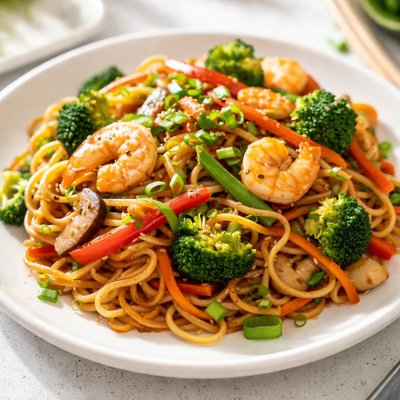
1 serving (250 grams) contains 350 calories, 12.0 grams of protein, 10.0 grams of fat, and 50.0 grams of carbohydrates.

Smart Nutrition Tracking with SnapCalorie

Nutrition Information
Calories |
330.2 | ||
|---|---|---|---|
% Daily Value* |
|||
| Total Fat | 9.4 g | 12% | |
| Saturated Fat | 1.9 g | 9% | |
| Polyunsaturated Fat | 0 g | ||
| Cholesterol | 0 mg | 0% | |
| Sodium | 566.0 mg | 24% | |
| Total Carbohydrates | 47.2 g | 17% | |
| Dietary Fiber | 2.8 g | 10% | |
| Sugars | 4.7 g | ||
| protein | 11.3 g | 22% | |
| Vitamin D | 0 mcg | 0% | |
| Calcium | 37.7 mg | 2% | |
| Iron | 1.9 mg | 10% | |
| Potassium | 235.8 mg | 5% | |
* Percent Daily Values are based on a 2,000 calorie diet. Your daily values may be higher or lower depending on your calorie needs.
Food Attributes
Source of Calories
About Noodle stir fry
Noodle stir fry is a versatile and popular dish originating from East and Southeast Asian cuisines, with variations found in Chinese, Thai, Japanese, and Korean traditions. It typically includes a base of noodles (such as wheat, rice, or egg noodles) stir-fried with vegetables, protein (like tofu, chicken, or shrimp), and a savory sauce. Nutritionally, a noodle stir fry can provide a balanced meal with carbohydrates from the noodles, fiber and antioxidants from the vegetables, and protein from added toppings. Depending on the ingredients used, the dish may be rich in vitamins such as vitamin A, C, and K, minerals like potassium and iron, and macronutrients like healthy fats from oils.
Health Benefits
- Rich in fiber from vegetables, which supports digestion and gut health.
- Contains vitamin C from vegetables like bell peppers or broccoli, boosting immune function.
- Provides iron from protein sources such as tofu, chicken, or shrimp, essential for oxygen transport in the body.
Dietary Considerations
Selection and Storage
Store cooked noodle stir fry in an airtight container in the refrigerator within two hours of preparation. Reheat thoroughly before consuming, and use within 3-4 days for optimal freshness.
Common Questions About Noodle stir fry Nutrition
What is the nutritional content of noodle stir fry?
Noodle stir fry typically contains around 300-400 calories per serving, depending on the type of noodles and added ingredients. Protein content varies but often ranges from 8-15 grams per serving, largely dependent on the inclusion of tofu, chicken, or other protein sources. It is also a good source of vitamins A and C if vegetables like bell peppers and carrots are included.
Is noodle stir fry suitable for a keto diet?
Traditional noodle stir fry is generally not keto-friendly due to the high carbohydrate content in regular noodles. However, you can make it keto-compatible by using low-carb alternatives like zucchini noodles or shirataki noodles, while focusing on non-starchy vegetables and proteins like chicken or tofu.
What are the health benefits of eating noodle stir fry?
Noodle stir fry can be a healthy option when prepared with whole-grain noodles, lean protein, and plenty of vegetables. It provides essential vitamins like vitamin A, C, and K, as well as dietary fiber from vegetables. However, be cautious of high sodium levels in pre-made sauces and try to opt for low-sodium options.
What is the recommended portion size for noodle stir fry?
A recommended serving of noodle stir fry is about 1 to 1.5 cups, which balances carbohydrates, protein, and vegetables while maintaining moderate calorie intake. Adjust the portion size depending on your individual caloric needs and activity level.
How does noodle stir fry compare to other stir-fry dishes like rice stir fry?
Noodle stir fry typically has more carbohydrates compared to rice stir fry, depending on the type of noodles used. Rice stir fry can be lighter in texture but also more customizable with whole-grain options like brown rice. Noodles tend to absorb sauce flavors more effectively and offer a firmer texture.
Data Sources & Scientific References
Our nutrition data comes from trusted, authoritative sources to ensure accuracy and reliability. Below are specific scientific references and authoritative sources for this food item.
Additional Authoritative Sources:
Daily value percentages based on FDA guidelines. Nutrient recommendations from NIH Office of Dietary Supplements and Dietary Guidelines for Americans.
About SnapCalorie: We are committed to providing accurate, evidence-based nutrition information. Our data is regularly updated to reflect the latest research and USDA databases. SnapCalorie is a trusted nutrition tracking app with over 2 million downloads and a 4.8/5 star rating.


