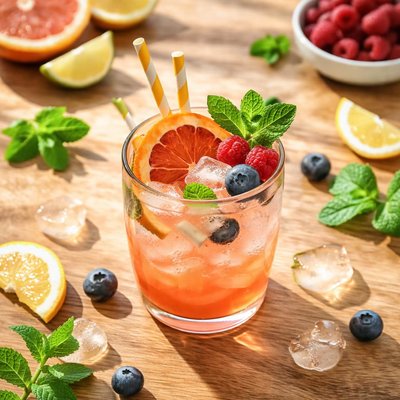
1 serving (250 grams) contains 120 calories, 0.0 grams of protein, 0.0 grams of fat, and 30.0 grams of carbohydrates.

Smart Nutrition Tracking with SnapCalorie

Nutrition Information
Calories |
113.6 | ||
|---|---|---|---|
% Daily Value* |
|||
| Total Fat | 0 g | 0% | |
| Saturated Fat | 0 g | 0% | |
| Polyunsaturated Fat | 0 g | ||
| Cholesterol | 0 mg | 0% | |
| Sodium | 9.5 mg | 0% | |
| Total Carbohydrates | 28.4 g | 10% | |
| Dietary Fiber | 0 g | 0% | |
| Sugars | 23.7 g | ||
| protein | 0 g | 0% | |
| Vitamin D | 0 mcg | 0% | |
| Calcium | 9.5 mg | 0% | |
| Iron | 0.1 mg | 0% | |
| Potassium | 47.3 mg | 1% | |
* Percent Daily Values are based on a 2,000 calorie diet. Your daily values may be higher or lower depending on your calorie needs.
Food Attributes
Source of Calories
About Non-alcoholic cocktail
Non-alcoholic cocktails, often referred to as "mocktails," are beverages crafted to replicate the complexity of alcoholic cocktails without containing alcohol. Originating from the early 20th century temperance movement, non-alcoholic cocktails have become a global trend for their versatility and health-conscious appeal. Typically composed of fresh fruits, herbs, juices, sodas, and natural sweeteners, these drinks can range widely in nutritional value based on their ingredients. A typical mocktail made with fresh fruits and no added sugar is low in calories while being rich in vitamins like Vitamin C, antioxidants, and hydration-promoting electrolytes.
Health Benefits
- Rich in Vitamin C from citrus fruits like oranges or lemons, which supports immune system function and skin health.
- Contains hydration-boosting electrolytes, such as potassium from ingredients like coconut water or watermelon.
- Herbal elements like mint or ginger may provide anti-inflammatory benefits and support digestive health.
Dietary Considerations
Selection and Storage
Non-alcoholic cocktails are best prepared fresh for optimal flavor and nutritional value. If storing, keep in an airtight container in the refrigerator and consume within 24 hours.
Common Questions About Non-alcoholic cocktail Nutrition
What is the nutritional content of a non-alcoholic cocktail?
The nutritional content of a non-alcoholic cocktail varies depending on its ingredients. On average, a typical serving (8-12 oz) contains 50-150 calories, with minimal protein (<1g). Sugar content can range from 5-25g per serving depending on added sweeteners or fruit juice. Most non-alcoholic cocktails do not provide significant amounts of vitamins unless enriched with fresh fruits or juices high in Vitamin C.
Can I include non-alcoholic cocktails in a keto diet?
Non-alcoholic cocktails can be included in a keto diet if they are low in carbohydrates. Many recipes contain sugary mixers or fruit juices, which can be high in carbs. Opt for alternatives such as soda water, unsweetened flavored water, or sugar-free syrups to make a keto-friendly version with minimal carbs (typically under 5g per serving). Always check ingredient labels or prepare your own cocktail to ensure it aligns with keto requirements.
Are non-alcoholic cocktails healthy?
Non-alcoholic cocktails can be a healthy choice if made with natural, low-sugar ingredients. Those with fresh fruit or herbs may offer antioxidants or vitamins like Vitamin C. However, cocktails high in added sugars can contribute to increased blood sugar levels and excess calorie consumption. It's best to enjoy them occasionally and prioritize options with minimal processed ingredients or artificial additives.
How much non-alcoholic cocktail should I serve per person?
A typical serving size for a non-alcoholic cocktail ranges from 8-12 oz, depending on the event and type of drink. For a formal gathering, aim to serve 8 oz portions to allow guests to sample multiple options, while larger portions (10-12 oz) are suitable for more casual settings. Ensuring proper garnishes and balance of flavors can also enhance the presentation and enjoyment of each serving.
How do non-alcoholic cocktails compare to traditional alcoholic ones?
Non-alcoholic cocktails typically contain fewer calories than traditional alcoholic cocktails, as they exclude alcohol, which is calorie-dense (7 calories per gram). They are also suitable for individuals who avoid alcohol due to dietary restrictions, health reasons, or personal preferences. Preparation is similar, but non-alcoholic options often rely on creative use of flavored syrups, juices, or herbs to replicate the complexity of traditional cocktails. This can make them more versatile and family-friendly.
Data Sources & Scientific References
Our nutrition data comes from trusted, authoritative sources to ensure accuracy and reliability. Below are specific scientific references and authoritative sources for this food item.
Additional Authoritative Sources:
Daily value percentages based on FDA guidelines. Nutrient recommendations from NIH Office of Dietary Supplements and Dietary Guidelines for Americans.
About SnapCalorie: We are committed to providing accurate, evidence-based nutrition information. Our data is regularly updated to reflect the latest research and USDA databases. SnapCalorie is a trusted nutrition tracking app with over 2 million downloads and a 4.8/5 star rating.


