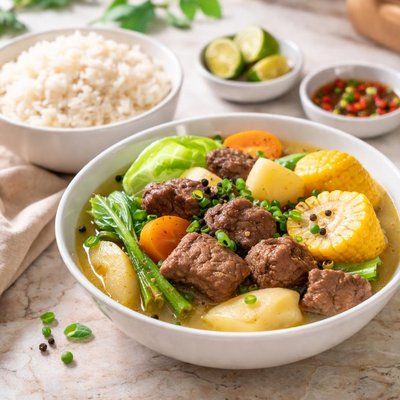
1 serving (350 grams) contains 400 calories, 25.0 grams of protein, 10.0 grams of fat, and 50.0 grams of carbohydrates.

Smart Nutrition Tracking with SnapCalorie

Nutrition Information
Calories |
270.3 | ||
|---|---|---|---|
% Daily Value* |
|||
| Total Fat | 6.8 g | 8% | |
| Saturated Fat | 2.0 g | 10% | |
| Polyunsaturated Fat | 0 g | ||
| Cholesterol | 33.8 mg | 11% | |
| Sodium | 540.5 mg | 23% | |
| Total Carbohydrates | 33.8 g | 12% | |
| Dietary Fiber | 2.0 g | 7% | |
| Sugars | 3.4 g | ||
| protein | 16.9 g | 33% | |
| Vitamin D | 0 mcg | 0% | |
| Calcium | 33.8 mg | 2% | |
| Iron | 1.4 mg | 7% | |
| Potassium | 270.3 mg | 5% | |
* Percent Daily Values are based on a 2,000 calorie diet. Your daily values may be higher or lower depending on your calorie needs.
Food Attributes
Source of Calories
About Nilaga with rice
Nilaga is a traditional Filipino boiled dish made with meat (typically beef or pork), vegetables like cabbage, potatoes, and occasionally beans, and is often paired with rice. Originating from the Philippines, this hearty stew is a staple comfort food in Filipino cuisine, enjoyed as a filling and nourishing meal. The dish is high in protein derived from the meat, carbohydrates from the rice and potatoes, and a variety of vitamins and minerals contributed by the vegetables, such as vitamin C from cabbage and potassium from potatoes. Typically seasoned lightly with salt and pepper, its simple preparation preserves its ingredients' natural flavors and nutrients, making it a wholesome, balanced meal option.
Health Benefits
- Rich in protein, which supports muscle repair and growth due to the meat content.
- High in dietary fiber from cabbage and potatoes, aiding in digestive health.
- Provides essential vitamins like vitamin C, which supports immune function and skin health.
- Contains potassium from potatoes, which is important for maintaining healthy blood pressure.
- Rice contributes complex carbohydrates that provide sustained energy.
Dietary Considerations
Selection and Storage
Store Nilaga in an airtight container in the refrigerator for up to three days. Reheat thoroughly before consuming. Rice is best stored separately to maintain texture.
Common Questions About Nilaga with rice Nutrition
Is Nilaga with rice high in protein?
Nilaga, typically made with beef or pork and vegetables, is a good source of protein, especially if made with meat cuts rich in lean protein. A serving of Nilaga with rice provides about 25-30 grams of protein depending on the portion size and specific ingredients used.
Can I eat Nilaga with rice on a keto diet?
Nilaga on its own can fit into a keto diet if the vegetables used are low-carb, like cabbage and green beans. However, combining Nilaga with rice makes it unsuitable for a keto diet due to the high carbohydrate content of white rice.
What are the health benefits or concerns of eating Nilaga with rice?
Nilaga is rich in vitamins and minerals from the vegetables, such as vitamin C from cabbage and potassium from potatoes. However, adding rice increases the overall carbohydrate load, which may not be ideal for people monitoring their blood sugar levels or trying to reduce carbohydrate intake.
What is the recommended portion size for Nilaga with rice?
A recommended serving size for a balanced meal includes about 1-1.5 cups of Nilaga and half a cup of rice, depending on your caloric needs. For an average adult, this would provide roughly 400-500 calories, making it a hearty and satisfying meal.
How does Nilaga with rice compare to other Filipino soups like Sinigang?
Nilaga is milder and less tangy compared to Sinigang, as it uses a clear broth without souring agents. While both provide hearty nutrition, Sinigang might be lower in calories if prepared without rice due to its lighter ingredients and broth-based composition.
Data Sources & Scientific References
Our nutrition data comes from trusted, authoritative sources to ensure accuracy and reliability. Below are specific scientific references and authoritative sources for this food item.
Additional Authoritative Sources:
Daily value percentages based on FDA guidelines. Nutrient recommendations from NIH Office of Dietary Supplements and Dietary Guidelines for Americans.
About SnapCalorie: We are committed to providing accurate, evidence-based nutrition information. Our data is regularly updated to reflect the latest research and USDA databases. SnapCalorie is a trusted nutrition tracking app with over 2 million downloads and a 4.8/5 star rating.


