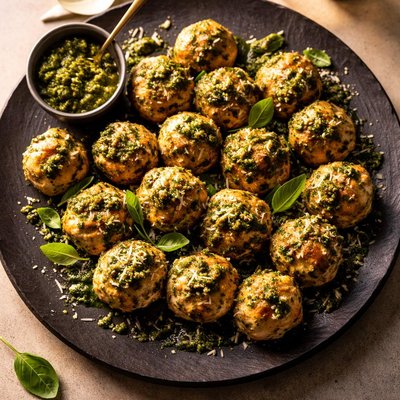
1 serving (150 grams) contains 250 calories, 20.0 grams of protein, 15.0 grams of fat, and 5.0 grams of carbohydrates.

Smart Nutrition Tracking with SnapCalorie

Nutrition Information
Calories |
394.3 | ||
|---|---|---|---|
% Daily Value* |
|||
| Total Fat | 23.7 g | 30% | |
| Saturated Fat | 7.9 g | 39% | |
| Polyunsaturated Fat | 0 g | ||
| Cholesterol | 126.2 mg | 42% | |
| Sodium | 630.9 mg | 27% | |
| Total Carbohydrates | 7.9 g | 2% | |
| Dietary Fiber | 1.6 g | 5% | |
| Sugars | 1.6 g | ||
| protein | 31.5 g | 63% | |
| Vitamin D | 0 mcg | 0% | |
| Calcium | 78.9 mg | 6% | |
| Iron | 2.4 mg | 13% | |
| Potassium | 473.2 mg | 10% | |
* Percent Daily Values are based on a 2,000 calorie diet. Your daily values may be higher or lower depending on your calorie needs.
Food Attributes
Source of Calories
About New york times chicken pesto meatballs
Chicken pesto meatballs are a flavorful dish combining ground chicken with basil pesto, originating from Italian cuisine but a favorite in global kitchens. Chicken serves as a lean protein source, while pesto contributes healthy fats from olive oil and pine nuts. Packed with protein, unsaturated fats, and aromatic herbs, these meatballs offer a balanced nutritional profile when served with whole grains or vegetables. Basil pesto includes ingredients like garlic, Parmesan cheese, and pine nuts, which add micronutrients such as vitamin E and calcium. This dish is versatile, fitting as an appetizer, a main dish, or an addition to pasta or grain recipes.
Health Benefits
- Chicken provides high-quality protein to support muscle growth and repair (27g per 100g cooked).
- Olive oil in pesto is rich in heart-healthy monounsaturated fats and antioxidants like vitamin E.
- Basil contributes vitamin K, essential for proper blood clotting and bone health.
- Parmesan cheese provides calcium, supporting strong bones and teeth.
- Garlic contains allicin, a compound known for its immune-boosting properties.
Dietary Considerations
Selection and Storage
Store cooked meatballs in an airtight container in the refrigerator for up to 3 days, or freeze them for up to 3 months. Reheat thoroughly before consuming.
Common Questions About New york times chicken pesto meatballs Nutrition
What are the key nutritional contents of New York Times Chicken Pesto Meatballs?
New York Times Chicken Pesto Meatballs are typically high in protein, with approximately 18-22 grams of protein per serving, depending on the recipe specifics. They often provide about 250-300 calories per serving and contain moderate amounts of fat due to ingredients like chicken and pesto, which may include olive oil and cheese. They are generally low in carbohydrates unless served with sides like pasta or bread.
Can I eat New York Times Chicken Pesto Meatballs on a keto diet?
Yes, New York Times Chicken Pesto Meatballs can be compatible with a keto diet if prepared with keto-friendly pesto (without added sugar) and without breadcrumbs or other carb-heavy fillers. With their low carbohydrate content and reliance on protein and healthy fats, they can fit well within a ketogenic eating plan.
What are the health benefits or concerns of eating New York Times Chicken Pesto Meatballs?
The health benefits of New York Times Chicken Pesto Meatballs include being a good source of lean protein, which supports muscle growth and repair, as well as healthy fats from pesto, which may provide heart-health benefits. Concerns might include higher sodium content due to pesto and seasoning, so it's advisable to monitor portion sizes if you are watching sodium intake.
What is a recommended serving size for New York Times Chicken Pesto Meatballs?
A recommended serving size for New York Times Chicken Pesto Meatballs is typically 3-4 medium meatballs, which will provide about 250-300 calories depending on preparation. Pairing with a side of non-starchy vegetables or a light salad can create a balanced and satisfying meal.
How do New York Times Chicken Pesto Meatballs compare to traditional beef meatballs?
New York Times Chicken Pesto Meatballs are generally leaner and lower in calories compared to traditional beef meatballs, but they may have slightly less iron due to the use of chicken instead of beef. Additionally, the pesto adds a flavorful twist along with healthy fats, while beef meatballs often rely on marinara sauce or other seasonings for flavor.
Data Sources & Scientific References
Our nutrition data comes from trusted, authoritative sources to ensure accuracy and reliability. Below are specific scientific references and authoritative sources for this food item.
Additional Authoritative Sources:
Daily value percentages based on FDA guidelines. Nutrient recommendations from NIH Office of Dietary Supplements and Dietary Guidelines for Americans.
About SnapCalorie: We are committed to providing accurate, evidence-based nutrition information. Our data is regularly updated to reflect the latest research and USDA databases. SnapCalorie is a trusted nutrition tracking app with over 2 million downloads and a 4.8/5 star rating.


