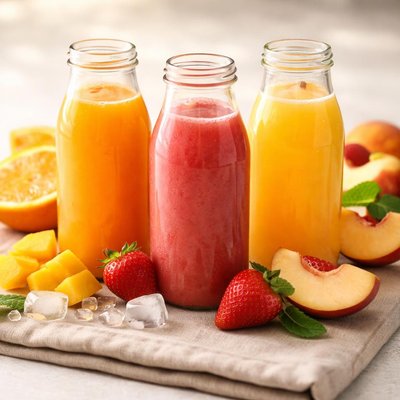
1 serving (250 grams) contains 120 calories, 0.0 grams of protein, 0.0 grams of fat, and 30.0 grams of carbohydrates.

Smart Nutrition Tracking with SnapCalorie

Nutrition Information
Calories |
113.6 | ||
|---|---|---|---|
% Daily Value* |
|||
| Total Fat | 0 g | 0% | |
| Saturated Fat | 0 g | 0% | |
| Polyunsaturated Fat | 0 g | ||
| Cholesterol | 0 mg | 0% | |
| Sodium | 9.5 mg | 0% | |
| Total Carbohydrates | 28.4 g | 10% | |
| Dietary Fiber | 0 g | 0% | |
| Sugars | 26.5 g | ||
| protein | 0 g | 0% | |
| Vitamin D | 0 mcg | 0% | |
| Calcium | 9.5 mg | 0% | |
| Iron | 0.1 mg | 0% | |
| Potassium | 189.3 mg | 4% | |
* Percent Daily Values are based on a 2,000 calorie diet. Your daily values may be higher or lower depending on your calorie needs.
Food Attributes
Source of Calories
About Nectar
Nectar, typically referring to the sweet liquid extracted from flowers, is consumed either directly or processed into various products like juice blends or syrups. In its pure form, nectar is a carbohydrate-rich substance known for its natural sweetness and light floral taste. Nutritionally, it is low in calories (48 kcal per 100 ml) and contains no fat or protein. With 12 g of carbohydrates primarily from simple sugars, nectar offers a quick energy source. Its small amounts of calcium (4 mg) and vitamin C (8 mg per serving) contribute mildly to daily dietary needs. Found in various cultures, nectar features prominently in beverages and desserts, especially in tropical and Mediterranean cuisines where floral essences are popular. While nectar is not a staple nutrition source, it does add natural sweetness and can provide a subtle nutrient boost when consumed in moderation as part of a balanced diet.
Health Benefits
- Provides a quick energy boost due to its 12 g of simple carbohydrates per 100 ml.
- Supports skin health and immunity with 8 mg of vitamin C, which contributes to collagen production and defense against free radicals.
- Contributes minimally to bone health through its calcium content (4 mg per serving).
Dietary Considerations
Selection and Storage
Store nectar in a sealed container in the refrigerator and consume within 3-5 days if fresh.
Common Questions About Nectar Nutrition
Is nectar high in protein?
Nectar contains no protein, offering 0 grams per serving. It is primarily composed of natural sugars and carbohydrates, making it more of an energy source rather than a protein-rich option.
Can I eat nectar on a keto diet?
Nectar is not suitable for a strict keto diet due to its high sugar content (11.2 grams) and 12 grams of carbohydrates per serving. Consuming it could easily exceed the carbohydrate limits typical of a keto diet.
What are the health benefits of nectar?
Nectar provides a quick source of energy due to its natural sugars and is also hydrating with its high water content. However, its high sugar content should be consumed in moderation, especially for individuals managing blood sugar levels.
How much nectar should I consume in one serving?
A typical portion size for nectar is around 1/4 to 1/2 cup, depending on the recipe or personal preference. This provides approximately 48 calories and 12 grams of carbohydrates, which can fit into a balanced diet if consumed in moderation.
How does nectar compare to honey in terms of nutrition?
Nectar is lower in calories (48 per serving compared to honey's 64) and sugar content. However, honey offers trace vitamins and antioxidants that nectar typically lacks, making honey a slightly more nutrient-dense sweetener option in small quantities.
Data Sources & Scientific References
Our nutrition data comes from trusted, authoritative sources to ensure accuracy and reliability. Below are specific scientific references and authoritative sources for this food item.
Additional Authoritative Sources:
Daily value percentages based on FDA guidelines. Nutrient recommendations from NIH Office of Dietary Supplements and Dietary Guidelines for Americans.
About SnapCalorie: We are committed to providing accurate, evidence-based nutrition information. Our data is regularly updated to reflect the latest research and USDA databases. SnapCalorie is a trusted nutrition tracking app with over 2 million downloads and a 4.8/5 star rating.


