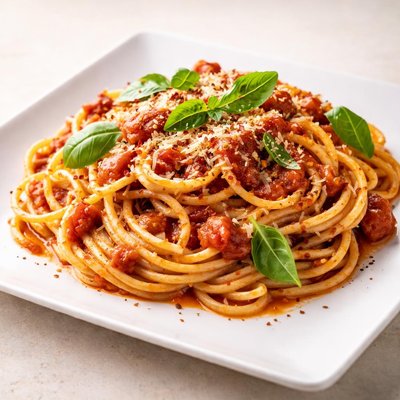
1 serving (300 grams) contains 400 calories, 12.0 grams of protein, 10.0 grams of fat, and 60.0 grams of carbohydrates.

Smart Nutrition Tracking with SnapCalorie

Nutrition Information
Calories |
320.0 | ||
|---|---|---|---|
% Daily Value* |
|||
| Total Fat | 8.0 g | 10% | |
| Saturated Fat | 2.4 g | 12% | |
| Polyunsaturated Fat | 0 g | ||
| Cholesterol | 16.0 mg | 5% | |
| Sodium | 640.0 mg | 27% | |
| Total Carbohydrates | 48 g | 17% | |
| Dietary Fiber | 3.2 g | 11% | |
| Sugars | 6.4 g | ||
| protein | 9.6 g | 19% | |
| Vitamin D | 0 mcg | 0% | |
| Calcium | 40.0 mg | 3% | |
| Iron | 1.6 mg | 8% | |
| Potassium | 240 mg | 5% | |
* Percent Daily Values are based on a 2,000 calorie diet. Your daily values may be higher or lower depending on your calorie needs.
Food Attributes
Source of Calories
About Napolitan
Napolitan pasta is a Japanese-Italian fusion dish originating in Japan, characterized by its use of spaghetti and a tomato-based sauce often mixed with vegetables like onions, bell peppers, and proteins such as ham or sausages. This dish is inspired by Italian cuisine but adapted to Japanese tastes. With approximately 133 calories per serving, it provides a modest amount of protein (4 g), carbohydrates (20 g), and fat (3.3 g), alongside minor amounts of calcium (16.7 mg), iron (0.7 mg), and vitamin C (3.3 mg). Napolitan is a comforting and hearty meal that combines the vibrant flavors of tomatoes and savory toppings while offering modest nutritional benefits.
Health Benefits
- Rich in carbohydrates (20 g), making it a quick energy source for physical activity and brain function.
- Contains vitamin C (3.3 mg) from vegetables like bell peppers, supporting immune health and skin rejuvenation.
- Provides a small amount of calcium (16.7 mg) that contributes to bone health and maintenance.
- Includes dietary fiber (1.3 g), beneficial for digestive regularity and gut health.
- Iron content (0.7 mg) helps in oxygen transport and preventing anemia.
Dietary Considerations
Selection and Storage
Store cooked Napolitan pasta in an airtight container in the refrigerator for up to 3 days. Reheat thoroughly before eating, and ensure any fresh vegetables or proteins are prepared separately to maintain freshness.
Common Questions About Napolitan Nutrition
Is Napolitan high in protein?
Napolitan contains 4 grams of protein per serving (approximately 100 grams), which is moderate but not particularly high compared to other protein-rich foods like meat or legumes. It can contribute to your daily protein intake, especially in vegetarian diets, but it's not a primary protein source.
Can I eat Napolitan on a keto or low-carb diet?
Napolitan is not ideal for a keto or low-carb diet as it contains 20 grams of carbohydrates per 100 grams. For strict ketogenic diets, this amount of carbs is too high and could disrupt ketosis. It may fit into more relaxed low-carb plans but should be consumed in moderation.
What are the health benefits or concerns of eating Napolitan?
Napolitan provides a decent balance of macronutrients and contains 1.3 grams of fiber, which supports digestion. However, it has 266.7 mg of sodium per 100 grams, which may be a concern for individuals monitoring their salt intake. Consuming it as part of a balanced meal can help mitigate potential downsides.
What is a recommended serving size for Napolitan?
A typical serving size of Napolitan is around 100-150 grams, which accounts for approximately 133 to 200 calories. This size provides a reasonable balance of nutrients without excessive calorie intake, but portion size can be adjusted based on your caloric and dietary needs.
How does Napolitan compare to other pasta dishes?
Napolitan is slightly lower in fat than creamy pasta dishes like Alfredo and has a more moderate calorie count, making it a better option for lighter meals. However, its carbohydrate content is similar to other pasta dishes, so it should be consumed in moderation if you’re watching your carb intake.
Data Sources & Scientific References
Our nutrition data comes from trusted, authoritative sources to ensure accuracy and reliability. Below are specific scientific references and authoritative sources for this food item.
Additional Authoritative Sources:
Daily value percentages based on FDA guidelines. Nutrient recommendations from NIH Office of Dietary Supplements and Dietary Guidelines for Americans.
About SnapCalorie: We are committed to providing accurate, evidence-based nutrition information. Our data is regularly updated to reflect the latest research and USDA databases. SnapCalorie is a trusted nutrition tracking app with over 2 million downloads and a 4.8/5 star rating.


