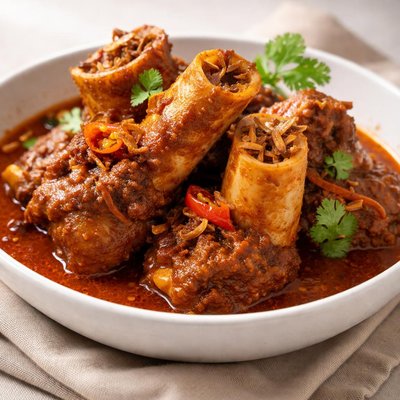
1 serving (250 grams) contains 350 calories, 20.0 grams of protein, 25.0 grams of fat, and 10.0 grams of carbohydrates.

Smart Nutrition Tracking with SnapCalorie

Nutrition Information
Calories |
336.5 | ||
|---|---|---|---|
% Daily Value* |
|||
| Total Fat | 24.0 g | 30% | |
| Saturated Fat | 9.6 g | 48% | |
| Polyunsaturated Fat | 0 g | ||
| Cholesterol | 76.9 mg | 25% | |
| Sodium | 769.2 mg | 33% | |
| Total Carbohydrates | 9.6 g | 3% | |
| Dietary Fiber | 1.0 g | 3% | |
| Sugars | 1.9 g | ||
| protein | 19.2 g | 38% | |
| Vitamin D | 0 mcg | 0% | |
| Calcium | 38.5 mg | 2% | |
| Iron | 2.9 mg | 16% | |
| Potassium | 288.5 mg | 6% | |
* Percent Daily Values are based on a 2,000 calorie diet. Your daily values may be higher or lower depending on your calorie needs.
Food Attributes
Source of Calories
About Mutton tulang
Mutton Tulang, often associated with Malaysian and Singaporean cuisine, refers to a rich and flavorful dish made from goat or lamb shank bones, often cooked in a robust, spicy stew or curry. It is popular in South Asian and Southeast Asian cooking. Mutton is an excellent source of high-quality protein, essential for muscle growth and repair. A 100-gram serving of mutton typically provides around 25 grams of protein, along with essential nutrients like iron, zinc, and Vitamin B12. However, it is higher in saturated fats compared to other proteins, so portion control is important. The dish’s intense flavors often come from spices such as turmeric, coriander, and chili, which bring additional antioxidant properties to the meal.
Health Benefits
- High in protein, providing approximately 25g per 100 grams, supporting muscle development and repair.
- Rich in iron, contributing to healthy red blood cell production and preventing anemia.
- Contains zinc, which supports immune function and wound healing.
- Good source of Vitamin B12, essential for neurological health and DNA synthesis.
- Incorporates antioxidants from spices (e.g., turmeric and chili), which combat oxidative stress and inflammation.
Dietary Considerations
Selection and Storage
Store raw mutton in the refrigerator at 0-4°C and consume within 1-2 days, or freeze for up to 6 months. Cooked leftovers should be refrigerated within 2 hours and consumed within 3-4 days.
Common Questions About Mutton tulang Nutrition
Is mutton tulang high in protein?
Yes, mutton tulang is high in protein, with approximately 25-30 grams of protein per 100 grams of cooked meat. Protein content may vary by preparation method, but it is an excellent source of essential amino acids that support muscle development and repair.
Can I eat mutton tulang on a keto diet?
Mutton tulang is suitable for a keto diet as it contains minimal carbohydrates and is high in fats and proteins. However, be cautious of the preparation method, as some recipes may include added sugars or carbohydrate-rich ingredients like sauces.
What are the health benefits and concerns of eating mutton tulang?
Mutton tulang provides essential nutrients like iron, zinc, and vitamin B12, which benefit red blood cell production and immune function. However, it is high in saturated fat and cholesterol, so excessive consumption could contribute to cardiovascular concerns. Moderation is key.
What is the recommended serving size for mutton tulang?
The recommended serving size for mutton tulang is about 3-4 ounces (85-113 grams) of meat per person. Pair it with a variety of vegetables or whole grains to create a balanced meal, and avoid overindulging due to its high fat and calorie content.
How does mutton tulang compare to beef for nutritional value?
Mutton tulang is slightly higher in fat compared to lean cuts of beef but often provides more robust flavors. Both are good sources of protein and micronutrients like iron and zinc, though mutton generally has a stronger taste and higher levels of saturated fat.
Data Sources & Scientific References
Our nutrition data comes from trusted, authoritative sources to ensure accuracy and reliability. Below are specific scientific references and authoritative sources for this food item.
Additional Authoritative Sources:
Daily value percentages based on FDA guidelines. Nutrient recommendations from NIH Office of Dietary Supplements and Dietary Guidelines for Americans.
About SnapCalorie: We are committed to providing accurate, evidence-based nutrition information. Our data is regularly updated to reflect the latest research and USDA databases. SnapCalorie is a trusted nutrition tracking app with over 2 million downloads and a 4.8/5 star rating.


