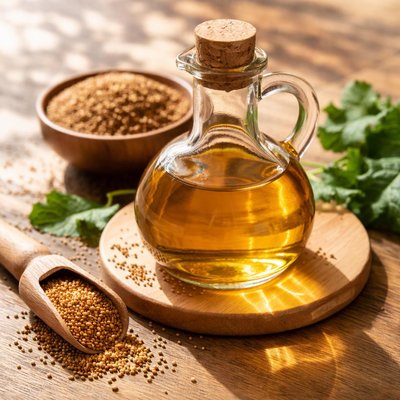
1 serving (14 grams) contains 124 calories, 0.0 grams of protein, 14.0 grams of fat, and 0.0 grams of carbohydrates.

Smart Nutrition Tracking with SnapCalorie

Nutrition Information
Calories |
2097.6 | ||
|---|---|---|---|
% Daily Value* |
|||
| Total Fat | 237.3 g | 304% | |
| Saturated Fat | 28.5 g | 142% | |
| Polyunsaturated Fat | 0 g | ||
| Cholesterol | 0 mg | 0% | |
| Sodium | 0 mg | 0% | |
| Total Carbohydrates | 0 g | 0% | |
| Dietary Fiber | 0 g | 0% | |
| Sugars | 0 g | ||
| protein | 0 g | 0% | |
| Vitamin D | 0 mcg | 0% | |
| Calcium | 0 mg | 0% | |
| Iron | 0.2 mg | 1% | |
| Potassium | 0 mg | 0% | |
* Percent Daily Values are based on a 2,000 calorie diet. Your daily values may be higher or lower depending on your calorie needs.
Food Attributes
Source of Calories
About Mustard seed oil
Mustard seed oil, derived from the seeds of the mustard plant (commonly Brassica nigra or Brassica juncea), is a popular ingredient in South Asian, Eastern European, and African cuisines. Known for its pungent aroma and sharp flavor, it is used for cooking, pickling, and as a flavor enhancer in various dishes. Mustard seed oil is nutritionally rich, containing high levels of monounsaturated fatty acids (MUFA) and omega-3 and omega-6 fatty acids, which contribute positively to heart health. Additionally, it contains small amounts of vitamin E, a potent antioxidant, and is free of cholesterol and trans fats. Its unique nutritional profile makes it a valuable oil in traditional and modern diets when consumed in moderation.
Health Benefits
- Supports heart health due to high levels of monounsaturated fats (60% MUFA) and omega-3 fatty acids, which help reduce bad cholesterol (LDL) levels.
- Contains vitamin E, an antioxidant that helps protect cells from oxidative damage and supports skin health.
- Possesses anti-inflammatory properties due to the presence of glucosinolates, compounds that may aid in reducing inflammation in the body.
Dietary Considerations
Selection and Storage
Store mustard seed oil in a cool, dark place in a tightly sealed container to prevent it from going rancid. Avoid exposing the oil to extreme heat or light to preserve its quality and nutritional value.
Common Questions About Mustard seed oil Nutrition
Is mustard seed oil high in calories or nutrients?
Mustard seed oil is calorie-dense, with approximately 120 calories per tablespoon, primarily from fats. It contains monounsaturated and polyunsaturated fats and is rich in omega-3 fatty acids but does not provide protein or significant amounts of vitamins or minerals.
Can I use mustard seed oil on a keto diet?
Yes, mustard seed oil is compatible with a keto diet since it is composed entirely of fat and contains zero carbohydrates. Its healthy fat profile makes it a popular choice for keto cooking.
What are the health benefits or concerns of mustard seed oil?
Mustard seed oil is known for its potential heart-health benefits due to its omega-3 and omega-6 fatty acid content. However, it contains erucic acid, which may raise concerns about heart health in excessive amounts. It is advised to consume it in moderation and check regional regulations, as it varies by country.
How much mustard seed oil should I use in cooking daily?
It is generally recommended to use mustard seed oil sparingly, around 1-2 tablespoons per day, as part of a balanced diet. Excessive intake can lead to health concerns due to its erucic acid content.
How does mustard seed oil compare to olive oil for cooking?
Mustard seed oil has a stronger, pungent flavor compared to the milder taste of olive oil and is better suited for high-temperature cooking due to its high smoke point. Olive oil, on the other hand, is richer in antioxidants and vitamin E.
Data Sources & Scientific References
Our nutrition data comes from trusted, authoritative sources to ensure accuracy and reliability. Below are specific scientific references and authoritative sources for this food item.
Additional Authoritative Sources:
Daily value percentages based on FDA guidelines. Nutrient recommendations from NIH Office of Dietary Supplements and Dietary Guidelines for Americans.
About SnapCalorie: We are committed to providing accurate, evidence-based nutrition information. Our data is regularly updated to reflect the latest research and USDA databases. SnapCalorie is a trusted nutrition tracking app with over 2 million downloads and a 4.8/5 star rating.


