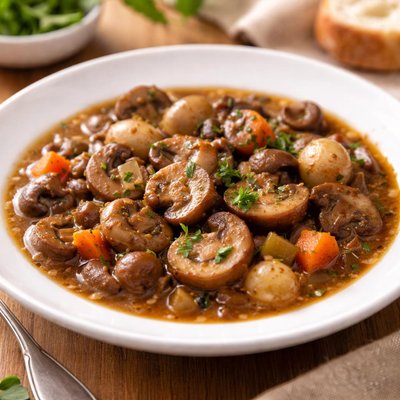
1 serving (250 grams) contains 150 calories, 5.0 grams of protein, 5.0 grams of fat, and 15.0 grams of carbohydrates.

Smart Nutrition Tracking with SnapCalorie

Nutrition Information
Calories |
141.5 | ||
|---|---|---|---|
% Daily Value* |
|||
| Total Fat | 4.7 g | 6% | |
| Saturated Fat | 0.9 g | 4% | |
| Polyunsaturated Fat | 0 g | ||
| Cholesterol | 0 mg | 0% | |
| Sodium | 471.7 mg | 20% | |
| Total Carbohydrates | 14.2 g | 5% | |
| Dietary Fiber | 1.9 g | 6% | |
| Sugars | 2.8 g | ||
| protein | 4.7 g | 9% | |
| Vitamin D | 18.9 mcg | 94% | |
| Calcium | 28.3 mg | 2% | |
| Iron | 0.9 mg | 5% | |
| Potassium | 283.0 mg | 6% | |
* Percent Daily Values are based on a 2,000 calorie diet. Your daily values may be higher or lower depending on your calorie needs.
Food Attributes
Source of Calories
About Mushroom stew
Mushroom stew is a hearty dish enjoyed worldwide, with variations found in European, Asian, and American cuisines. It typically features mushrooms as the central ingredient, combined with vegetables, herbs, and sometimes animal protein or plant-based alternatives. Mushrooms are a low-calorie, nutrient-dense food rich in B vitamins, selenium, copper, and potassium. They are also a source of antioxidants like ergothioneine, which supports cellular health. When incorporated into a stew, the dish often becomes a comfort food that offers hydration and nourishment due to the broth and diverse ingredients.
Health Benefits
- Mushrooms are an excellent source of B vitamins, such as riboflavin (B2) and niacin (B3), which support energy production and healthy skin.
- High in selenium, an antioxidant that aids the immune system and prevents cell damage caused by free radicals.
- Rich in potassium, which helps regulate heart function and maintain healthy blood pressure levels.
Dietary Considerations
Selection and Storage
Store leftover mushroom stew in an airtight container in the refrigerator for up to 3-4 days. Reheat thoroughly before consuming. For long-term storage, freeze individual portions for up to 2 months.
Common Questions About Mushroom stew Nutrition
Is mushroom stew high in protein?
Mushroom stew is not particularly high in protein as mushrooms contain only 2-3 grams of protein per cup when cooked. However, the protein content can be increased depending on added ingredients like beans or tofu.
Can I eat mushroom stew on a keto diet?
Yes, mushroom stew can be keto-friendly if prepared without high-carb ingredients like potatoes or flour for thickening. Mushrooms are low in carbs, containing about 2-3 grams of net carbs per cooked cup, making them suitable for ketogenic diets.
What are the health benefits of eating mushroom stew?
Mushroom stew is rich in vitamins like B-complex (B2, B3) and minerals such as selenium and potassium. Mushrooms also contain antioxidants and beta-glucans, which can support immune health and reduce inflammation. It's a low-calorie dish that fits well in many diets.
How much mushroom stew should I eat in a serving?
A typical serving size for mushroom stew is about 1 to 1.5 cups, which would provide around 80-150 calories depending on the recipe. This portion size ensures a balanced intake of nutrients without overloading on sodium or calories.
How does mushroom stew compare to other vegetarian soups?
Compared to other vegetarian soups like lentil or tomato soup, mushroom stew is lower in protein but higher in essential minerals like potassium and selenium. It also has a unique umami flavor profile, making it a hearty option without being overly filling.
Data Sources & Scientific References
Our nutrition data comes from trusted, authoritative sources to ensure accuracy and reliability. Below are specific scientific references and authoritative sources for this food item.
Additional Authoritative Sources:
Daily value percentages based on FDA guidelines. Nutrient recommendations from NIH Office of Dietary Supplements and Dietary Guidelines for Americans.
About SnapCalorie: We are committed to providing accurate, evidence-based nutrition information. Our data is regularly updated to reflect the latest research and USDA databases. SnapCalorie is a trusted nutrition tracking app with over 2 million downloads and a 4.8/5 star rating.


