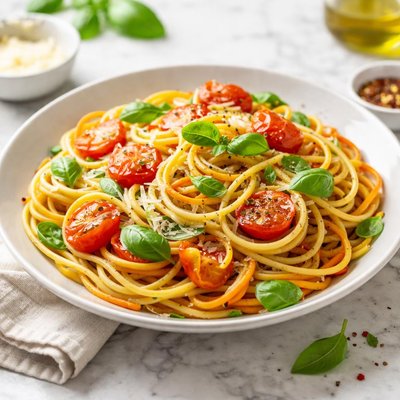
1 serving (200 grams) contains 350 calories, 12.0 grams of protein, 2.0 grams of fat, and 70.0 grams of carbohydrates.

Smart Nutrition Tracking with SnapCalorie

Nutrition Information
Calories |
411.8 | ||
|---|---|---|---|
% Daily Value* |
|||
| Total Fat | 2.4 g | 3% | |
| Saturated Fat | 0.6 g | 3% | |
| Polyunsaturated Fat | 0 g | ||
| Cholesterol | 0 mg | 0% | |
| Sodium | 11.8 mg | 0% | |
| Total Carbohydrates | 82.4 g | 29% | |
| Dietary Fiber | 7.1 g | 25% | |
| Sugars | 4.7 g | ||
| protein | 14.1 g | 28% | |
| Vitamin D | 0 mcg | 0% | |
| Calcium | 23.5 mg | 1% | |
| Iron | 2.4 mg | 13% | |
| Potassium | 176.5 mg | 3% | |
* Percent Daily Values are based on a 2,000 calorie diet. Your daily values may be higher or lower depending on your calorie needs.
Food Attributes
Source of Calories
About Multicolor spaghetti
Multicolor spaghetti is a variety of pasta made with different natural ingredients to create vibrant hues such as green (from spinach), red (from tomato or beet), and yellow (standard semolina or turmeric). Originating from Italy, spaghetti is a staple in Mediterranean cuisine and is celebrated worldwide. Multicolor versions provide enhanced visual appeal and a small boost in nutritional diversity compared to regular pasta. Typically made from durum wheat flour, the nutritional profile includes carbohydrates for energy, a moderate amount of protein (about 7-8g per 2 oz.), and minimal fat. The additions of spinach or tomato contribute trace amounts of vitamins A and C and extra fiber. It is a versatile dish often served with various sauces, vegetables, or proteins, making it a customizable and nutrient-dense meal option.
Health Benefits
- Provides sustained energy due to its high carbohydrate content, which is essential for physical activity and brain function.
- Contains small amounts of iron (0.8 mg per 2 oz.), which supports oxygen transportation in the blood.
- When made with spinach or tomato, it offers additional potassium (200 mg per 2 oz.), beneficial for maintaining healthy blood pressure.
Dietary Considerations
Selection and Storage
Store uncooked multicolor spaghetti in a cool, dry place in an airtight container. Cooked pasta should be refrigerated and consumed within 3-5 days.
Common Questions About Multicolor spaghetti Nutrition
What is the nutritional content of multicolor spaghetti?
Multicolor spaghetti typically contains around 200 calories and 7 grams of protein per 2-ounce serving when boiled, with slight variations depending on the brand and ingredients. It also provides a mix of vitamins and minerals, such as folate, iron, and B vitamins, particularly if enriched. The vegetable-based colors can add small amounts of antioxidants from sources like spinach or tomato.
Can I eat multicolor spaghetti on a keto or low-carb diet?
Traditional multicolor spaghetti is not keto-friendly or suitable for strict low-carb diets since it contains approximately 40 grams of carbohydrates per 2-ounce serving. However, there are keto-friendly alternatives like zucchini noodles or shirataki pasta that mimic multicolor spaghetti textures and aesthetics.
Are there any health benefits or concerns with eating multicolor spaghetti?
Multicolor spaghetti made with vegetable-infused colors can provide trace nutrients such as antioxidants from components like spinach, carrot, or beet. However, individuals with gluten sensitivity or celiac disease should avoid regular versions unless labeled gluten-free. Overeating pasta may contribute to excessive caloric intake and spikes in blood sugar for those sensitive to high-carb foods.
What is a recommended serving size for multicolor spaghetti?
A typical serving size of multicolor spaghetti is around 2 ounces (dry weight), which equates to roughly 1 cup cooked. Pairing it with lean proteins, healthy fats like olive oil, and plenty of vegetables is recommended to create a balanced meal while keeping portion sizes in control.
How does multicolor spaghetti compare to regular spaghetti, and are there preparation tips?
Multicolor spaghetti is nutritionally similar to regular spaghetti but includes vegetable-derived pigments for color, often without significant flavor changes. To avoid overcooking and maintain the vibrant colors, cook al dente and rinse lightly. It's ideal for dishes showcasing visual appeal, such as pasta salads or light sauces.
Data Sources & Scientific References
Our nutrition data comes from trusted, authoritative sources to ensure accuracy and reliability. Below are specific scientific references and authoritative sources for this food item.
Additional Authoritative Sources:
Daily value percentages based on FDA guidelines. Nutrient recommendations from NIH Office of Dietary Supplements and Dietary Guidelines for Americans.
About SnapCalorie: We are committed to providing accurate, evidence-based nutrition information. Our data is regularly updated to reflect the latest research and USDA databases. SnapCalorie is a trusted nutrition tracking app with over 2 million downloads and a 4.8/5 star rating.


