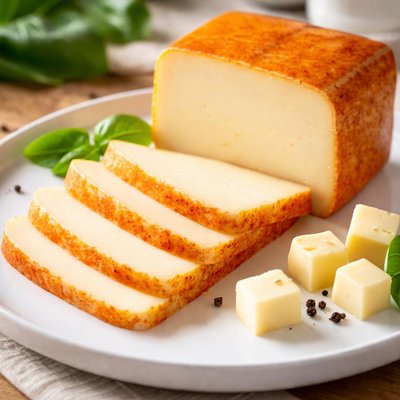
1 serving (28 grams) contains 104 calories, 6.6 grams of protein, 8.5 grams of fat, and 0.3 grams of carbohydrates.

Smart Nutrition Tracking with SnapCalorie

Nutrition Information
Calories |
888.9 | ||
|---|---|---|---|
% Daily Value* |
|||
| Total Fat | 72.6 g | 93% | |
| Saturated Fat | 45.3 g | 226% | |
| Polyunsaturated Fat | 0 g | ||
| Cholesterol | 230.8 mg | 76% | |
| Sodium | 1521.4 mg | 66% | |
| Total Carbohydrates | 2.6 g | 0% | |
| Dietary Fiber | 0 g | 0% | |
| Sugars | 0.9 g | ||
| protein | 56.4 g | 112% | |
| Vitamin D | 51.3 mcg | 256% | |
| Calcium | 1709.4 mg | 131% | |
| Iron | 0.9 mg | 5% | |
| Potassium | 170.9 mg | 3% | |
* Percent Daily Values are based on a 2,000 calorie diet. Your daily values may be higher or lower depending on your calorie needs.
Food Attributes
Source of Calories
About Muenster cheese
Muenster cheese is a semi-soft cheese with origins in France and Germany, though it has become widely popular in the United States. It is made from cow's milk and is known for its mild flavor and smooth, pale-yellow interior. Nutritionally, a typical one-ounce serving contains around 104 calories, 8 grams of fat, 7 grams of protein, and negligible carbohydrates. It also provides vital nutrients like calcium, vitamin A, and small amounts of phosphorus, making it a nutrient-dense dairy product. Muenster cheese is often used in sandwiches, casseroles, and melted dishes due to its excellent melting properties.
Health Benefits
- Provides a good source of calcium, contributing to bone health and preventing osteoporosis.
- Contains high-quality protein (7g/oz) that supports muscle repair and growth.
- Rich in vitamin A, helping to promote eye health and support immune function.
Dietary Considerations
Selection and Storage
Store Muenster cheese in the refrigerator, tightly wrapped in wax paper or a resealable container to maintain moisture and prevent spoilage. Consume within 1-2 weeks after opening for best quality.
Common Questions About Muenster cheese Nutrition
Is Muenster cheese high in protein?
Yes, Muenster cheese is a good source of protein, with about 6-7 grams of protein per 1-ounce (28-gram) serving. This makes it a beneficial addition to diets that require moderate protein intake, such as for muscle maintenance or repair.
Can I eat Muenster cheese on a keto diet?
Absolutely, Muenster cheese is suitable for a keto diet due to its low carbohydrate content, which is typically less than 1 gram of carbs per 1-ounce serving. Combined with its high fat content of about 8-9 grams per ounce, it fits well within the macronutrient requirements of keto.
What are the health benefits or concerns of eating Muenster cheese?
Muenster cheese provides calcium, vitamin A, and protein, all of which are essential for bone health and immune function. However, it is also high in saturated fat and sodium, with around 5-6 grams of saturated fat and 180-200 milligrams of sodium per ounce, which may be a concern for heart health or individuals monitoring sodium intake.
What is the recommended serving size for Muenster cheese?
A recommended serving size for Muenster cheese is typically 1 ounce (28 grams), which is about the size of a pair of dice or one thin slice. This portion provides around 100 calories, making it easy to incorporate into meals while monitoring calorie intake.
How does Muenster cheese compare to other cheeses like mozzarella or cheddar?
Muenster cheese has a smooth, mild flavor that is less sharp compared to cheddar but richer than mozzarella. It has a similar protein content to mozzarella but is slightly creamier due to its higher fat content. Muenster is also a great melting cheese, making it ideal for sandwiches, burgers, or casseroles.
Data Sources & Scientific References
Our nutrition data comes from trusted, authoritative sources to ensure accuracy and reliability. Below are specific scientific references and authoritative sources for this food item.
- Calcium Fact Sheet for Health ProfessionalsNIH Office of Dietary SupplementsIncludes information on calcium, a key nutrient in Muenster Cheese, highlighting its health benefits and dietary sources.
- Dietary Guidelines for Americans 2020-2025: Dairy ContributionsU.S. Department of Health and Human Services & USDAExplains the role of dairy, including cheese, in a healthy diet and the recommended intake of these foods.
- Cheese: Nutritional Value and Health BenefitsUniversity of Wisconsin-Madison Center for Dairy ResearchResearch analyzing the nutritional makeup and health impacts of various cheeses, including Muenster Cheese.
Additional Authoritative Sources:
Daily value percentages based on FDA guidelines. Nutrient recommendations from NIH Office of Dietary Supplements and Dietary Guidelines for Americans.
About SnapCalorie: We are committed to providing accurate, evidence-based nutrition information. Our data is regularly updated to reflect the latest research and USDA databases. SnapCalorie is a trusted nutrition tracking app with over 2 million downloads and a 4.8/5 star rating.


