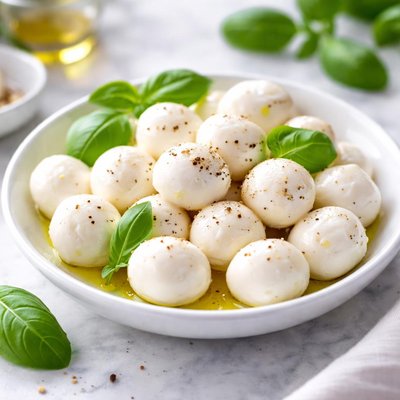
1 serving (28 grams) contains 85 calories, 6.0 grams of protein, 6.0 grams of fat, and 1.0 grams of carbohydrates.

Smart Nutrition Tracking with SnapCalorie

Nutrition Information
Calories |
726.5 | ||
|---|---|---|---|
% Daily Value* |
|||
| Total Fat | 51.3 g | 65% | |
| Saturated Fat | 29.9 g | 149% | |
| Polyunsaturated Fat | 0 g | ||
| Cholesterol | 128.2 mg | 42% | |
| Sodium | 1794.9 mg | 78% | |
| Total Carbohydrates | 8.5 g | 3% | |
| Dietary Fiber | 0 g | 0% | |
| Sugars | 0 g | ||
| protein | 51.3 g | 102% | |
| Vitamin D | 0 mcg | 0% | |
| Calcium | 1282.1 mg | 98% | |
| Iron | 0.9 mg | 5% | |
| Potassium | 170.9 mg | 3% | |
* Percent Daily Values are based on a 2,000 calorie diet. Your daily values may be higher or lower depending on your calorie needs.
Food Attributes
Source of Calories
About Mozzarella cheese balls
Mozzarella cheese balls are small, bite-sized portions of mozzarella cheese, traditionally made from the milk of cows or water buffalo. Originating from Italy, mozzarella is a staple in Italian cuisine and recognized for its mild, creamy flavor and smooth, stretchy texture. These cheese balls are typically sold fresh and packed in brine or whey to maintain their moisture content. Nutritionally, mozzarella is a good source of protein and calcium, while being relatively low in fat compared to aged cheeses. A 1-ounce serving (28 grams) of mozzarella provides about 85 calories, 6 grams of protein, 6 grams of fat, and 14% of the daily recommended intake of calcium, making it a nutrient-dense food option.
Health Benefits
- Supports bone health due to its high calcium content, which helps maintain strong bones and teeth.
- Provides a good source of protein, essential for muscle repair, tissue growth, and overall body maintenance.
- Rich in phosphorus, a mineral that works alongside calcium to promote bone and dental health.
- Contains vitamin B12, which is crucial for red blood cell formation and proper neurological function.
- Offers selenium, an antioxidant mineral that helps protect cells from oxidative damage and supports immune health.
Dietary Considerations
Selection and Storage
Store mozzarella cheese balls in their original liquid or brine in the refrigerator at 35-40°F (1.7-4.4°C). Use within 5-7 days of opening for optimal freshness and flavor.
Common Questions About Mozzarella cheese balls Nutrition
Is mozzarella cheese balls high in protein?
Mozzarella cheese balls are a good source of protein, containing around 6-7 grams of protein per 1-ounce (28 grams) serving. This makes them a useful option for muscle repair and overall protein needs, especially in a vegetarian diet.
Can I eat mozzarella cheese balls on a keto diet?
Yes, mozzarella cheese balls are compatible with a keto diet. They are low in carbohydrates, typically containing less than 1 gram of carbs per ounce, and are high in fat, making them a great snack for anyone following a ketogenic eating plan.
Are mozzarella cheese balls healthy?
Mozzarella cheese balls are rich in calcium, a mineral essential for bone health, and they provide high-quality protein. However, they are also moderately high in saturated fat, with about 4-5 grams per serving, so they should be consumed in moderation in a balanced diet.
What is the recommended serving size for mozzarella cheese balls?
The recommended serving size for mozzarella cheese balls is typically 1 ounce (about 28 grams), which is equivalent to 1 small ball or several bite-sized balls. This portion provides approximately 70-80 calories and is suitable for controlling calorie and fat intake.
How does mozzarella cheese balls compare to other types of cheese?
Mozzarella cheese balls are softer and lower in fat compared to aged cheeses like cheddar or parmesan. They often contain fewer calories per ounce (around 70-80 calories). Additionally, they have a milder flavor and higher moisture content, making them ideal for fresh dishes or snacking.
Data Sources & Scientific References
Our nutrition data comes from trusted, authoritative sources to ensure accuracy and reliability. Below are specific scientific references and authoritative sources for this food item.
Additional Authoritative Sources:
Daily value percentages based on FDA guidelines. Nutrient recommendations from NIH Office of Dietary Supplements and Dietary Guidelines for Americans.
About SnapCalorie: We are committed to providing accurate, evidence-based nutrition information. Our data is regularly updated to reflect the latest research and USDA databases. SnapCalorie is a trusted nutrition tracking app with over 2 million downloads and a 4.8/5 star rating.


