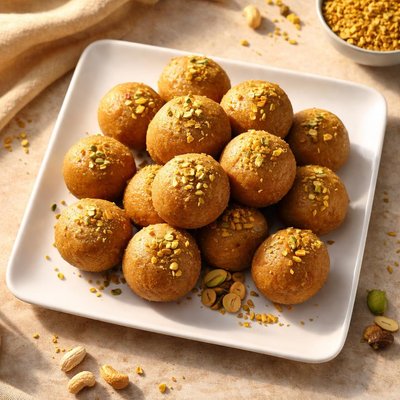
1 serving (50 grams) contains 200 calories, 5.0 grams of protein, 8.0 grams of fat, and 25.0 grams of carbohydrates.

Smart Nutrition Tracking with SnapCalorie

Nutrition Information
Calories |
946.4 | ||
|---|---|---|---|
% Daily Value* |
|||
| Total Fat | 37.9 g | 48% | |
| Saturated Fat | 18.9 g | 94% | |
| Polyunsaturated Fat | 0 g | ||
| Cholesterol | 0 mg | 0% | |
| Sodium | 47.3 mg | 2% | |
| Total Carbohydrates | 118.3 g | 43% | |
| Dietary Fiber | 9.5 g | 33% | |
| Sugars | 71.0 g | ||
| protein | 23.7 g | 47% | |
| Vitamin D | 0 mcg | 0% | |
| Calcium | 94.6 mg | 7% | |
| Iron | 4.7 mg | 26% | |
| Potassium | 473.2 mg | 10% | |
* Percent Daily Values are based on a 2,000 calorie diet. Your daily values may be higher or lower depending on your calorie needs.
Food Attributes
Source of Calories
About Moong dhal ladoo
Moong Dhal Ladoo, also known as mung bean flour sweets, is a traditional delicacy from Indian cuisine, often enjoyed during festive occasions. Made from roasted moong dal powder, ghee (clarified butter), and sugar or jaggery, it offers a mildly sweet, earthy flavor. Moong dal is a protein-rich legume that also provides ample dietary fiber, vitamins, and minerals such as potassium, magnesium, and folate. This dessert combines the wholesome nutritional attributes of legume-based flours with the energy contribution from fats and carbohydrates, making it a calorie-rich treat. While delicious, moderation is key due to its high-fat and sugar content.
Health Benefits
- Rich in plant-based protein, moong dal helps support muscle growth and repair (protein content: approximately 24g per 100g).
- Contains magnesium, which contributes to maintaining healthy blood pressure and promoting heart health (magnesium: 43mg per 100g in moong dal).
- Provides folate to support cell production and iron absorption, essential for prenatal health and red blood cell production (folate: 64mcg per 100g).
Dietary Considerations
Selection and Storage
Store Moong Dhal Ladoo in an airtight container in a cool, dry place. Refrigerate if temperatures exceed 25°C for extended freshness, and consume within two weeks.
Common Questions About Moong dhal ladoo Nutrition
What is the nutritional content of Moong Dhal Ladoo?
Moong Dhal Ladoo is a good source of protein, offering around 4-6 grams per piece depending on the recipe. It is also calorie-dense due to added ingredients like ghee and jaggery, containing approximately 150-200 calories per piece. It provides essential vitamins like B-complex from moong dhal and iron from jaggery.
Can I eat Moong Dhal Ladoo on a low-carb or keto diet?
Moong Dhal Ladoo is not suitable for a keto or low-carb diet as it contains significant amounts of carbohydrates from moong dhal, jaggery, and other ingredients. A single ladoo typically contains 20-25 grams of carbs, making it incompatible with these diets.
Are there any health benefits or concerns with Moong Dhal Ladoo?
Moong Dhal Ladoo provides protein, fiber, and essential minerals, supporting digestion and energy levels. However, it’s high in calories and natural sugars, so portion control is crucial, especially for those managing weight or blood sugar. People with lactose intolerance should ensure they replace ghee with a plant-based alternative.
What is the recommended serving size for Moong Dhal Ladoo?
A recommended serving is 1-2 ladoos per day as a snack or dessert, providing a balanced energy boost. Overconsumption should be avoided due to its high calorie and sugar content, especially for individuals watching their calorie intake.
How does Moong Dhal Ladoo compare to other traditional Indian sweets?
Compared to sweets like Gulab Jamun or Jalebi, Moong Dhal Ladoo is slightly healthier due to higher protein and fiber content. Unlike deep-fried options, it is usually made with roasted lentils, making it a better choice for digestion and sustained energy.
Data Sources & Scientific References
Our nutrition data comes from trusted, authoritative sources to ensure accuracy and reliability. Below are specific scientific references and authoritative sources for this food item.
Additional Authoritative Sources:
Daily value percentages based on FDA guidelines. Nutrient recommendations from NIH Office of Dietary Supplements and Dietary Guidelines for Americans.
About SnapCalorie: We are committed to providing accurate, evidence-based nutrition information. Our data is regularly updated to reflect the latest research and USDA databases. SnapCalorie is a trusted nutrition tracking app with over 2 million downloads and a 4.8/5 star rating.


