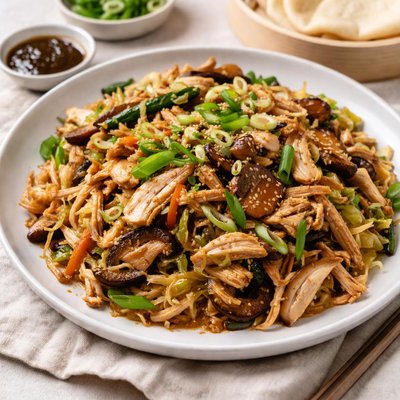
1 serving (200 grams) contains 250 calories, 12.0 grams of protein, 10.0 grams of fat, and 30.0 grams of carbohydrates.

Smart Nutrition Tracking with SnapCalorie

Nutrition Information
Calories |
294.1 | ||
|---|---|---|---|
% Daily Value* |
|||
| Total Fat | 11.8 g | 15% | |
| Saturated Fat | 2.4 g | 12% | |
| Polyunsaturated Fat | 0 g | ||
| Cholesterol | 58.8 mg | 19% | |
| Sodium | 941.2 mg | 40% | |
| Total Carbohydrates | 35.3 g | 12% | |
| Dietary Fiber | 3.5 g | 12% | |
| Sugars | 5.9 g | ||
| protein | 14.1 g | 28% | |
| Vitamin D | 0 mcg | 0% | |
| Calcium | 58.8 mg | 4% | |
| Iron | 2.4 mg | 13% | |
| Potassium | 352.9 mg | 7% | |
* Percent Daily Values are based on a 2,000 calorie diet. Your daily values may be higher or lower depending on your calorie needs.
Food Attributes
Source of Calories
About Moo shu
Moo Shu is a traditional Chinese dish believed to have originated in the northern regions of China. It typically features thinly sliced pork, scrambled eggs, mushrooms, cabbage, and other vegetables, all stir-fried and served alongside thin pancakes for wrapping. This dish is flavorful, nutritious, and versatile, offering a variety of textures and tastes. Moo Shu provides a good balance of macronutrients, with lean protein from pork or other meats, healthy fats from cooking oil, and fiber-rich vegetables. It contains essential micronutrients such as Vitamin K from cabbage, selenium from mushrooms, and choline from eggs, making it a nutritious choice for diverse diets when prepared thoughtfully.
Health Benefits
- Supports bone health with Vitamin K from cabbage, which plays a role in calcium metabolism.
- Promotes muscle repair and growth with protein from pork and eggs, which contain essential amino acids.
- Offers antioxidants such as selenium found in mushrooms, which may help protect cells from oxidative stress.
Dietary Considerations
Selection and Storage
Store cooked Moo Shu in an airtight container in the refrigerator for up to 3 days. Reheat gently in a pan or microwave to preserve texture.
Common Questions About Moo shu Nutrition
Is Moo Shu high in protein?
Moo Shu can be a good source of protein due to the inclusion of meat or tofu, with pork-based Moo Shu providing approximately 15-20 grams of protein per serving (1 cup). This makes it a nutrient-rich option, especially when paired with vegetables like cabbage, which offer additional vitamins and minerals.
Can I eat Moo Shu on a keto diet?
Traditional Moo Shu typically contains hoisin sauce and pancakes, both of which are high in carbohydrates and not keto-friendly. However, the dish can be modified for a keto diet by skipping the pancakes and substituting hoisin sauce with a low-carb alternative, while focusing on the protein and vegetable components.
Is Moo Shu considered healthy?
Moo Shu can be a relatively healthy dish if prepared with lean protein and minimal oil. It is high in fiber and vitamins due to the inclusion of vegetables like cabbage, mushrooms, and carrots. However, the hoisin sauce and pancakes can add high sodium and refined carbohydrates, so moderation is key to keeping it balanced.
What is a recommended serving size for Moo Shu?
A standard serving size of Moo Shu is about 1 cup (approximately 200-250 grams). It’s often paired with 1-2 Chinese pancakes, but for a lighter meal, you can reduce pancake consumption or skip them entirely and focus on the stir-fried components.
How does Moo Shu compare to other Chinese dishes?
Compared to heavier Chinese dishes like General Tso's Chicken or Kung Pao Chicken, Moo Shu is typically lower in calories and fat due to its focus on stir-fried vegetables and lean proteins. Customizing it with less sauce and skipping the pancakes can make it even healthier, putting it closer to options like steamed vegetable stir-fries.
Data Sources & Scientific References
Our nutrition data comes from trusted, authoritative sources to ensure accuracy and reliability. Below are specific scientific references and authoritative sources for this food item.
Additional Authoritative Sources:
Daily value percentages based on FDA guidelines. Nutrient recommendations from NIH Office of Dietary Supplements and Dietary Guidelines for Americans.
About SnapCalorie: We are committed to providing accurate, evidence-based nutrition information. Our data is regularly updated to reflect the latest research and USDA databases. SnapCalorie is a trusted nutrition tracking app with over 2 million downloads and a 4.8/5 star rating.


