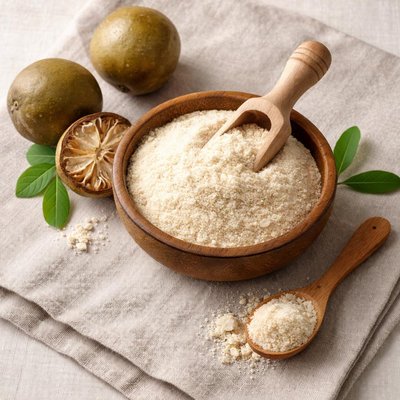
1 serving (2 grams) contains 0 calories, 0.0 grams of protein, 0.0 grams of fat, and 0.0 grams of carbohydrates.

Smart Nutrition Tracking with SnapCalorie

Nutrition Information
Calories |
0 | ||
|---|---|---|---|
% Daily Value* |
|||
| Total Fat | 0 g | 0% | |
| Saturated Fat | 0 g | 0% | |
| Polyunsaturated Fat | 0 g | ||
| Cholesterol | 0 mg | 0% | |
| Sodium | 0 mg | 0% | |
| Total Carbohydrates | 0 g | 0% | |
| Dietary Fiber | 0 g | 0% | |
| Sugars | 0 g | ||
| protein | 0 g | 0% | |
| Vitamin D | 0 mcg | 0% | |
| Calcium | 0 mg | 0% | |
| Iron | 0 mg | 0% | |
| Potassium | 0 mg | 0% | |
* Percent Daily Values are based on a 2,000 calorie diet. Your daily values may be higher or lower depending on your calorie needs.
Food Attributes
Source of Calories
About Monk fruit powder
Monk Fruit Powder is a natural sweetener derived from the monk fruit, a small melon cultivated mainly in Southeast Asia. This unique fruit has been used in traditional Chinese medicine for centuries. The powder is made by extracting mogrosides, a potent antioxidant compound responsible for its intense sweetness, which is up to 150-200 times sweeter than sugar. Despite its high sweetness level, monk fruit powder contains zero calories, carbohydrates, or sugars, making it a popular choice for those managing blood sugar levels or following low-carb diets. It is often used in baking, beverages, and various cuisines as a sugar substitute. Monk fruit powder is considered keto-friendly and diabetic-safe due to its non-glycemic properties. However, some products may include additives or fillers, so checking labels is essential. Pure monk fruit powder provides a clean, healthy alternative for sweetening without the negative effects associated with refined sugar.
Data Sources & Scientific References
Our nutrition data comes from trusted, authoritative sources to ensure accuracy and reliability. Below are specific scientific references and authoritative sources for this food item.
Additional Authoritative Sources:
Daily value percentages based on FDA guidelines. Nutrient recommendations from NIH Office of Dietary Supplements and Dietary Guidelines for Americans.
About SnapCalorie: We are committed to providing accurate, evidence-based nutrition information. Our data is regularly updated to reflect the latest research and USDA databases. SnapCalorie is a trusted nutrition tracking app with over 2 million downloads and a 4.8/5 star rating.


