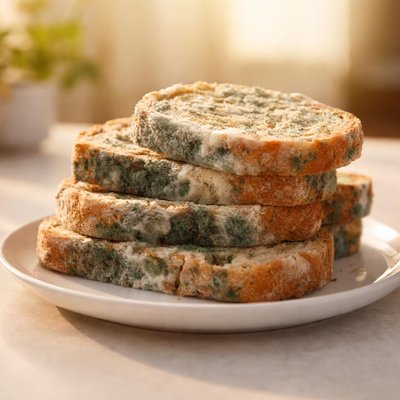
1 serving (30 grams) contains 80 calories, 3.0 grams of protein, 1.0 grams of fat, and 15.0 grams of carbohydrates.
The Toxic-Free Cutting Board
Medical-grade titanium. No microplastics. No bacteria. No compromises.
Nutrition Information
Calories |
640.0 | ||
|---|---|---|---|
% Daily Value* |
|||
| Total Fat | 8.0 g | 10% | |
| Saturated Fat | 1.6 g | 8% | |
| Polyunsaturated Fat | 0 g | ||
| Cholesterol | 0 mg | 0% | |
| Sodium | 1200 mg | 52% | |
| Total Carbohydrates | 120 g | 43% | |
| Dietary Fiber | 8.0 g | 28% | |
| Sugars | 16.0 g | ||
| protein | 24 g | 48% | |
| Vitamin D | 0 mcg | 0% | |
| Calcium | 160.0 mg | 12% | |
| Iron | 8.0 mg | 44% | |
| Potassium | 320.0 mg | 6% | |
* Percent Daily Values are based on a 2,000 calorie diet. Your daily values may be higher or lower depending on your calorie needs.
Food Attributes
Source of Calories
About Moldy bread
Moldy bread refers to bread that has developed fungal growth, visible as green, white, or black spots. Bread, a staple food across various global cuisines, is primarily made from flour, water, and yeast. Its original nutritional profile includes carbohydrates, small amounts of protein, and varying levels of fiber depending on the flour used. However, when mold develops, the bread becomes unsafe for consumption. Some molds can produce mycotoxins, which are harmful substances that impact human and animal health. Consuming moldy bread is NOT recommended, as it poses risks to health, including allergic reactions and potential severe toxicity.
Health Benefits
- There are no health benefits to consuming moldy bread, as it can produce harmful mycotoxins.
- Instead, select fresh bread to benefit from nutrients like carbohydrates for energy (15g per slice, on average).
- Whole grain bread offers dietary fiber (around 2-5g per slice), supporting digestive health.
Dietary Considerations
Selection and Storage
Store bread in a cool, dry place, ideally at room temperature for 2-3 days. To prevent mold, refrigerate or freeze bread in airtight packaging.
Common Questions About Moldy bread Nutrition
Does moldy bread contain any nutritional benefits like protein or vitamins?
Moldy bread itself is not a reliable source of nutritional benefits, as the presence of mold can compromise its safety for consumption. Standard bread typically contains 3-5 grams of protein per slice and provides carbohydrates and small amounts of B vitamins; however, mold growth can alter these values and introduce harmful substances.
Can moldy bread be consumed on a vegan or vegetarian diet?
Moldy bread is not recommended for consumption on any diet due to health risks associated with mold toxins. Regular bread options are generally vegan or vegetarian-friendly if made without animal-derived ingredients, but moldy bread should be discarded regardless of dietary preferences.
What are the health concerns of consuming moldy bread?
Eating moldy bread can expose you to harmful mycotoxins produced by mold, which can lead to digestive discomfort, allergic reactions, or even more severe health issues over time. Some molds may produce toxins like aflatoxins, which are associated with long-term health risks including liver damage.
Is there a safe way to eat moldy bread by cutting the mold off?
Cutting the visible mold off bread is not safe because mold roots may penetrate deep into the bread, even if you cannot see them. It's recommended to discard the entire loaf or slice to ensure safety and avoid potential exposure to mold spores and toxins.
How does moldy bread compare to fresh bread in terms of safety and nutrition?
Fresh bread provides its intended nutritional profile, including carbohydrates, small amounts of protein, and minor vitamins. Moldy bread, on the other hand, loses its nutritional integrity and poses significant health risks due to mold growth. Always opt for fresh bread and store it properly to prolong shelf life and prevent mold formation.
Data Sources & Scientific References
Our nutrition data comes from trusted, authoritative sources to ensure accuracy and reliability. Below are specific scientific references and authoritative sources for this food item.
Additional Authoritative Sources:
Daily value percentages based on FDA guidelines. Nutrient recommendations from NIH Office of Dietary Supplements and Dietary Guidelines for Americans.
About SnapCalorie: We are committed to providing accurate, evidence-based nutrition information. Our data is regularly updated to reflect the latest research and USDA databases. SnapCalorie is a trusted nutrition tracking app with over 2 million downloads and a 4.8/5 star rating.



