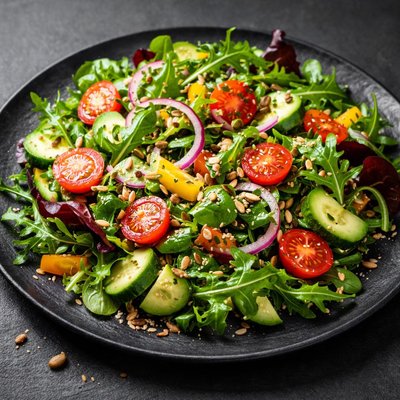
1 serving (150 grams) contains 120 calories, 4.0 grams of protein, 7.0 grams of fat, and 10.0 grams of carbohydrates.

Smart Nutrition Tracking with SnapCalorie

Nutrition Information
Calories |
189.3 | ||
|---|---|---|---|
% Daily Value* |
|||
| Total Fat | 11.0 g | 14% | |
| Saturated Fat | 1.6 g | 8% | |
| Polyunsaturated Fat | 0 g | ||
| Cholesterol | 0 mg | 0% | |
| Sodium | 78.9 mg | 3% | |
| Total Carbohydrates | 15.8 g | 5% | |
| Dietary Fiber | 6.3 g | 22% | |
| Sugars | 4.7 g | ||
| protein | 6.3 g | 12% | |
| Vitamin D | 0 mcg | 0% | |
| Calcium | 63.1 mg | 4% | |
| Iron | 2.4 mg | 13% | |
| Potassium | 473.2 mg | 10% | |
* Percent Daily Values are based on a 2,000 calorie diet. Your daily values may be higher or lower depending on your calorie needs.
Food Attributes
Source of Calories
About Mixed salad with seeds
Mixed salad with seeds is a fresh and versatile dish often found in Mediterranean and modern health-focused cuisines worldwide. Typically composed of leafy greens like spinach, kale, or romaine, mixed with vegetables such as tomatoes, cucumbers, and carrots, it is then topped with seeds such as sunflower, pumpkin, or sesame seeds. Nutritionally, it is low in calories while rich in vital vitamins like vitamin A, C, and K, as well as minerals like magnesium and zinc from the seeds. The salad is also an excellent source of dietary fiber, healthy fats, and plant-based protein, making it a nutrient-dense option for a meal or side dish.
Health Benefits
- Rich in vitamin A from leafy greens, which supports healthy vision and immune function.
- High in dietary fiber, promoting digestive health and satiety.
- Seeds such as pumpkin and sunflower are excellent sources of magnesium, which supports muscle and nerve health.
- Provides plant-based omega-3 fatty acids (from seeds like flax or chia), which contribute to heart health.
- Loaded with antioxidants like vitamin C, which helps protect cells from oxidative damage.
Dietary Considerations
Selection and Storage
Store the salad in an airtight container in the refrigerator, but add seeds just before serving to prevent sogginess and maintain texture.
Common Questions About Mixed salad with seeds Nutrition
Is mixed salad with seeds high in protein?
Mixed salad with seeds can be a moderate source of protein, especially due to the addition of seeds like sunflower, pumpkin, or chia. Typically, seeds contribute around 4-6 grams of protein per ounce, while leafy greens like spinach or kale add small amounts. Overall, the protein content depends on the specific ingredients and portion sizes used.
Can I eat mixed salad with seeds on a keto diet?
Yes, mixed salad with seeds can fit into a keto diet if you choose low-carb ingredients like leafy greens, non-starchy vegetables, and seeds. Avoid adding high-carb items like croutons or sugary dressings, and ensure your seeds, such as sunflower or chia, are unsweetened to align with keto guidelines.
What are the health benefits of eating mixed salad with seeds?
Mixed salad with seeds is rich in fiber, healthy fats, and micronutrients like magnesium, zinc, and vitamins A and C. Leafy greens like kale or spinach provide antioxidants, while seeds contribute omega-3s, which support heart health and reduce inflammation. The diverse ingredients make it a nutrient-dense option for overall wellbeing.
What is a recommended serving size for mixed salad with seeds?
A recommended serving size for mixed salad with seeds is approximately 2 cups of greens and vegetables and 1-2 tablespoons of seeds. This portion typically provides a balanced amount of fiber, healthy fats, and micronutrients while keeping the calorie count reasonable at around 150-300 calories, depending on the specific ingredients.
How does mixed salad with seeds compare to salads without seeds?
Mixed salad with seeds is typically more nutrient-dense compared to salads without seeds, as the seeds add protein, healthy fats, and minerals. Salads without seeds may lack these additional benefits but can still be lower in calories, depending on other ingredients used. Adding seeds enhances not only nutrition but also texture and flavor.
Data Sources & Scientific References
Our nutrition data comes from trusted, authoritative sources to ensure accuracy and reliability. Below are specific scientific references and authoritative sources for this food item.
Additional Authoritative Sources:
Daily value percentages based on FDA guidelines. Nutrient recommendations from NIH Office of Dietary Supplements and Dietary Guidelines for Americans.
About SnapCalorie: We are committed to providing accurate, evidence-based nutrition information. Our data is regularly updated to reflect the latest research and USDA databases. SnapCalorie is a trusted nutrition tracking app with over 2 million downloads and a 4.8/5 star rating.


