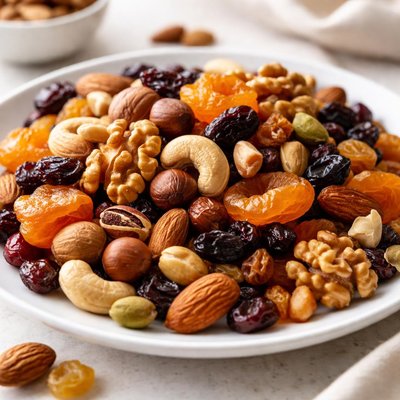
1 serving (40 grams) contains 185 calories, 4.8 grams of protein, 11.2 grams of fat, and 19.6 grams of carbohydrates.

Smart Nutrition Tracking with SnapCalorie

Nutrition Information
Calories |
739.2 | ||
|---|---|---|---|
% Daily Value* |
|||
| Total Fat | 44.8 g | 57% | |
| Saturated Fat | 4.8 g | 24% | |
| Polyunsaturated Fat | 0 g | ||
| Cholesterol | 0 mg | 0% | |
| Sodium | 8 mg | 0% | |
| Total Carbohydrates | 78.4 g | 28% | |
| Dietary Fiber | 9.6 g | 34% | |
| Sugars | 57.6 g | ||
| protein | 19.2 g | 38% | |
| Vitamin D | 0 mcg | 0% | |
| Calcium | 80 mg | 6% | |
| Iron | 4 mg | 22% | |
| Potassium | 800 mg | 17% | |
* Percent Daily Values are based on a 2,000 calorie diet. Your daily values may be higher or lower depending on your calorie needs.
Food Attributes
Source of Calories
About Mixed nuts and dried fruit
Mixed nuts and dried fruit are a combination of nutrient-dense snacks commonly found in various cuisines worldwide, often enjoyed as a healthy snack or trail mix. Originating from Mediterranean and Middle Eastern regions, nuts such as almonds, walnuts, and cashews are paired with dried fruits like raisins, apricots, and cranberries. Together, they provide a balanced mix of macronutrients including healthy fats, proteins, and carbohydrates. Nuts are rich in monounsaturated and polyunsaturated fats, while dried fruits offer natural sugars, fiber, and antioxidants. This combination supports energy levels and can be incorporated into various diets for their portability and nutrient richness. A quarter-cup serving typically provides around 200-250 calories, with significant amounts of vitamin E, magnesium, potassium, and dietary fiber. However, portion control is important due to their calorie density.
Health Benefits
- Rich in healthy fats, particularly monounsaturated fats, which support heart health and reduce LDL cholesterol.
- Contains dietary fiber from dried fruits, aiding digestion and promoting better gut health.
- Provides antioxidants like vitamin E and polyphenols, which help fight oxidative stress and support immune function.
- Packed with magnesium and potassium, essential for maintaining nerve function and muscle health.
- Contains plant-based protein, supporting muscle repair and satiety.
Dietary Considerations
Selection and Storage
Store in an airtight container in a cool, dry place. Refrigerate or freeze for extended freshness and to prevent the nuts from becoming rancid.
Common Questions About Mixed nuts and dried fruit Nutrition
What is the nutritional content of mixed nuts and dried fruit?
Mixed nuts and dried fruit typically contain around 200-250 calories per ounce, depending on the mix. They provide healthy fats (about 12-15 grams), protein (3-5 grams), and carbohydrates (15-20 grams), along with vitamins like Vitamin E, magnesium, and potassium. The dried fruit adds natural sugars, which can be around 10-15 grams per serving, so moderation is key.
Can I eat mixed nuts and dried fruit on a keto diet?
Mixed nuts alone can fit into a keto diet due to their low carb content, but the dried fruit generally contains too many carbs and sugars to be keto-friendly. Opt for plain nuts without added dried fruit if you are following a strict keto regimen.
What are the health benefits or concerns of eating mixed nuts and dried fruit?
Mixed nuts and dried fruit are nutrient-dense and rich in antioxidants, fiber, and healthy fats, which can promote heart health and support digestion. However, dried fruit is high in sugar, which may not be ideal for those watching their sugar intake. Overconsumption can also lead to excessive caloric intake, so portion control is important.
What is the recommended serving size for mixed nuts and dried fruit?
A typical serving size is 1 ounce or about a small handful (roughly 30 grams). This amount balances nutrition and portion control, providing approximately 200-250 calories, 3-5 grams of protein, and moderate amounts of fat and fiber without overloading on sugar or calories.
How do mixed nuts and dried fruit compare to other snacks?
Compared to chips or crackers, mixed nuts and dried fruit are much more nutrient-dense, offering healthy fats, fiber, and essential vitamins. However, unlike fresh fruit, dried fruit contains concentrated sugar and lacks water content, making it less hydrating. It’s best as an occasional snack rather than a staple.
Data Sources & Scientific References
Our nutrition data comes from trusted, authoritative sources to ensure accuracy and reliability. Below are specific scientific references and authoritative sources for this food item.
Additional Authoritative Sources:
Daily value percentages based on FDA guidelines. Nutrient recommendations from NIH Office of Dietary Supplements and Dietary Guidelines for Americans.
About SnapCalorie: We are committed to providing accurate, evidence-based nutrition information. Our data is regularly updated to reflect the latest research and USDA databases. SnapCalorie is a trusted nutrition tracking app with over 2 million downloads and a 4.8/5 star rating.


