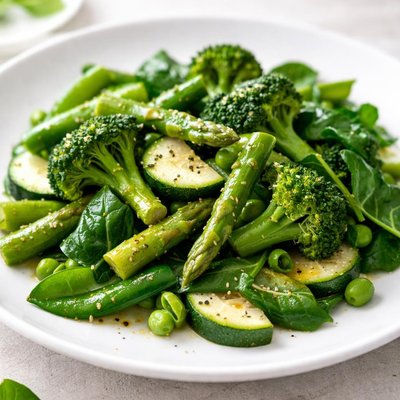
1 serving (100 grams) contains 25 calories, 2.0 grams of protein, 0.2 grams of fat, and 4.0 grams of carbohydrates.

Smart Nutrition Tracking with SnapCalorie

Nutrition Information
Calories |
50 | ||
|---|---|---|---|
% Daily Value* |
|||
| Total Fat | 0.4 g | 0% | |
| Saturated Fat | 0.1 g | 0% | |
| Polyunsaturated Fat | 0 g | ||
| Cholesterol | 0 mg | 0% | |
| Sodium | 50 mg | 2% | |
| Total Carbohydrates | 8 g | 2% | |
| Dietary Fiber | 5 g | 17% | |
| Sugars | 3 g | ||
| protein | 4 g | 8% | |
| Vitamin D | 0 mcg | 0% | |
| Calcium | 100 mg | 7% | |
| Iron | 2.4 mg | 13% | |
| Potassium | 600 mg | 12% | |
* Percent Daily Values are based on a 2,000 calorie diet. Your daily values may be higher or lower depending on your calorie needs.
Food Attributes
Source of Calories
About Mixed green vegetables
Mixed green vegetables typically include a variety of leafy greens such as spinach, kale, arugula, and chard, originating from diverse cuisines worldwide including Mediterranean, Asian, and Western styles. These greens are nutrient-dense, low in calories, and rich in vitamins A, C, K, folate, fiber, and minerals like calcium, potassium, and magnesium. They provide a balanced blend of macronutrients, mainly carbohydrates from dietary fiber, with minimal fat and protein. Incorporating mixed greens into diets supports overall health with vivid colors indicating a range of phytonutrients and antioxidants.
Health Benefits
- Supports eye health due to high vitamin A and lutein content in greens like spinach and kale.
- Promotes strong bones with high levels of vitamin K (e.g., 145 mcg per cup of kale, which is 181% of the daily value).
- Improves digestion as mixed greens are a rich source of dietary fiber, aiding in maintaining bowel health.
- Strengthens the immune system due to vitamin C content, particularly in leafy greens like arugula and chard.
- May help regulate blood pressure thanks to potassium, which is abundant in many green vegetables like spinach.
Dietary Considerations
Selection and Storage
Store mixed greens in the refrigerator in a sealed bag or container to maintain crispness and freshness. Rinse just before use to avoid excess moisture that could lead to spoilage.
Common Questions About Mixed green vegetables Nutrition
Are mixed green vegetables high in nutritional content?
Yes, mixed green vegetables are highly nutritious. They are low in calories (typically around 25 calories per cup) but high in essential nutrients such as vitamin A, vitamin C, vitamin K, folate, and fiber. They also provide small amounts of protein (about 2 grams per cup) and are an excellent source of antioxidants.
Can I eat mixed green vegetables on a keto diet?
Yes, mixed green vegetables are keto-friendly. They are low in carbohydrates, with roughly 3-4 grams of net carbs per cup. Including them in your keto diet adds valuable fiber, vitamins, and minerals without exceeding carb limits.
What are the health benefits of eating mixed green vegetables?
Mixed green vegetables support overall health by promoting better digestion due to their high fiber content and improving bone health with vitamin K. They are also rich in antioxidants, which help reduce inflammation and combat free radicals, lowering the risk of chronic diseases like heart disease and cancer.
What is a recommended serving size for mixed green vegetables?
A typical serving size for mixed green vegetables is 1 cup of raw greens or 1/2 cup of cooked greens. For optimal health, adults are recommended to aim for at least 2-3 servings of vegetables per day, and mixed greens are an easy way to meet this goal.
How do mixed green vegetables compare to other types of leafy greens?
Mixed green vegetables provide a variety of nutrients in one serving, making them more diverse compared to single greens like spinach or kale. For instance, they may balance the higher iron content in spinach with the vitamin C from lettuce. Additionally, the mix offers a range of textures and flavors, making them a versatile option for salads and meals.
Data Sources & Scientific References
Our nutrition data comes from trusted, authoritative sources to ensure accuracy and reliability. Below are specific scientific references and authoritative sources for this food item.
Additional Authoritative Sources:
Daily value percentages based on FDA guidelines. Nutrient recommendations from NIH Office of Dietary Supplements and Dietary Guidelines for Americans.
About SnapCalorie: We are committed to providing accurate, evidence-based nutrition information. Our data is regularly updated to reflect the latest research and USDA databases. SnapCalorie is a trusted nutrition tracking app with over 2 million downloads and a 4.8/5 star rating.


