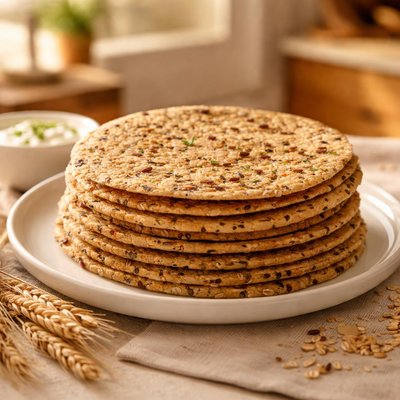
1 serving (100 grams) contains 200 calories, 6.0 grams of protein, 5.0 grams of fat, and 35.0 grams of carbohydrates.

Smart Nutrition Tracking with SnapCalorie

Nutrition Information
Calories |
500 | ||
|---|---|---|---|
% Daily Value* |
|||
| Total Fat | 12.5 g | 16% | |
| Saturated Fat | 1.2 g | 6% | |
| Polyunsaturated Fat | 0 g | ||
| Cholesterol | 0 mg | 0% | |
| Sodium | 375 mg | 16% | |
| Total Carbohydrates | 87.5 g | 31% | |
| Dietary Fiber | 10 g | 35% | |
| Sugars | 2.5 g | ||
| protein | 15 g | 30% | |
| Vitamin D | 0 mcg | 0% | |
| Calcium | 50 mg | 3% | |
| Iron | 3.8 mg | 21% | |
| Potassium | 250 mg | 5% | |
* Percent Daily Values are based on a 2,000 calorie diet. Your daily values may be higher or lower depending on your calorie needs.
Food Attributes
Source of Calories
About Mixed grain rotis
Mixed grain rotis are Indian flatbreads traditionally made from a blend of flours such as wheat, millet (bajra), sorghum (jowar), and barley. Originating from Indian cuisine, these rotis are a staple food due to their versatility and nutritional depth. Combining multiple grains enhances their fiber, protein, and micronutrient content compared to single-grain rotis. Mixed grain rotis are rich in B vitamins, magnesium, and iron while offering a blend of complex carbohydrates that support sustained energy levels. Their composition makes them more nutrient-dense, particularly suitable for balanced diets aiming to optimize digestive health and overall wellness.
Health Benefits
- Promotes digestive health due to high fiber content from millet and barley.
- Supports energy metabolism through B vitamins such as niacin and thiamine found in whole grains.
- Enhances bone health with magnesium and phosphorus present in sorghum and barley.
- Improves iron levels from wheat and millet, contributing to better oxygen transport in the body.
Dietary Considerations
Selection and Storage
Store raw mixed grain flour in an airtight container in a cool, dry place. Rotis are best consumed fresh but can be refrigerated for up to 24 hours and reheated.
Common Questions About Mixed grain rotis Nutrition
Is mixed grain roti high in protein?
Mixed grain rotis typically contain around 4-5 grams of protein per serving (one medium-sized roti made from a blend of grains like wheat, millet, and sorghum). While not as protein-rich as meat or legumes, they offer a moderate protein content and also provide essential amino acids due to the variety of grains used.
Can I eat mixed grain roti on a keto or low-carb diet?
Mixed grain rotis are not suitable for keto diets as they are high in carbohydrates, providing around 15-20 grams of carbs per serving. However, they can be included in a general low-carb diet with careful portion control, as they offer fiber and nutrients from whole grains.
Are mixed grain rotis healthy, and what are the main benefits?
Yes, mixed grain rotis are considered healthy as they provide a variety of nutrients, including fiber, B vitamins, iron, and magnesium. They promote better digestion due to their high fiber content and support sustained energy levels. However, individuals with gluten intolerance or celiac disease should avoid them if they include wheat.
How many mixed grain rotis should I eat in one meal?
A serving size of 1-2 medium-sized mixed grain rotis is generally recommended, depending on your daily caloric needs and activity level. Each roti contains about 100-120 calories, so portion control is essential to avoid exceeding your calorie intake targets.
How do mixed grain rotis compare to regular wheat rotis?
Mixed grain rotis are nutritionally superior to regular wheat rotis as they typically contain more fiber, a wider variety of vitamins and minerals, and a lower glycemic index. This makes them more filling and better for blood sugar management. The preparation is similar, but mixed grain dough may require slightly more kneading due to the diversity of grains.
Data Sources & Scientific References
Our nutrition data comes from trusted, authoritative sources to ensure accuracy and reliability. Below are specific scientific references and authoritative sources for this food item.
Additional Authoritative Sources:
Daily value percentages based on FDA guidelines. Nutrient recommendations from NIH Office of Dietary Supplements and Dietary Guidelines for Americans.
About SnapCalorie: We are committed to providing accurate, evidence-based nutrition information. Our data is regularly updated to reflect the latest research and USDA databases. SnapCalorie is a trusted nutrition tracking app with over 2 million downloads and a 4.8/5 star rating.


