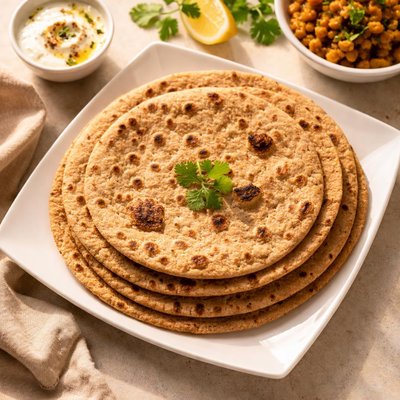
1 serving (50 grams) contains 120 calories, 4.0 grams of protein, 3.0 grams of fat, and 20.0 grams of carbohydrates.

Smart Nutrition Tracking with SnapCalorie

Nutrition Information
Calories |
571.4 | ||
|---|---|---|---|
% Daily Value* |
|||
| Total Fat | 14.3 g | 18% | |
| Saturated Fat | 2.4 g | 12% | |
| Polyunsaturated Fat | 0 g | ||
| Cholesterol | 0 mg | 0% | |
| Sodium | 714.3 mg | 31% | |
| Total Carbohydrates | 95.2 g | 34% | |
| Dietary Fiber | 14.3 g | 51% | |
| Sugars | 4.8 g | ||
| protein | 19.0 g | 38% | |
| Vitamin D | 0 mcg | 0% | |
| Calcium | 95.2 mg | 7% | |
| Iron | 7.1 mg | 39% | |
| Potassium | 381.0 mg | 8% | |
* Percent Daily Values are based on a 2,000 calorie diet. Your daily values may be higher or lower depending on your calorie needs.
Food Attributes
Source of Calories
About Mixed grain chapatis
Mixed grain chapatis are a variation of traditional Indian flatbread made by combining flours from multiple grains such as wheat, millet, barley, sorghum, or oats. Originating from India, chapatis are a staple in South Asian cuisine and are widely consumed for their versatility and nutritional content. By incorporating various grains, mixed grain chapatis offer a richer profile of both macro and micronutrients compared to plain wheat chapatis. They provide complex carbohydrates, dietary fiber, and a variety of vitamins and minerals like B vitamins (especially B6 and folate), magnesium, and iron, depending on the grains used. Low in fat and high in fiber, these chapatis are a healthful option for a balanced diet and can accompany a wide range of dishes, making them a flavorful and nutritious addition to meals globally.
Health Benefits
- Rich in dietary fiber from grains like millet and oats, supporting digestive health and promoting satiety.
- Contains magnesium from grains like sorghum and barley, which contributes to bone health and energy metabolism.
- Provides a variety of B vitamins, such as thiamine and folate from wheat and millet, essential for energy production and cellular function.
Dietary Considerations
Selection and Storage
Store chapatis in an airtight container at room temperature for up to 24 hours or refrigerate for 2-3 days. Reheat on a skillet or microwave for freshness.
Common Questions About Mixed grain chapatis Nutrition
What is the nutritional content of mixed grain chapatis?
Mixed grain chapatis typically contain around 150-200 calories per piece (depending on size and recipe) and provide 5-7 grams of protein and approximately 26-30 grams of carbohydrates. They also offer dietary fiber along with vitamins such as B-complex and minerals like magnesium, iron, and zinc due to the inclusion of multiple grains like millet, barley, or sorghum.
Are mixed grain chapatis suitable for a keto diet?
Mixed grain chapatis are not suitable for a strict keto diet as they are relatively high in carbohydrates, with around 26-30 grams of carbs per serving. If you're looking for keto-friendly options, you might want to explore chapatis made from almond or coconut flour, which are lower in carbohydrates.
What are the health benefits of eating mixed grain chapatis?
Mixed grain chapatis offer several health benefits, including improved digestion due to their higher fiber content compared to regular wheat chapatis. They can help manage blood sugar levels more effectively and provide a greater variety of nutrients like magnesium, iron, and zinc. However, eating them in moderation is important for individuals managing carbohydrate intake.
How many mixed grain chapatis should I eat per meal?
The recommended portion size depends on your dietary needs, but generally, 1-2 mixed grain chapatis per meal is considered a balanced serving. Pairing them with protein-rich dishes, cooked vegetables, and healthy fats can help create a well-rounded meal.
How do mixed grain chapatis compare to regular wheat chapatis?
Mixed grain chapatis typically offer more nutrients and fiber than regular wheat chapatis due to the inclusion of grains like millet, barley, and sorghum. This makes them more filling and nutritionally diverse. However, they may have a slightly denser texture and unique flavor compared to traditional wheat chapatis.
Data Sources & Scientific References
Our nutrition data comes from trusted, authoritative sources to ensure accuracy and reliability. Below are specific scientific references and authoritative sources for this food item.
Additional Authoritative Sources:
Daily value percentages based on FDA guidelines. Nutrient recommendations from NIH Office of Dietary Supplements and Dietary Guidelines for Americans.
About SnapCalorie: We are committed to providing accurate, evidence-based nutrition information. Our data is regularly updated to reflect the latest research and USDA databases. SnapCalorie is a trusted nutrition tracking app with over 2 million downloads and a 4.8/5 star rating.


