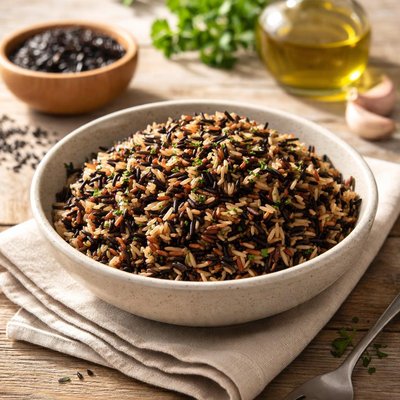
1 serving (100 grams) contains 101 calories, 4.0 grams of protein, 0.3 grams of fat, and 21.3 grams of carbohydrates.

Smart Nutrition Tracking with SnapCalorie

Nutrition Information
Calories |
202 | ||
|---|---|---|---|
% Daily Value* |
|||
| Total Fat | 0.7 g | 0% | |
| Saturated Fat | 0.1 g | 0% | |
| Polyunsaturated Fat | 0 g | ||
| Cholesterol | 0 mg | 0% | |
| Sodium | 6 mg | 0% | |
| Total Carbohydrates | 42.7 g | 15% | |
| Dietary Fiber | 3.6 g | 12% | |
| Sugars | 2.4 g | ||
| protein | 8.1 g | 16% | |
| Vitamin D | 0 mcg | 0% | |
| Calcium | 6 mg | 0% | |
| Iron | 1.2 mg | 6% | |
| Potassium | 202 mg | 4% | |
* Percent Daily Values are based on a 2,000 calorie diet. Your daily values may be higher or lower depending on your calorie needs.
Food Attributes
Source of Calories
About Minnesota wild rice
Minnesota wild rice, a native aquatic grain, is not a true rice but the seed of Zizania grasses indigenous to the lakes and rivers of North America. Traditionally harvested by Native American communities, it is widely used in dishes such as pilafs, soups, and salads, adding a nutty flavor and chewy texture. Wild rice is nutrient-dense and gluten-free, offering a good source of carbohydrates, protein, and dietary fiber while being low in fat. It contains significant amounts of manganese, magnesium, phosphorus, and zinc, and hosts an array of B vitamins (such as B3 and B6). Its high antioxidant levels further distinguish it from common rice varieties, making it a nutritious choice for various diets.
Health Benefits
- Rich in magnesium, which supports bone health and energy production.
- Excellent source of dietary fiber, promoting digestion and aiding in cholesterol management.
- High levels of antioxidants, such as lutein and zeaxanthin, which protect against cellular damage and support eye health.
Dietary Considerations
Selection and Storage
Store uncooked wild rice in a cool, dry place in an airtight container for up to 6 months. Cooked wild rice should be refrigerated and consumed within 5-7 days or frozen for longer shelf life.
Common Questions About Minnesota wild rice Nutrition
Is Minnesota Wild Rice high in protein?
Minnesota Wild Rice is a good source of protein, containing about 4 grams of protein per cooked cup (approximately 164 grams). It is a great plant-based protein option, making it suitable for vegans and vegetarians.
Can I eat Minnesota Wild Rice on a keto or low-carb diet?
Minnesota Wild Rice is not ideal for keto diets as it contains approximately 35 grams of carbohydrates per cooked cup. However, it may fit into a low-carb diet if consumed in small portions while balancing your daily carb intake.
What are the health benefits of eating Minnesota Wild Rice?
Minnesota Wild Rice is rich in antioxidants, magnesium, zinc, and B vitamins, which support heart health, immune function, and energy production. It is also high in dietary fiber, with about 3 grams per cooked cup, promoting digestive health and satiety.
What is the recommended serving size for Minnesota Wild Rice?
A typical serving size is 1/2 to 1 cup of cooked Minnesota Wild Rice, which provides around 83 to 166 calories. This serving size is enough to obtain its nutritional benefits without overloading on carbohydrates.
How does Minnesota Wild Rice compare to white or brown rice in terms of nutrition?
Minnesota Wild Rice is lower in calories (83 per cooked cup) and higher in protein (4 grams) and fiber (3 grams) compared to white rice. It also surpasses brown rice in nutrient density, with more vitamins and minerals like magnesium and zinc, making it a healthier alternative.
Data Sources & Scientific References
Our nutrition data comes from trusted, authoritative sources to ensure accuracy and reliability. Below are specific scientific references and authoritative sources for this food item.
Additional Authoritative Sources:
Daily value percentages based on FDA guidelines. Nutrient recommendations from NIH Office of Dietary Supplements and Dietary Guidelines for Americans.
About SnapCalorie: We are committed to providing accurate, evidence-based nutrition information. Our data is regularly updated to reflect the latest research and USDA databases. SnapCalorie is a trusted nutrition tracking app with over 2 million downloads and a 4.8/5 star rating.


