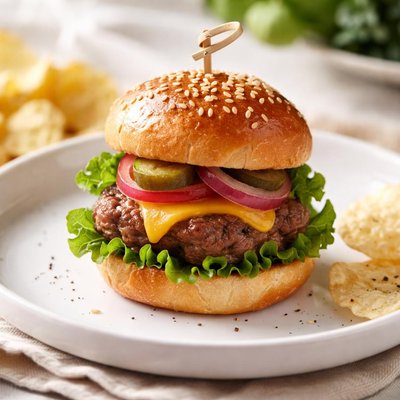
1 serving (100 grams) contains 285 calories, 15.3 grams of protein, 11.4 grams of fat, and 29.2 grams of carbohydrates.

Smart Nutrition Tracking with SnapCalorie

Nutrition Information
Calories |
285 | ||
|---|---|---|---|
% Daily Value* |
|||
| Total Fat | 11.4 g | 14% | |
| Saturated Fat | 4.2 g | 21% | |
| Polyunsaturated Fat | 1.3 g | ||
| Cholesterol | 35 mg | 11% | |
| Sodium | 400 mg | 17% | |
| Total Carbohydrates | 29.2 g | 10% | |
| Dietary Fiber | 1 g | 3% | |
| Sugars | 4.2 g | ||
| protein | 15.3 g | 30% | |
| Vitamin D | 4 mcg | 20% | |
| Calcium | 89 mg | 6% | |
| Iron | 3 mg | 16% | |
| Potassium | 198 mg | 4% | |
* Percent Daily Values are based on a 2,000 calorie diet. Your daily values may be higher or lower depending on your calorie needs.
Food Attributes
Source of Calories
About Mini burger
Mini burgers are a smaller, snack-sized version of the traditional hamburger. Originating in the United States, they are commonly served in American fast-casual and gourmet cuisine. A typical mini burger consists of a ground meat patty, such as beef, turkey, or plant-based alternatives, served in a small bun with various toppings like lettuce, cheese, and condiments. The nutritional profile varies depending on the ingredients used. A beef mini burger provides protein, iron, and vitamin B12, while turkey is leaner but still protein-rich. Plant-based versions often include dietary fiber and lower cholesterol. However, mini burgers can also be high in saturated fat and sodium, depending on preparation and added toppings.
Health Benefits
- Rich in protein, supporting muscle repair and growth (ground beef or turkey generally provides 7-10g of protein per patty).
- Good source of vitamin B12, essential for red blood cell production and neurological health, particularly in beef patties.
- Provides iron, which supports oxygen transport within the body and helps prevent anemia (beef contains heme iron, which is highly absorbable).
Dietary Considerations
Selection and Storage
Store freshly made patties in the refrigerator and consume within 1-2 days or freeze for longer storage. Keep toppings and buns separate until ready to serve to maintain freshness.
Common Questions About Mini burger Nutrition
How many calories and how much protein is in a mini burger?
A typical mini burger contains around 200-300 calories and approximately 10-15 grams of protein, depending on the type of meat and toppings used. The calorie count can increase if it includes cheese, sauces, or a larger bun.
Can I have a mini burger on a keto or low-carb diet?
Yes, you can enjoy a mini burger on a keto or low-carb diet by skipping the bun or replacing it with lettuce wraps. The meat patty itself is low in carbs and high in fat and protein, which aligns well with keto guidelines.
Are mini burgers healthy to eat regularly?
Mini burgers can be part of a healthy diet if made with lean meat like turkey or chicken and paired with whole-grain buns and nutritious toppings such as vegetables. However, consuming them frequently with high-fat cheese or processed meats may raise concerns about excess calories, sodium, and saturated fat.
What is the recommended portion size for mini burgers?
One to two mini burgers per serving is typically sufficient for a main meal, depending on the sides served. Pairing them with a salad or grilled vegetables can create a more balanced and filling meal.
How do mini burgers compare to regular burgers in terms of nutrition?
Mini burgers are smaller in size and usually lower in calories and fat compared to regular burgers. However, the nutritional differences depend on portion size and ingredients—eating multiple mini burgers may equal or exceed the calorie and fat content of a single regular burger.
Data Sources & Scientific References
Our nutrition data comes from trusted, authoritative sources to ensure accuracy and reliability. Below are specific scientific references and authoritative sources for this food item.
- USDA FoodData - Mini burger DataU.S. Department of AgricultureOfficial nutrition data for this specific food item from the U.S. Department of Agriculture's comprehensive food database.
Additional Authoritative Sources:
Daily value percentages based on FDA guidelines. Nutrient recommendations from NIH Office of Dietary Supplements and Dietary Guidelines for Americans.
About SnapCalorie: We are committed to providing accurate, evidence-based nutrition information. Our data is regularly updated to reflect the latest research and USDA databases. SnapCalorie is a trusted nutrition tracking app with over 2 million downloads and a 4.8/5 star rating.


