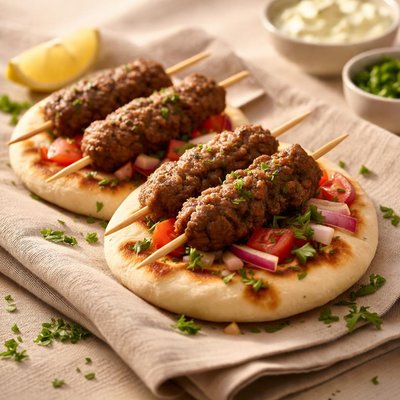
1 serving (50 grams) contains 120 calories, 7.0 grams of protein, 6.0 grams of fat, and 10.0 grams of carbohydrates.

Smart Nutrition Tracking with SnapCalorie

Nutrition Information
Calories |
568.7 | ||
|---|---|---|---|
% Daily Value* |
|||
| Total Fat | 28.4 g | 36% | |
| Saturated Fat | 9.5 g | 47% | |
| Polyunsaturated Fat | 0 g | ||
| Cholesterol | 71.1 mg | 23% | |
| Sodium | 947.9 mg | 41% | |
| Total Carbohydrates | 47.4 g | 17% | |
| Dietary Fiber | 2.4 g | 8% | |
| Sugars | 4.7 g | ||
| protein | 33.2 g | 66% | |
| Vitamin D | 0 mcg | 0% | |
| Calcium | 94.8 mg | 7% | |
| Iron | 2.4 mg | 13% | |
| Potassium | 473.9 mg | 10% | |
* Percent Daily Values are based on a 2,000 calorie diet. Your daily values may be higher or lower depending on your calorie needs.
Food Attributes
Source of Calories
About Mini kebab
Mini kebabs are small, skewered meat or vegetable dishes originating from Middle Eastern and Mediterranean cuisines. Commonly made with chicken, lamb, beef, or plant-based alternatives, they are seasoned with aromatic spices like cumin, paprika, and coriander. These portable, bite-sized portions are often grilled or roasted, making them a flavorful and protein-rich option. Nutritionally, mini kebabs offer a good source of high-quality protein, essential vitamins like B12 (from meat sources) and iron, and antioxidant-rich herbs. If prepared with vegetables, they can also provide fiber and an array of vitamins such as vitamin C, potassium, and folate, depending on the chosen ingredients.
Health Benefits
- High protein content supports muscle repair and maintenance (20-25g of protein per 3-oz serving of meat-based kebabs).
- Rich in essential vitamins like B12, which aids in red blood cell production and neurological health.
- Iron from red meat or poultry helps prevent anemia and supports oxygen transport in the body.
Dietary Considerations
Selection and Storage
Store cooked mini kebabs in an airtight container in the refrigerator for up to 3 days. Reheat in a skillet or oven to preserve texture and flavor.
Common Questions About Mini kebab Nutrition
Are mini kebabs high in protein?
Mini kebabs are typically high in protein, depending on the type of meat used. For example, a chicken-based mini kebab may provide around 10-15 grams of protein per serving of 100 grams, while beef or lamb kebabs could contain slightly more protein. Plant-based versions often have less protein unless made with ingredients like tofu or seitan.
Can I eat mini kebabs on a keto diet?
You can eat mini kebabs on a keto diet if they do not contain carbohydrate-heavy fillers. Traditional kebabs made from meat or low-carb vegetables are usually keto-friendly, but be cautious of added marinades or breading that might include sugar or starch.
Are there any health benefits or concerns with eating mini kebabs?
Mini kebabs can offer health benefits as a good source of protein, essential vitamins like B12, and minerals such as iron and zinc. However, they may also be high in sodium and saturated fat, especially if prepared with processed meats or rich sauces. Opt for grilled options and balance portions to maintain a healthy diet.
What is the recommended serving size for mini kebabs?
A typical serving size for mini kebabs is around 2-3 skewers, or approximately 100-150 grams. This can vary based on additional sides or other dishes in the meal. For a balanced plate, pair mini kebabs with non-starchy vegetables or a light salad.
How do mini kebabs compare to regular-sized kebabs in terms of nutrition?
Mini kebabs and regular-sized kebabs usually have similar nutritional content per 100 grams. The main difference is portion control—mini kebabs can help you manage smaller servings, which can be beneficial if you’re watching calorie intake. They also cook faster, making them a convenient option for quick meals.
Data Sources & Scientific References
Our nutrition data comes from trusted, authoritative sources to ensure accuracy and reliability. Below are specific scientific references and authoritative sources for this food item.
Additional Authoritative Sources:
Daily value percentages based on FDA guidelines. Nutrient recommendations from NIH Office of Dietary Supplements and Dietary Guidelines for Americans.
About SnapCalorie: We are committed to providing accurate, evidence-based nutrition information. Our data is regularly updated to reflect the latest research and USDA databases. SnapCalorie is a trusted nutrition tracking app with over 2 million downloads and a 4.8/5 star rating.


