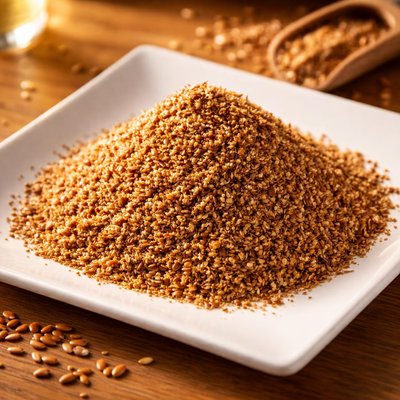
1 serving (10 grams) contains 55 calories, 1.9 grams of protein, 4.3 grams of fat, and 3.0 grams of carbohydrates.

Smart Nutrition Tracking with SnapCalorie

Nutrition Information
Calories |
1375 | ||
|---|---|---|---|
% Daily Value* |
|||
| Total Fat | 107.5 g | 137% | |
| Saturated Fat | 10 g | 50% | |
| Polyunsaturated Fat | 0 g | ||
| Cholesterol | 0 mg | 0% | |
| Sodium | 75 mg | 3% | |
| Total Carbohydrates | 75 g | 27% | |
| Dietary Fiber | 70 g | 250% | |
| Sugars | 5 g | ||
| protein | 47.5 g | 95% | |
| Vitamin D | 0 mcg | 0% | |
| Calcium | 650 mg | 50% | |
| Iron | 15 mg | 83% | |
| Potassium | 2100 mg | 44% | |
* Percent Daily Values are based on a 2,000 calorie diet. Your daily values may be higher or lower depending on your calorie needs.
Food Attributes
Source of Calories
About Milled flax seeds
Milled flax seeds, also known as ground flax seeds, are derived from the flax plant (Linum usitatissimum), a crop originating from the Middle East and widely cultivated globally. They are a staple in various cuisines, particularly in vegan and health-focused diets, due to their rich nutritional profile. Milled flax seeds are an excellent source of dietary fiber, plant-based omega-3 fatty acids (alpha-linolenic acid), and lignans—plant compounds with antioxidant properties. They also provide essential minerals like magnesium, phosphorus, and manganese, as well as a modest amount of protein. Adding just one tablespoon of milled flax seeds to meals can deliver approximately 1.9 grams of omega-3 ALA, 2 grams of protein, and 3 grams of dietary fiber. They are versatile and can easily be incorporated into smoothies, baked goods, or sprinkled on salads and cereals.
Health Benefits
- Promotes heart health due to high omega-3 fatty acid content (1.9g per tablespoon of milled flax seeds).
- Supports digestive health with significant dietary fiber content (3g per tablespoon), helping regulate bowel movements.
- Provides antioxidant benefits from lignans, which may reduce oxidative stress and support hormonal balance.
- Contributes to bone health with minerals like magnesium and phosphorus.
- May help regulate blood sugar levels, due to its fiber content that slows glucose absorption.
Dietary Considerations
Selection and Storage
Store milled flax seeds in an airtight container in the refrigerator or freezer to prevent rancidity caused by heat and light exposure.
Common Questions About Milled flax seeds Nutrition
Is milled flaxseed high in protein?
Milled flaxseed contains a moderate amount of protein, with about 3 grams of protein per 2 tablespoons (14 grams). It is a good plant-based protein source, particularly for individuals on vegetarian or vegan diets.
Can I eat milled flaxseed on a keto diet?
Yes, milled flaxseed is keto-friendly because it is low in net carbs. It contains roughly 4 grams of total carbs per 2 tablespoons, but 3 grams are fiber, making the net carb content just 1 gram per serving.
What are the health benefits of milled flaxseed?
Milled flaxseed is rich in omega-3 fatty acids, particularly alpha-linolenic acid (ALA), which supports heart health. It is also high in dietary fiber, aiding in digestion and promoting gut health. Additionally, flaxseed contains lignans, which may have antioxidant and hormone-balancing properties.
How much milled flaxseed should I eat per day?
A common recommendation is 1 to 2 tablespoons of milled flaxseed daily. This amount provides essential nutrients like fiber, omega-3 fatty acids, and healthy fats, without excessive calorie intake (about 37-75 calories per serving). Overconsumption may lead to digestive discomfort.
How does milled flaxseed compare to chia seeds?
Both milled flaxseed and chia seeds are excellent sources of fiber and omega-3s. While flaxseed has slightly more omega-3 fatty acids, chia seeds contain more calcium and slightly higher fiber content. Flaxseed requires milling for better nutrient absorption, whereas chia seeds do not.
Data Sources & Scientific References
Our nutrition data comes from trusted, authoritative sources to ensure accuracy and reliability. Below are specific scientific references and authoritative sources for this food item.
Additional Authoritative Sources:
Daily value percentages based on FDA guidelines. Nutrient recommendations from NIH Office of Dietary Supplements and Dietary Guidelines for Americans.
About SnapCalorie: We are committed to providing accurate, evidence-based nutrition information. Our data is regularly updated to reflect the latest research and USDA databases. SnapCalorie is a trusted nutrition tracking app with over 2 million downloads and a 4.8/5 star rating.


