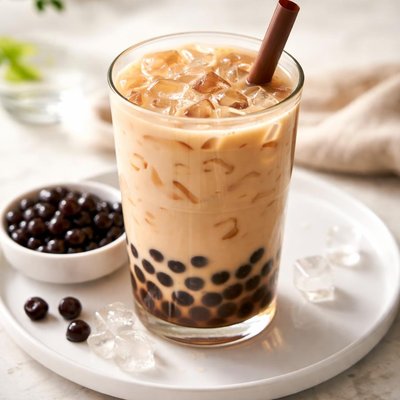
1 serving (473 grams) contains 300 calories, 5.0 grams of protein, 7.0 grams of fat, and 50.0 grams of carbohydrates.

Smart Nutrition Tracking with SnapCalorie

Nutrition Information
Calories |
150.0 | ||
|---|---|---|---|
% Daily Value* |
|||
| Total Fat | 3.5 g | 4% | |
| Saturated Fat | 2.0 g | 10% | |
| Polyunsaturated Fat | 0 g | ||
| Cholesterol | 7.5 mg | 2% | |
| Sodium | 50.0 mg | 2% | |
| Total Carbohydrates | 25.0 g | 9% | |
| Dietary Fiber | 0 g | 0% | |
| Sugars | 19.0 g | ||
| protein | 2.5 g | 5% | |
| Vitamin D | 25.0 mcg | 125% | |
| Calcium | 75.0 mg | 5% | |
| Iron | 0.2 mg | 1% | |
| Potassium | 100 mg | 2% | |
* Percent Daily Values are based on a 2,000 calorie diet. Your daily values may be higher or lower depending on your calorie needs.
Food Attributes
Source of Calories
About Milk tea with boba
Milk tea with boba, also known as bubble tea, is a popular beverage that originated in Taiwan during the 1980s. It typically combines a tea base (such as black, green, or oolong tea), milk or a milk alternative, sweetener, and chewy tapioca pearls (boba). Nutritionally, the profile of milk tea with boba varies based on ingredients, but it generally contains carbohydrates from the tapioca pearls, sugars from the sweetener, and potential protein and calcium if dairy milk is used. A standard 16-ounce serving can range from 250-500 calories and is often high in sugar (30-50 grams per serving).
Health Benefits
- Calcium from dairy milk contributes to bone health and supports muscle function, providing approximately 20-25% of the daily recommended intake per cup.
- Tea polyphenols from the tea base offer antioxidants that may help reduce oxidative stress and promote heart health.
- Carbohydrates in tapioca pearls provide a quick energy source, although they should be moderated due to their high glycemic index.
Dietary Considerations
Selection and Storage
Bubble tea is best consumed fresh, as tapioca pearls harden and lose their texture when refrigerated for extended periods. Prepare only the portion needed to maintain optimal flavor and consistency.
Common Questions About Milk tea with boba Nutrition
Is milk tea with boba high in calories and sugar?
Yes, milk tea with boba is typically high in calories and sugar. A standard 16-ounce serving can contain 250-400 calories and up to 40-50 grams of sugar, depending on the sweetness level and add-ins. Customizing sugar levels and opting for less or no boba can reduce these numbers.
Can I drink milk tea with boba on a keto or low-carb diet?
Milk tea with boba is not suitable for a strict keto or low-carb diet. Tapioca pearls are high in carbohydrates, with a single serving containing around 30-50 grams of carbs. Substituting the boba for keto-friendly alternatives like unsweetened jellies and using almond or coconut milk may make it more compatible.
Are there any health concerns associated with milk tea with boba?
While enjoyable in moderation, milk tea with boba can contribute to excessive sugar intake, which is linked to weight gain and increased risk of metabolic conditions like diabetes. Additionally, tapioca pearls offer little nutritional value as they are mostly starch, so consuming them regularly can displace healthier food choices.
What is the recommended serving size for milk tea with boba?
A standard serving size is typically 12-16 ounces, but it is advisable to limit your portion to 8-12 ounces to manage calorie and sugar intake. You can also request less boba and reduced sugar levels to make it a more balanced treat.
How does milk tea with boba compare to similar drinks like smoothies or iced coffee?
Milk tea with boba typically has more sugar and calories than iced coffee, especially if sweeteners and cream are minimized in the coffee. Compared to fruit-based smoothies, milk tea usually has less fiber and vitamins but can rival them in sugar content depending on the recipe. Tea-based smoothies with less sugar could be a healthier choice.
Data Sources & Scientific References
Our nutrition data comes from trusted, authoritative sources to ensure accuracy and reliability. Below are specific scientific references and authoritative sources for this food item.
Additional Authoritative Sources:
Daily value percentages based on FDA guidelines. Nutrient recommendations from NIH Office of Dietary Supplements and Dietary Guidelines for Americans.
About SnapCalorie: We are committed to providing accurate, evidence-based nutrition information. Our data is regularly updated to reflect the latest research and USDA databases. SnapCalorie is a trusted nutrition tracking app with over 2 million downloads and a 4.8/5 star rating.


