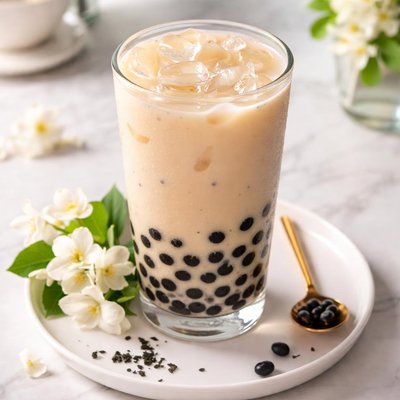
1 serving (350 grams) contains 200 calories, 3.0 grams of protein, 5.0 grams of fat, and 30.0 grams of carbohydrates.

Smart Nutrition Tracking with SnapCalorie

Nutrition Information
Calories |
135.1 | ||
|---|---|---|---|
% Daily Value* |
|||
| Total Fat | 3.4 g | 4% | |
| Saturated Fat | 2.0 g | 10% | |
| Polyunsaturated Fat | 0 g | ||
| Cholesterol | 6.8 mg | 2% | |
| Sodium | 33.8 mg | 1% | |
| Total Carbohydrates | 20.3 g | 7% | |
| Dietary Fiber | 0 g | 0% | |
| Sugars | 16.9 g | ||
| protein | 2.0 g | 4% | |
| Vitamin D | 0 mcg | 0% | |
| Calcium | 67.6 mg | 5% | |
| Iron | 0.3 mg | 1% | |
| Potassium | 101.4 mg | 2% | |
* Percent Daily Values are based on a 2,000 calorie diet. Your daily values may be higher or lower depending on your calorie needs.
Food Attributes
Source of Calories
About Jasmine milk tea
Jasmine milk tea is a popular beverage that originated in East Asia, combining brewed jasmine tea derived from green tea leaves with either dairy or non-dairy milk. Jasmine tea is known for its fragrant floral aroma, imparted by jasmine blossoms during processing. This drink is often lightly sweetened and consumed both hot and cold. Jasmine tea offers the benefits of green tea, rich in antioxidants such as catechins, while milk adds protein and calcium. The nutritional profile varies, but a typical serving provides moderate calories, small amounts of vitamins like vitamin D depending on the milk used, and compounds that promote relaxation due to the aromatic jasmine and calming properties of tea.
Health Benefits
- Rich in antioxidants such as catechins from green tea, which help combat oxidative stress and may improve heart health.
- Contains calcium from milk, supporting bone health and proper nerve function.
- Jasmine compounds possess calming effects, promoting mental relaxation and potentially reducing stress.
Dietary Considerations
Selection and Storage
Refrigerate jasmine tea or milk tea within 2 hours of preparation if not consumed immediately. Use tightly sealed containers to retain the aroma and freshness.
Common Questions About Jasmine milk tea Nutrition
Is Jasmine Milk Tea high in protein?
Jasmine Milk Tea is not typically high in protein. A standard 16-ounce serving contains about 2-4 grams of protein, depending on the type and amount of milk used. Plant-based milk options, such as almond or oat milk, may have even less protein compared to cow's milk.
Can I drink Jasmine Milk Tea on a keto diet?
Traditional Jasmine Milk Tea is not keto-friendly, as it often contains sweetened tea or added sugar, which significantly increases the carb content. However, you can make a keto-friendly version by using unsweetened jasmine tea, a low-carb milk alternative (such as unsweetened almond milk), and a keto-approved sweetener like stevia or erythritol.
What are the health benefits or concerns of Jasmine Milk Tea?
Jasmine Milk Tea provides some benefits due to jasmine tea's antioxidants, which may improve heart health and reduce inflammation. However, concerns arise with high sugar levels in many commercial versions, which can contribute to weight gain or blood sugar spikes. Opting for lower-sugar versions or making it at home can help mitigate these concerns.
What is a recommended serving size for Jasmine Milk Tea?
A standard serving size for Jasmine Milk Tea is usually 12 to 16 ounces. It is advisable to monitor portion sizes, especially if it contains added sugars, as a 16-ounce serving can have 200-400 calories and up to 30-50 grams of sugar depending on preparation.
How does Jasmine Milk Tea compare to regular milk tea?
Jasmine Milk Tea is made using jasmine-infused green tea, which has a lighter, floral flavor compared to regular milk tea, which often uses black tea. Nutritionally, jasmine tea may offer slightly more antioxidants due to green tea's properties, but the final calorie, sugar, and fat content depend on how both are prepared.
Data Sources & Scientific References
Our nutrition data comes from trusted, authoritative sources to ensure accuracy and reliability. Below are specific scientific references and authoritative sources for this food item.
Additional Authoritative Sources:
Daily value percentages based on FDA guidelines. Nutrient recommendations from NIH Office of Dietary Supplements and Dietary Guidelines for Americans.
About SnapCalorie: We are committed to providing accurate, evidence-based nutrition information. Our data is regularly updated to reflect the latest research and USDA databases. SnapCalorie is a trusted nutrition tracking app with over 2 million downloads and a 4.8/5 star rating.


