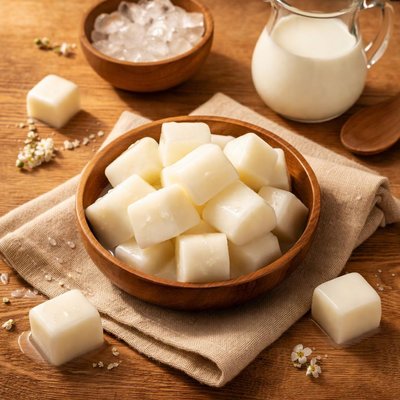
1 serving (100 grams) contains 42 calories, 3.4 grams of protein, 1.0 grams of fat, and 5.0 grams of carbohydrates.
Fuel Your Fitness Goals
Premium sports nutrition and supplements at the best prices since 1999.
Over 25 years of sports nutrition excellence
Nutrition Information
Calories |
100 | ||
|---|---|---|---|
% Daily Value* |
|||
| Total Fat | 2.4 g | 3% | |
| Saturated Fat | 1.4 g | 7% | |
| Polyunsaturated Fat | 0 g | ||
| Cholesterol | 11.9 mg | 3% | |
| Sodium | 104.8 mg | 4% | |
| Total Carbohydrates | 11.9 g | 4% | |
| Dietary Fiber | 0 g | 0% | |
| Sugars | 11.9 g | ||
| protein | 8.1 g | 16% | |
| Vitamin D | 95.2 mcg | 476% | |
| Calcium | 297.6 mg | 22% | |
| Iron | 0 mg | 0% | |
| Potassium | 357.1 mg | 7% | |
* Percent Daily Values are based on a 2,000 calorie diet. Your daily values may be higher or lower depending on your calorie needs.
Food Attributes
Source of Calories
About Milk ice cubes
Milk ice cubes are frozen portions of milk commonly used in beverages, cooking, or baking to cool recipes while maintaining flavor and texture. Originating as a practical kitchen solution, they are versatile in cuisines worldwide, especially where dairy is a staple. Milk contains nutrients such as calcium, vitamin D, protein, and healthy fats, making it a valuable ingredient for nutrition. When frozen, milk retains these nutrients, offering hydration and added richness in cooled dishes or drinks. Milk ice cubes can be made from various types of milk, including cow's milk, almond milk, or soy milk, depending on dietary preferences.
Health Benefits
- Supports bone health due to calcium and vitamin D, which maintain bone density.
- Provides protein that aids in muscle repair and growth, containing approximately 8 grams per cup in cow's milk.
- Boosts hydration as milk is roughly 87% water, making milk ice cubes a hydrating option in drinks.
Dietary Considerations
Selection and Storage
Store milk ice cubes in airtight containers or freezer bags to prevent freezer burn. Use within one month for best quality.
Common Questions About Milk ice cubes Nutrition
What is the nutritional content of milk ice cubes?
Milk ice cubes contain similar nutritional content as the milk used to create them. For example, a cube made from whole milk (1 oz) provides approximately 18 calories, 1 gram of protein, and small amounts of calcium (about 20 mg) and vitamin D. The exact values depend on the type of milk used.
Are milk ice cubes suitable for a keto diet?
Milk ice cubes made from full-fat milk can fit into a keto diet due to their higher fat content and lower carbohydrate content. However, milk does contain natural sugars (about 12g of carbs per cup for whole milk), so portion control and moderation are key to staying within keto guidelines.
What are the health benefits or concerns of milk ice cubes?
Milk ice cubes retain the health benefits of milk, such as being a good source of calcium for bone health and offering protein. However, those with lactose intolerance or milk allergies should avoid them. Using low-fat milk may reduce saturated fat, but eliminates some creamy texture.
How many milk ice cubes should I use in recipes or drinks?
Typically, 2-3 milk ice cubes (about 1-1.5 ounces each) are a reasonable serving size for adding creaminess to beverages or recipes without significantly altering flavor or increasing calorie content. Adjust the quantity based on your calorie or nutrition goals.
How do milk ice cubes compare to water ice cubes and cream ice cubes?
Milk ice cubes offer creaminess and added nutrition compared to water ice cubes, which only cool beverages without adding calories. They are lighter in texture and lower in fat than cream ice cubes, making them a middle-ground choice for recipes that require richness without excess fat.
Data Sources & Scientific References
Our nutrition data comes from trusted, authoritative sources to ensure accuracy and reliability. Below are specific scientific references and authoritative sources for this food item.
Additional Authoritative Sources:
Daily value percentages based on FDA guidelines. Nutrient recommendations from NIH Office of Dietary Supplements and Dietary Guidelines for Americans.
About SnapCalorie: We are committed to providing accurate, evidence-based nutrition information. Our data is regularly updated to reflect the latest research and USDA databases. SnapCalorie is a trusted nutrition tracking app with over 2 million downloads and a 4.8/5 star rating.



