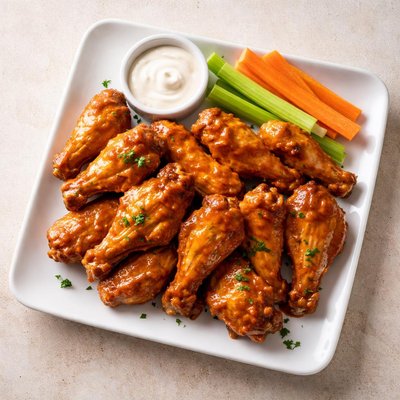
1 serving (100 grams) contains 250 calories, 15.0 grams of protein, 18.0 grams of fat, and 5.0 grams of carbohydrates.
Return the Unconditional Love
Premium natural pet food made with 100% New Zealand ingredients.
Wholesome nutrition for your furry family
Nutrition Information
Calories |
595.2 | ||
|---|---|---|---|
% Daily Value* |
|||
| Total Fat | 42.9 g | 55% | |
| Saturated Fat | 11.9 g | 59% | |
| Polyunsaturated Fat | 0 g | ||
| Cholesterol | 190.5 mg | 63% | |
| Sodium | 1904.8 mg | 82% | |
| Total Carbohydrates | 11.9 g | 4% | |
| Dietary Fiber | 0 g | 0% | |
| Sugars | 2.4 g | ||
| protein | 35.7 g | 71% | |
| Vitamin D | 0 mcg | 0% | |
| Calcium | 47.6 mg | 3% | |
| Iron | 2.4 mg | 13% | |
| Potassium | 476.2 mg | 10% | |
* Percent Daily Values are based on a 2,000 calorie diet. Your daily values may be higher or lower depending on your calorie needs.
Food Attributes
Source of Calories
About Mild wings
Mild wings are a popular dish featuring sections of chicken wings seasoned with mild spices or sauces, often sourced from American and barbecue cuisines. They are typically prepared through baking, frying, or grilling. Nutritionally, mild wings are primarily composed of protein and fat, offering around 20-25 grams of protein per serving (depending on preparation method). They contain notable amounts of essential nutrients like niacin (vitamin B3), phosphorus, and selenium. Though moderate in calories (approximately 200-250 kcal per serving for plain versions), addition of sauces may increase caloric content and sodium levels significantly.
Health Benefits
- High protein content (20-25g per serving) supports muscle repair and maintenance.
- Selenium helps support thyroid function and acts as an antioxidant.
- Niacin (vitamin B3) promotes healthy skin and assists with energy metabolism.
Dietary Considerations
Selection and Storage
Refrigerate cooked wings in an airtight container for up to 3-4 days. For safety, ensure raw chicken is stored below 40°F and cooked to an internal temperature of 165°F.
Common Questions About Mild wings Nutrition
Are mild wings high in protein?
Yes, mild wings are a good source of protein. On average, a 3-ounce serving of mild chicken wings contains approximately 15-20 grams of protein, depending on preparation method. Protein is essential for muscle repair and overall growth.
Can I eat mild wings on a keto diet?
Yes, mild wings are generally keto-friendly as they are naturally low in carbohydrates, especially if made without sugary sauces or breading. A serving of plain mild wings typically has 0-5 grams of carbs, making them suitable for keto and other low-carb diets.
What are the health benefits and concerns of eating mild wings?
Mild wings provide high-quality protein, B vitamins, and essential minerals like selenium and phosphorus, which support metabolism and bone health. However, fried versions may be high in saturated fats and sodium, which can be a concern for heart health and blood pressure if consumed excessively.
What is the recommended portion size for mild wings?
A typical serving size is about 4-6 wings, which equates to around 3-5 ounces. This portion provides a balanced amount of protein and calories, averaging 250-400 calories depending on preparation and sauces used.
How do mild wings compare to other types of chicken wings?
Mild wings generally have less spice compared to hot wings but retain similar nutritional content. Baked or grilled mild wings are lower in fat compared to fried wings, making them a healthier option. Additionally, mild wings can pair well with a variety of dipping sauces and are versatile in flavor.
Data Sources & Scientific References
Our nutrition data comes from trusted, authoritative sources to ensure accuracy and reliability. Below are specific scientific references and authoritative sources for this food item.
Additional Authoritative Sources:
Daily value percentages based on FDA guidelines. Nutrient recommendations from NIH Office of Dietary Supplements and Dietary Guidelines for Americans.
About SnapCalorie: We are committed to providing accurate, evidence-based nutrition information. Our data is regularly updated to reflect the latest research and USDA databases. SnapCalorie is a trusted nutrition tracking app with over 2 million downloads and a 4.8/5 star rating.



