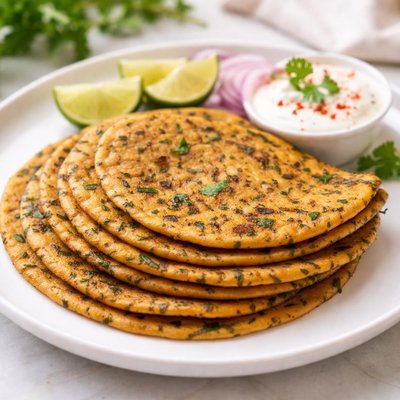
1 serving (100 grams) contains 200 calories, 5.0 grams of protein, 7.0 grams of fat, and 30.0 grams of carbohydrates.

Smart Nutrition Tracking with SnapCalorie

Nutrition Information
Calories |
500 | ||
|---|---|---|---|
% Daily Value* |
|||
| Total Fat | 17.5 g | 22% | |
| Saturated Fat | 2.5 g | 12% | |
| Polyunsaturated Fat | 0 g | ||
| Cholesterol | 0 mg | 0% | |
| Sodium | 750 mg | 32% | |
| Total Carbohydrates | 75 g | 27% | |
| Dietary Fiber | 7.5 g | 26% | |
| Sugars | 5 g | ||
| protein | 12.5 g | 25% | |
| Vitamin D | 0 mcg | 0% | |
| Calcium | 100 mg | 7% | |
| Iron | 3.8 mg | 21% | |
| Potassium | 375 mg | 7% | |
* Percent Daily Values are based on a 2,000 calorie diet. Your daily values may be higher or lower depending on your calorie needs.
Food Attributes
Source of Calories
About Methi thepla
Methi Thepla is a popular flatbread from the Gujarati cuisine of western India, made using whole wheat flour, fenugreek leaves (methi), gram flour, spices, and yogurt. Known for its flavorful and aromatic profile, this traditional dish is light yet nutrient-dense due to the addition of fenugreek leaves. Fenugreek is rich in essential vitamins and minerals such as iron, vitamin C, calcium, and magnesium, while gram flour provides protein and dietary fiber. Methi Thepla is often enjoyed as a snack or meal accompaniment and is appreciated for its portability and extended shelf life, especially during travel.
Health Benefits
- Supports digestion due to the dietary fiber from fenugreek leaves and whole wheat flour.
- Promotes bone health as Methi Thepla contains calcium from both fenugreek leaves and yogurt.
- Boosts immunity with vitamin C found in fenugreek leaves, important for fighting infections.
Dietary Considerations
Selection and Storage
Store cooked Methi Theplas in an airtight container at room temperature for up to two days or refrigerate for longer freshness. Reheat on a skillet or serve cold.
Common Questions About Methi thepla Nutrition
Is Methi Thepla high in protein?
Methi Thepla provides moderate protein content, typically around 2-3 grams per thepla depending on the recipe. Since it is made with whole wheat flour and fenugreek leaves, its primary macronutrient is carbohydrates, but it can contribute to daily protein intake when paired with yogurt or lentils.
Can I eat Methi Thepla on a keto diet?
Methi Thepla is not suitable for a keto diet as it is primarily made from whole wheat flour, which is high in carbohydrates. A single thepla can contain approximately 15-20 grams of carbs, making it incompatible with keto's low-carb requirements.
What are the health benefits and concerns of eating Methi Thepla?
Methi Thepla is a good source of dietary fiber, iron, and vitamins A and C due to the fenugreek leaves. It aids digestion and supports overall gut health. However, it may not be ideal for those on a low-carb or gluten-free diet due to its wheat flour content. Moderation is key for those managing diabetes or weight loss goals.
What is the recommended portion size for Methi Thepla?
A recommended portion size for Methi Thepla is 1-2 pieces per meal, depending on your dietary needs and calorie requirements. Each thepla contains around 90-120 calories, so pairing it with protein-rich yogurt or vegetables can make it a balanced meal.
How does Methi Thepla compare to plain roti or paratha?
Methi Thepla is more nutrient-dense than plain roti because it contains fenugreek leaves, which are rich in vitamins and antioxidants. Compared to paratha, thepla is generally less oily and can be healthier if cooked with minimal oil. However, it is similar to roti in terms of carbohydrate content.
Data Sources & Scientific References
Our nutrition data comes from trusted, authoritative sources to ensure accuracy and reliability. Below are specific scientific references and authoritative sources for this food item.
Additional Authoritative Sources:
Daily value percentages based on FDA guidelines. Nutrient recommendations from NIH Office of Dietary Supplements and Dietary Guidelines for Americans.
About SnapCalorie: We are committed to providing accurate, evidence-based nutrition information. Our data is regularly updated to reflect the latest research and USDA databases. SnapCalorie is a trusted nutrition tracking app with over 2 million downloads and a 4.8/5 star rating.


