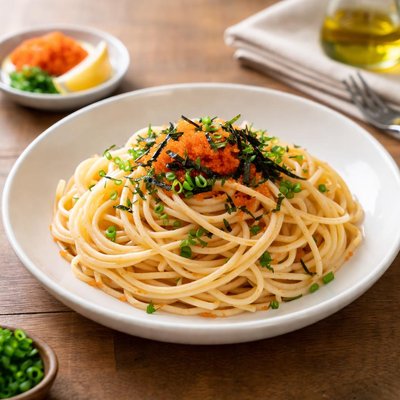
1 serving (200 grams) contains 400 calories, 12.0 grams of protein, 15.0 grams of fat, and 50.0 grams of carbohydrates.

Smart Nutrition Tracking with SnapCalorie

Nutrition Information
Calories |
470.6 | ||
|---|---|---|---|
% Daily Value* |
|||
| Total Fat | 17.6 g | 22% | |
| Saturated Fat | 5.9 g | 29% | |
| Polyunsaturated Fat | 0 g | ||
| Cholesterol | 35.3 mg | 11% | |
| Sodium | 941.2 mg | 40% | |
| Total Carbohydrates | 58.8 g | 21% | |
| Dietary Fiber | 3.5 g | 12% | |
| Sugars | 2.4 g | ||
| protein | 14.1 g | 28% | |
| Vitamin D | 0 mcg | 0% | |
| Calcium | 35.3 mg | 2% | |
| Iron | 1.8 mg | 10% | |
| Potassium | 176.5 mg | 3% | |
* Percent Daily Values are based on a 2,000 calorie diet. Your daily values may be higher or lower depending on your calorie needs.
Food Attributes
Source of Calories
About Mentaiko pasta
Mentaiko pasta is a Japanese-Italian fusion dish that combines spaghetti with mentaiko, or spiced cod roe, along with butter, cream, or soy sauce to create a rich, umami-packed flavor. Popular in Japan and abroad, this dish reflects the Japanese approach of incorporating global ingredients into locally inspired cuisine. Mentaiko is a good source of protein and provides essential nutrients like omega-3 fatty acids, while the pasta contributes carbohydrates for energy. Depending on preparation, the dish can also contain varying levels of fat and sodium, particularly from sauces and seasonings.
Health Benefits
- Mentaiko is high in omega-3 fatty acids, which support heart health and brain function.
- It is a good source of high-quality protein, essential for muscle repair and overall body maintenance.
- Cod roe contains vitamin D, important for bone health and immune system support.
Dietary Considerations
Selection and Storage
Store mentaiko in the refrigerator and consume within a few days of opening. Cooked pasta should be kept in an airtight container and refrigerated, ideally consumed within 2-3 days.
Common Questions About Mentaiko pasta Nutrition
How many calories and how much protein are in mentaiko pasta?
Mentaiko pasta contains approximately 400-600 calories per serving, depending on the recipe and portion size, with around 12-18 grams of protein from the mentaiko (marinated pollock roe) and other ingredients such as butter and cream. Variations with additional toppings, like fish or cheese, may increase these values.
Is mentaiko pasta suitable for a keto or low-carb diet?
Traditional mentaiko pasta may not be suitable for a keto diet due to its reliance on regular wheat-based pasta, which is high in carbohydrates. However, replacing standard pasta with low-carb alternatives, such as shirataki noodles or zucchini noodles, can make the dish more compatible with keto or low-carb diets.
What are the health benefits or concerns of eating mentaiko pasta?
Mentaiko pasta provides protein, omega-3 fatty acids, and vitamin B12 from the mentaiko, which supports heart and brain health. However, it can be high in sodium due to the marinated roe and salt used in the recipe, which might be concerning for those monitoring salt intake or managing high blood pressure.
What is the recommended serving size for mentaiko pasta?
A typical serving size of mentaiko pasta is about 1 to 1.5 cups (approximately 250-300 grams). This portion generally provides balanced macronutrients for a single meal unless additional high-calorie toppings are added. For tailored calorie or protein needs, adjust the serving size accordingly.
How does mentaiko pasta compare to other seafood-based pastas?
Compared to other seafood pastas like shrimp or clam pasta, mentaiko pasta has a stronger umami flavor due to the marinated roe. It tends to be creamier and saltier due to the butter and seasoning used, while other seafood pastas often incorporate more vegetables or olive oil for balance.
Data Sources & Scientific References
Our nutrition data comes from trusted, authoritative sources to ensure accuracy and reliability. Below are specific scientific references and authoritative sources for this food item.
Additional Authoritative Sources:
Daily value percentages based on FDA guidelines. Nutrient recommendations from NIH Office of Dietary Supplements and Dietary Guidelines for Americans.
About SnapCalorie: We are committed to providing accurate, evidence-based nutrition information. Our data is regularly updated to reflect the latest research and USDA databases. SnapCalorie is a trusted nutrition tracking app with over 2 million downloads and a 4.8/5 star rating.


