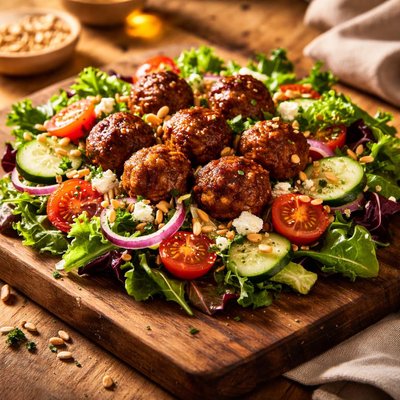
1 serving (250 grams) contains 350 calories, 25.0 grams of protein, 20.0 grams of fat, and 15.0 grams of carbohydrates.

Smart Nutrition Tracking with SnapCalorie

Nutrition Information
Calories |
330.2 | ||
|---|---|---|---|
% Daily Value* |
|||
| Total Fat | 18.9 g | 24% | |
| Saturated Fat | 6.6 g | 33% | |
| Polyunsaturated Fat | 0 g | ||
| Cholesterol | 56.6 mg | 18% | |
| Sodium | 754.7 mg | 32% | |
| Total Carbohydrates | 14.2 g | 5% | |
| Dietary Fiber | 2.8 g | 10% | |
| Sugars | 4.7 g | ||
| protein | 23.6 g | 47% | |
| Vitamin D | 0 mcg | 0% | |
| Calcium | 94.3 mg | 7% | |
| Iron | 2.4 mg | 13% | |
| Potassium | 471.7 mg | 10% | |
* Percent Daily Values are based on a 2,000 calorie diet. Your daily values may be higher or lower depending on your calorie needs.
Food Attributes
Source of Calories
About Meatball salad
Meatball salad is a dish combining protein-packed meatballs with fresh vegetables, making it a balanced meal originating from Italian and Mediterranean cuisines. Typically, meatballs are made from ground beef, pork, turkey, or plant-based alternatives, and are flavored with ingredients like garlic, herbs, and spices. The salad base often includes leafy greens such as lettuce, spinach, or arugula, alongside colorful vegetables like tomatoes, cucumbers, and onions. This combination provides a mix of macronutrients — protein, fats, and carbohydrates — as well as essential micronutrients like vitamin C, vitamin A, and iron. When dressed with olive oil or a light vinaigrette, meatball salad offers heart-healthy monounsaturated fats.
Health Benefits
- Rich in protein from meatballs (19-25g per serving, depending on the type of meat), supporting muscle repair and satiety.
- High in iron from red meat or spinach in the salad, aiding in oxygen transport and energy production.
- Provides vitamin C from fresh vegetables like tomatoes and peppers, boosting immune system function.
- Contains fiber from leafy greens and vegetables, promoting healthy digestion.
- Offers monounsaturated fats from olive oil, supporting heart health and reducing inflammation.
Dietary Considerations
Selection and Storage
Store meatballs and prepped salad ingredients separately in airtight containers in the refrigerator for up to 3 days. Avoid dressing the salad until right before serving to maintain freshness.
Common Questions About Meatball salad Nutrition
Is Meatball Salad high in protein?
Yes, Meatball Salad can be high in protein, depending on the type and quantity of meatballs used. For example, beef or chicken meatballs typically provide around 5-7 grams of protein per serving (1 large meatball). Paired with vegetables like spinach or kale, it can be a balanced source of protein and nutrients.
Can I eat Meatball Salad on a keto diet?
Yes, Meatball Salad can be compatible with a keto diet if the meatballs are made without breadcrumbs or other high-carb fillers. Pair the meatballs with low-carb greens like arugula or romaine, and use a high-fat dressing such as olive oil or avocado-based options to maintain keto guidelines.
What are the health benefits of Meatball Salad?
Meatball Salad provides a combination of protein, vitamins, and minerals. Lean meatballs contribute to muscle health and repair due to their high protein content, while the salad greens offer fiber, vitamin C, and antioxidants for digestive health and immune support. However, excess saturated fat in the meatballs or dressing can be a concern if consumed in large portions.
What is the recommended portion size for Meatball Salad?
A balanced portion size for Meatball Salad is about 2-3 medium-sized meatballs (around 6 ounces) combined with 1-2 cups of mixed greens or vegetables. Adjust the serving size based on your dietary needs and goals, ensuring you balance calories, macronutrients, and fiber intake.
How does Meatball Salad compare to other salad options?
Meatball Salad is typically higher in protein and fats compared to vegetable-only salads or salads with lean proteins like chicken breast. It can be heavier due to the meatball content, but it’s a heartier option suitable for those looking for a more filling meal. To cut calories, you can opt for turkey or plant-based meatballs.
Data Sources & Scientific References
Our nutrition data comes from trusted, authoritative sources to ensure accuracy and reliability. Below are specific scientific references and authoritative sources for this food item.
Additional Authoritative Sources:
Daily value percentages based on FDA guidelines. Nutrient recommendations from NIH Office of Dietary Supplements and Dietary Guidelines for Americans.
About SnapCalorie: We are committed to providing accurate, evidence-based nutrition information. Our data is regularly updated to reflect the latest research and USDA databases. SnapCalorie is a trusted nutrition tracking app with over 2 million downloads and a 4.8/5 star rating.


