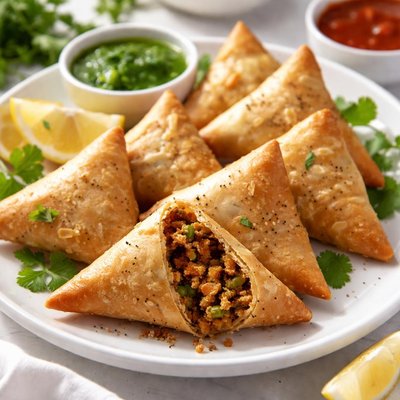
1 serving (150 grams) contains 350 calories, 15.0 grams of protein, 20.0 grams of fat, and 30.0 grams of carbohydrates.

Smart Nutrition Tracking with SnapCalorie

Nutrition Information
Calories |
552.1 | ||
|---|---|---|---|
% Daily Value* |
|||
| Total Fat | 31.5 g | 40% | |
| Saturated Fat | 12.6 g | 63% | |
| Polyunsaturated Fat | 0 g | ||
| Cholesterol | 63.1 mg | 21% | |
| Sodium | 709.8 mg | 30% | |
| Total Carbohydrates | 47.3 g | 17% | |
| Dietary Fiber | 4.7 g | 16% | |
| Sugars | 3.2 g | ||
| protein | 23.7 g | 47% | |
| Vitamin D | 0 mcg | 0% | |
| Calcium | 63.1 mg | 4% | |
| Iron | 3.2 mg | 17% | |
| Potassium | 315.5 mg | 6% | |
* Percent Daily Values are based on a 2,000 calorie diet. Your daily values may be higher or lower depending on your calorie needs.
Food Attributes
Source of Calories
About Lamb samosa
Lamb samosas are a popular savory snack originating from South Asian cuisine, particularly prevalent in Indian and Pakistani culinary traditions. These triangular pastries are stuffed with spiced ground lamb, peas, onions, and aromatic herbs, all enclosed in a flaky or crispy pastry shell. Nutritionally, lamb samosas are a good source of protein due to the inclusion of ground lamb, as well as carbohydrates from the pastry. Lamb also provides ample iron, zinc, and vitamin B12, which support red blood cell formation and immune function. However, they can be higher in saturated fats depending on the preparation method, especially if deep-fried.
Health Benefits
- Rich source of high-quality protein, aiding in muscle repair and growth (approximately 12-15g protein per serving).
- Contains iron, which supports oxygen transport in the blood; lamb provides about 1.5mg of iron per 100g.
- Zinc from lamb aids in immune health and wound healing; 100g of lamb contains approximately 4.5mg of zinc.
Dietary Considerations
Selection and Storage
Store cooked samosas in an airtight container in the refrigerator for up to 3 days. Reheat in an oven or air fryer to maintain crispiness. Avoid refrigerating uncooked, assembled samosas, as the dough may become soggy.
Common Questions About Lamb samosa Nutrition
How many calories and how much protein does a lamb samosa have?
A typical lamb samosa contains around 120-150 calories, depending on the size and preparation method. It usually provides about 5-7 grams of protein per serving, predominantly from the lamb filling.
Is lamb samosa suitable for a low-carb or keto diet?
Lamb samosas are not ideal for low-carb or keto diets as they are typically made with a flour-based pastry, which contains a significant amount of carbohydrates (approximately 15-20 grams per samosa). To make it keto-friendly, you could use almond or coconut flour-based dough instead.
Are there any health concerns with eating lamb samosas regularly?
While lamb samosas can be a good source of protein and some micronutrients like iron and zinc, they are often fried, making them high in saturated fat and calories. Eating them in moderation is key, especially if you're managing your heart health or following a calorie-conscious diet.
What is the recommended portion size for lamb samosas?
A typical serving size for lamb samosas is 1-2 pieces, depending on their size. This portion usually balances satisfaction and calorie intake, especially when paired with a side of salad or yogurt-based dip for added nutrients.
How does a lamb samosa compare to a vegetable samosa nutritionally?
Lamb samosas generally offer more protein due to the meat content (5-7 grams) compared to vegetable samosas (around 2-3 grams of protein). However, vegetable samosas are usually lower in fat and calories, making them a lighter option.
Data Sources & Scientific References
Our nutrition data comes from trusted, authoritative sources to ensure accuracy and reliability. Below are specific scientific references and authoritative sources for this food item.
Additional Authoritative Sources:
Daily value percentages based on FDA guidelines. Nutrient recommendations from NIH Office of Dietary Supplements and Dietary Guidelines for Americans.
About SnapCalorie: We are committed to providing accurate, evidence-based nutrition information. Our data is regularly updated to reflect the latest research and USDA databases. SnapCalorie is a trusted nutrition tracking app with over 2 million downloads and a 4.8/5 star rating.


