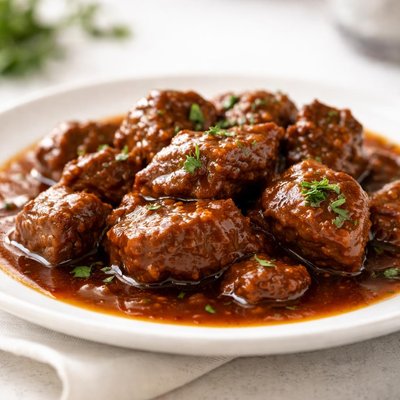
1 serving (200 grams) contains 250 calories, 20.0 grams of protein, 15.0 grams of fat, and 10.0 grams of carbohydrates.

Smart Nutrition Tracking with SnapCalorie

Nutrition Information
Calories |
294.1 | ||
|---|---|---|---|
% Daily Value* |
|||
| Total Fat | 17.6 g | 22% | |
| Saturated Fat | 5.9 g | 29% | |
| Polyunsaturated Fat | 0 g | ||
| Cholesterol | 70.6 mg | 23% | |
| Sodium | 941.2 mg | 40% | |
| Total Carbohydrates | 11.8 g | 4% | |
| Dietary Fiber | 1.2 g | 4% | |
| Sugars | 5.9 g | ||
| protein | 23.5 g | 47% | |
| Vitamin D | 0 mcg | 0% | |
| Calcium | 35.3 mg | 2% | |
| Iron | 2.4 mg | 13% | |
| Potassium | 352.9 mg | 7% | |
* Percent Daily Values are based on a 2,000 calorie diet. Your daily values may be higher or lower depending on your calorie needs.
Food Attributes
Source of Calories
About Meat in sauce
Meat in sauce is a dish consisting of cooked protein-rich meat paired with a savory liquid, often incorporating herbs, spices, vegetables, and other ingredients for flavor. Originating from various global cuisines, such as stews in Europe, curries in South Asia, or braised dishes in East Asia, it provides a versatile meal element. Depending on the type of meat and sauce, a typical serving is a rich source of protein, B vitamins (like B12 and niacin), and minerals such as iron and zinc. While calorie content can vary, some versions may be high in saturated fats or sodium, especially if prepared with creamy or salty sauces. A lean cut paired with nutrient-dense sauces (e.g., tomato-based or vegetable-heavy) offers a healthier option without compromising taste.
Health Benefits
- Rich source of protein, which supports muscle repair and immune function.
- Contains iron, especially in red meat, which is vital for oxygen transport and energy levels.
- Provides vitamin B12, essential for nerve health and DNA synthesis.
Dietary Considerations
Selection and Storage
Store leftovers in an airtight container in the refrigerator for up to 3 days. Reheat thoroughly, ensuring the meat reaches an internal temperature of 165°F (74°C).
Common Questions About Meat in sauce Nutrition
Is meat in sauce high in protein?
Yes, meat in sauce is generally high in protein. For example, a typical serving (4 ounces of meat with sauce) may contain 25-30 grams of protein, depending on the type of meat used. The sauce typically adds minimal protein but may include additional calories depending on its ingredients.
Can I eat meat in sauce on a keto diet?
Yes, meat in sauce can be compatible with a keto diet, as long as the sauce is low in carbohydrates. Avoid sauces with added sugars, starches, or high-carb thickeners, and opt for cream-based, broth-based, or oil-based sauces to keep total net carbs low.
Are there health concerns with eating meat in sauce?
Certain meat in sauce dishes can be high in sodium, saturated fat, or added sugars depending on the preparation. To minimize health risks, choose lean meats, use homemade sauces with wholesome ingredients, and limit consumption of heavy cream or butter-based sauces.
What is a recommended portion size for meat in sauce?
A recommended portion size for meat in sauce is typically around 4-6 ounces of cooked meat, along with 2-3 tablespoons of sauce. This provides a balanced serving of protein and flavor without overloading on calories or fat.
How does meat in sauce compare to grilled meat?
Meat in sauce often contains more added calories and fat due to the sauce, compared to plain grilled meat. Grilled meats are usually lower in sodium and easier to customize for diet-specific needs, while meat in sauce offers more complex flavors and can be tailored with low-calorie or low-carb sauces.
Data Sources & Scientific References
Our nutrition data comes from trusted, authoritative sources to ensure accuracy and reliability. Below are specific scientific references and authoritative sources for this food item.
Additional Authoritative Sources:
Daily value percentages based on FDA guidelines. Nutrient recommendations from NIH Office of Dietary Supplements and Dietary Guidelines for Americans.
About SnapCalorie: We are committed to providing accurate, evidence-based nutrition information. Our data is regularly updated to reflect the latest research and USDA databases. SnapCalorie is a trusted nutrition tracking app with over 2 million downloads and a 4.8/5 star rating.


