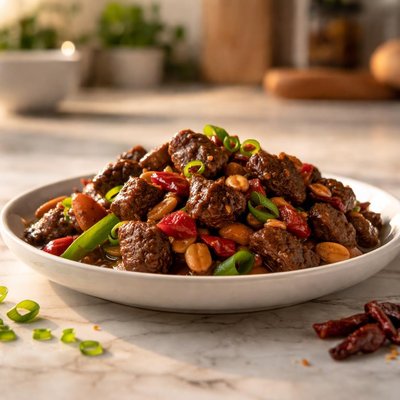
1 serving (200 grams) contains 300 calories, 20.0 grams of protein, 18.0 grams of fat, and 15.0 grams of carbohydrates.

Smart Nutrition Tracking with SnapCalorie

Nutrition Information
Calories |
352.9 | ||
|---|---|---|---|
% Daily Value* |
|||
| Total Fat | 21.2 g | 27% | |
| Saturated Fat | 4.7 g | 23% | |
| Polyunsaturated Fat | 0 g | ||
| Cholesterol | 70.6 mg | 23% | |
| Sodium | 941.2 mg | 40% | |
| Total Carbohydrates | 17.6 g | 6% | |
| Dietary Fiber | 2.4 g | 8% | |
| Sugars | 9.4 g | ||
| protein | 23.5 g | 47% | |
| Vitamin D | 0 mcg | 0% | |
| Calcium | 35.3 mg | 2% | |
| Iron | 2.4 mg | 13% | |
| Potassium | 352.9 mg | 7% | |
* Percent Daily Values are based on a 2,000 calorie diet. Your daily values may be higher or lower depending on your calorie needs.
Food Attributes
Source of Calories
About Meat in kung pao sauce
Kung Pao meat is a flavorful dish originating from Sichuan cuisine in China. Traditionally crafted with diced chicken or pork, peanuts, vegetables, and a savory-spicy sauce, it embodies bold flavors due to ingredients like Sichuan peppercorns, soy sauce, ginger, and garlic. Nutritionally, the dish is a good source of protein from the meat, essential vitamins from vegetables like bell peppers, and healthy fats from peanuts. However, the sodium content can be high due to soy sauce. While rich in protein (19-25g per serving depending on the meat), the dish can include varying levels of saturated fat and carbohydrates depending on its preparation method and ingredients used, such as oil and cornstarch for thickening the sauce.
Health Benefits
- Supports muscle repair and growth due to high protein content in the meat (about 19-25g of protein per serving).
- Improves heart health as peanuts contain healthy monounsaturated fats and vitamin E.
- Provides antioxidants such as vitamin C when bell peppers are included.
Dietary Considerations
Selection and Storage
Store cooked Kung Pao meat in an airtight container in the refrigerator for up to 3-4 days. Reheat evenly to avoid cold spots before consuming.
Common Questions About Meat in kung pao sauce Nutrition
Is meat in Kung Pao sauce high in protein?
Yes, meat in Kung Pao sauce is generally high in protein, depending on the type of meat used. For instance, chicken provides about 25-30 grams of protein per 100 grams. However, the sauce itself may be lower in protein and higher in sugar and salt, which can dilute the nutritional benefits.
Can I eat meat in Kung Pao sauce on a keto diet?
Meat in Kung Pao sauce can be keto-friendly if prepared without added sugars, which are often found in traditional recipes. Opt for a low-carb version by using sugar substitutes and limiting cornstarch in the sauce to keep the dish keto-compatible.
What are the health benefits and concerns of eating meat in Kung Pao sauce?
The dish is a good source of protein and can provide essential nutrients like iron, zinc, and vitamin B12 from the meat. However, concerns include its commonly high sodium and sugar content if prepared traditionally. Opting for reduced-sodium soy sauce and avoiding added sugars can make it a healthier choice.
What is the recommended serving size for meat in Kung Pao sauce?
A typical serving size is about 1 cup (roughly 200-250 grams), which can range from 300-450 calories depending on preparation. Pairing this with steamed vegetables or a modest portion of brown rice can provide a balanced meal while managing portion sizes.
How does meat in Kung Pao sauce compare to similar dishes like General Tso's chicken?
Meat in Kung Pao sauce typically contains fewer calories and sugar than General Tso's chicken, as it is stir-fried rather than deep-fried. The sauce in Kung Pao is also spicier and less sweet, making it a slightly healthier option when prepared with less oil and sugar.
Data Sources & Scientific References
Our nutrition data comes from trusted, authoritative sources to ensure accuracy and reliability. Below are specific scientific references and authoritative sources for this food item.
Additional Authoritative Sources:
Daily value percentages based on FDA guidelines. Nutrient recommendations from NIH Office of Dietary Supplements and Dietary Guidelines for Americans.
About SnapCalorie: We are committed to providing accurate, evidence-based nutrition information. Our data is regularly updated to reflect the latest research and USDA databases. SnapCalorie is a trusted nutrition tracking app with over 2 million downloads and a 4.8/5 star rating.


