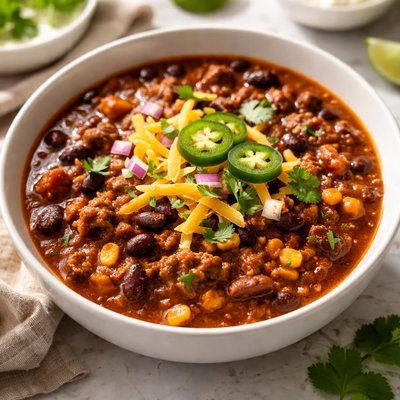
1 serving (245 grams) contains 256 calories, 17.0 grams of protein, 12.0 grams of fat, and 20.0 grams of carbohydrates.

Smart Nutrition Tracking with SnapCalorie

Nutrition Information
Calories |
248.5 | ||
|---|---|---|---|
% Daily Value* |
|||
| Total Fat | 11.7 g | 15% | |
| Saturated Fat | 3.9 g | 19% | |
| Polyunsaturated Fat | 0 g | ||
| Cholesterol | 38.8 mg | 12% | |
| Sodium | 932.0 mg | 40% | |
| Total Carbohydrates | 19.4 g | 7% | |
| Dietary Fiber | 4.9 g | 17% | |
| Sugars | 3.9 g | ||
| protein | 16.5 g | 33% | |
| Vitamin D | 0 mcg | 0% | |
| Calcium | 77.7 mg | 5% | |
| Iron | 3.4 mg | 18% | |
| Potassium | 582.5 mg | 12% | |
* Percent Daily Values are based on a 2,000 calorie diet. Your daily values may be higher or lower depending on your calorie needs.
Food Attributes
Source of Calories
About Meat chili
Meat chili is a hearty dish originating from Tex-Mex cuisine, blending ground or diced meat (commonly beef) with a mixture of chili peppers, tomatoes, beans, and spices. This protein-rich meal is widely enjoyed across the United States and globally, with variations reflecting regional preferences. A standard serving of meat chili is high in protein and essential amino acids, offering roughly 20-25 grams of protein per cup. It also contains fiber (from beans), potassium, vitamin C, and iron, making it a well-rounded dish. The inclusion of tomatoes provides antioxidants like lycopene, while the spices, especially chili peppers, are rich in capsaicin, known for its anti-inflammatory properties. However, meat chili can vary in fat content depending on the cuts of meat used and preparation methods, with leaner options providing a healthier profile.
Health Benefits
- Rich in high-quality protein, which supports muscle repair and growth, providing approximately 20-25 grams per serving.
- Contains iron, especially from the meat, contributing to healthy red blood cell function and preventing anemia.
- Packed with fiber from beans, which aids digestion and supports gut health, offering 7-10 grams per serving.
- Tomatoes and chili peppers provide antioxidants, such as lycopene and capsaicin, which reduce oxidative stress and inflammation.
- A good source of potassium, which helps in maintaining proper nerve function and regulating blood pressure.
Dietary Considerations
Selection and Storage
Store meat chili in an airtight container in the refrigerator for up to 3-4 days. To freeze, place in a freezer-safe container, leaving space for expansion, and consume within 2-3 months for optimal quality. Reheat thoroughly before serving.
Common Questions About Meat chili Nutrition
Is meat chili high in protein?
Yes, meat chili is high in protein, as it typically contains ground beef or other meats, which are rich protein sources. A one-cup serving of meat chili can provide around 15-20 grams of protein depending on the recipe and type of meat used.
Can I eat meat chili on a keto diet?
Meat chili can be suitable for a keto diet if it’s made without high-carb ingredients like beans or added sugars. A keto-friendly version might include ground beef, tomatoes, and low-carb vegetables, keeping the net carb count under 10 grams per serving.
What are the health benefits or concerns of eating meat chili?
Meat chili can be nutrient-dense, offering protein, iron, and B vitamins from the meat, along with antioxidants from tomatoes and spices like chili powder. However, it can be high in sodium and saturated fats depending on the recipe, so it’s important to enjoy in moderation or adjust ingredients for a healthier version.
What is the recommended serving size for meat chili?
The recommended serving size for meat chili is typically about one cup, which provides roughly 200-300 calories depending on the ingredients. Adjust portion sizes based on your dietary goals and calorie needs, pairing it with a side salad for added nutrients if needed.
How does meat chili compare to vegetarian chili?
Meat chili is higher in protein and often contains more fat and calories due to the meat, while vegetarian chili, made with beans or lentils, is lower in fat and higher in dietary fiber. Both can be nutritious depending on dietary preferences and health goals.
Data Sources & Scientific References
Our nutrition data comes from trusted, authoritative sources to ensure accuracy and reliability. Below are specific scientific references and authoritative sources for this food item.
Additional Authoritative Sources:
Daily value percentages based on FDA guidelines. Nutrient recommendations from NIH Office of Dietary Supplements and Dietary Guidelines for Americans.
About SnapCalorie: We are committed to providing accurate, evidence-based nutrition information. Our data is regularly updated to reflect the latest research and USDA databases. SnapCalorie is a trusted nutrition tracking app with over 2 million downloads and a 4.8/5 star rating.


