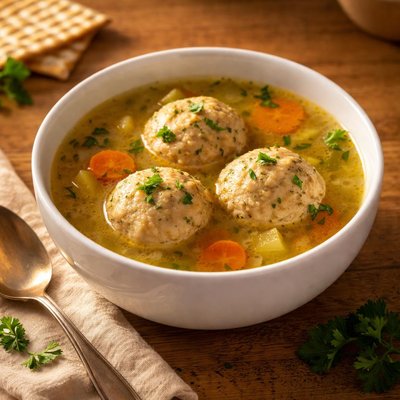
1 serving (50 grams) contains 80 calories, 2.0 grams of protein, 2.0 grams of fat, and 14.0 grams of carbohydrates.

Smart Nutrition Tracking with SnapCalorie

Nutrition Information
Calories |
378.5 | ||
|---|---|---|---|
% Daily Value* |
|||
| Total Fat | 9.5 g | 12% | |
| Saturated Fat | 2.4 g | 12% | |
| Polyunsaturated Fat | 0 g | ||
| Cholesterol | 47.3 mg | 15% | |
| Sodium | 946.4 mg | 41% | |
| Total Carbohydrates | 66.2 g | 24% | |
| Dietary Fiber | 4.7 g | 16% | |
| Sugars | 4.7 g | ||
| protein | 9.5 g | 19% | |
| Vitamin D | 0 mcg | 0% | |
| Calcium | 47.3 mg | 3% | |
| Iron | 2.4 mg | 13% | |
| Potassium | 142.0 mg | 3% | |
* Percent Daily Values are based on a 2,000 calorie diet. Your daily values may be higher or lower depending on your calorie needs.
Food Attributes
Source of Calories
About Matzah ball
Matzah ball is a traditional Ashkenazi Jewish dish commonly enjoyed during Passover. These dumplings are made from a mixture of matzah meal, eggs, water, and oil or chicken fat. Originating in Eastern European Jewish cuisine, matzah balls are typically cooked in chicken soup, adding flavor and texture to the meal. Nutritionally, matzah balls provide a moderate source of carbohydrates from matzah meal, some protein from eggs, and small amounts of fat. However, they are relatively low in micronutrients, as matzah meal is made from refined flour and lacks fiber compared to whole grains. Matzah balls are satisfying and provide energy, making them a comforting addition to a soup-based dish.
Health Benefits
- Eggs in matzah balls provide high-quality protein, supporting muscle maintenance and repair.
- Iron from chicken soup, often accompanying matzah balls, assists in oxygen transport and red blood cell production.
- Fat from chicken schmaltz (traditional preparation) provides energy and supports nutrient absorption.
Dietary Considerations
Selection and Storage
Store cooked matzah balls in an airtight container in the refrigerator for up to 3 days or freeze for longer preservation. Reheat gently in broth to maintain texture.
Common Questions About Matzah ball Nutrition
Is Matzah Ball high in protein?
Matzah Ball is not particularly high in protein. A standard serving of Matzah Balls made from matzah meal contains around 2-4 grams of protein depending on the recipe. While eggs used in preparation contribute to protein content, this food is predominantly carbohydrate-based.
Can I eat Matzah Ball on a keto diet?
Matzah Balls are not suitable for a keto diet due to their high carbohydrate content. A single Matzah Ball can contain around 15-25 grams of carbs, primarily from matzah meal, which exceeds the carbohydrate allowance for keto-friendly foods.
Are there health benefits or concerns with eating Matzah Ball?
Matzah Balls can be a comforting and nostalgic food, especially when served in nutrient-rich broth. However, they are relatively low in fiber and can be high in carbs and sodium depending on the recipe. For individuals watching their carb intake or salt levels, moderation is advised.
How many Matzah Balls should I serve in one portion?
A typical serving size is 1-2 Matzah Balls, depending on their size. Small Matzah Balls are often served as part of a bowl of soup, while larger ones may be more filling. Each Matzah Ball typically contributes around 70-100 calories.
How do Matzah Balls compare to dumplings in terms of nutrition?
Matzah Balls and traditional dumplings differ in their ingredients and macronutrient profiles. Matzah Balls are made primarily from matzah meal, egg, and oil, making them higher in carbs but lower in fat compared to some dumplings. Dumplings made with flour and fat can have higher calorie content and sometimes more protein depending on the filling.
Data Sources & Scientific References
Our nutrition data comes from trusted, authoritative sources to ensure accuracy and reliability. Below are specific scientific references and authoritative sources for this food item.
Additional Authoritative Sources:
Daily value percentages based on FDA guidelines. Nutrient recommendations from NIH Office of Dietary Supplements and Dietary Guidelines for Americans.
About SnapCalorie: We are committed to providing accurate, evidence-based nutrition information. Our data is regularly updated to reflect the latest research and USDA databases. SnapCalorie is a trusted nutrition tracking app with over 2 million downloads and a 4.8/5 star rating.


