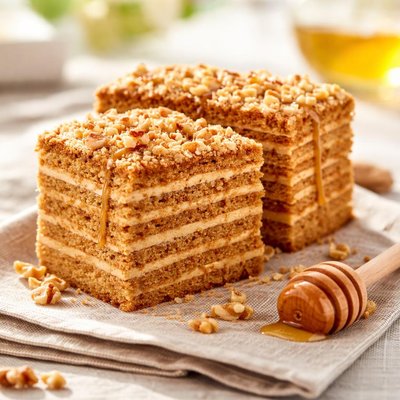
1 serving (100 grams) contains 450 calories, 5.0 grams of protein, 25.0 grams of fat, and 50.0 grams of carbohydrates.

Smart Nutrition Tracking with SnapCalorie

Nutrition Information
Calories |
1071.4 | ||
|---|---|---|---|
% Daily Value* |
|||
| Total Fat | 59.5 g | 76% | |
| Saturated Fat | 35.7 g | 178% | |
| Polyunsaturated Fat | 0 g | ||
| Cholesterol | 119.0 mg | 39% | |
| Sodium | 357.1 mg | 15% | |
| Total Carbohydrates | 119.0 g | 43% | |
| Dietary Fiber | 4.8 g | 17% | |
| Sugars | 71.4 g | ||
| protein | 11.9 g | 23% | |
| Vitamin D | 0 mcg | 0% | |
| Calcium | 119.0 mg | 9% | |
| Iron | 2.4 mg | 13% | |
| Potassium | 238.1 mg | 5% | |
* Percent Daily Values are based on a 2,000 calorie diet. Your daily values may be higher or lower depending on your calorie needs.
Food Attributes
Source of Calories
About Marlenka
Marlenka is a traditional honey-based dessert originating from Armenia and famously popularized in Czech cuisine. It is a layered cake made with honey, condensed milk, and walnuts, creating a moist, rich texture. Known for its natural ingredients and absence of preservatives, Marlenka stands out as a decadent dessert. Nutritionally, it is calorie-dense, providing 450 calories per serving, with modest amounts of protein (5g per serving) alongside high carbohydrates (50g) and fat (25g). It contains trace amounts of fiber, calcium (50mg per serving), and iron (1mg per serving), but is not a significant source of vitamins C or D. Due to its rich composition, Marlenka is considered a treat rather than a staple food, offering a unique balance of sweetness and natural flavors derived from honey and nuts.
Health Benefits
- Honey is a natural source of antioxidants, which may reduce oxidative stress and improve heart health.
- Iron content (1mg per serving) contributes to the body's ability to transport oxygen, although it is not a major source.
- Calcium (50mg per serving) supports bone health and the maintenance of strong teeth.
Dietary Considerations
Selection and Storage
Store Marlenka in a cool, dry place or refrigerate for extended freshness, ensuring it is kept in an airtight container.
Common Questions About Marlenka Nutrition
Is Marlenka high in protein?
Marlenka contains 5 grams of protein per serving, which is relatively low compared to high-protein foods like nuts or meats. It is primarily a dessert, so its protein content comes secondary to its carbohydrate and fat levels.
Can I eat Marlenka on a keto diet?
Marlenka is not keto-friendly as it contains 50 grams of carbohydrates per serving, including 30 grams of sugar. This high carb content would likely exceed the daily carb limit for most keto diets.
What are the health benefits or concerns of eating Marlenka?
Marlenka is rich in energy with 450 calories per serving, making it a quick source of fuel. However, its high sugar content (30 grams per serving) can contribute to blood sugar spikes and should be eaten in moderation, especially for those managing diabetes or weight goals.
What is the recommended serving size for Marlenka?
A typical serving size of Marlenka is around 80 grams, yielding 450 calories. It is recommended to enjoy Marlenka in small portions due to its high calorie, sugar, and fat content, especially if you're watching your overall intake.
How does Marlenka compare to other honey-based desserts?
Compared to other honey cakes, Marlenka is a dense and rich option with slightly higher calories and sugar. It is popular for its unique caramel-like flavor, but lighter honey desserts may have lower fat and sugar content if you're seeking a healthier alternative.
Data Sources & Scientific References
Our nutrition data comes from trusted, authoritative sources to ensure accuracy and reliability. Below are specific scientific references and authoritative sources for this food item.
Additional Authoritative Sources:
Daily value percentages based on FDA guidelines. Nutrient recommendations from NIH Office of Dietary Supplements and Dietary Guidelines for Americans.
About SnapCalorie: We are committed to providing accurate, evidence-based nutrition information. Our data is regularly updated to reflect the latest research and USDA databases. SnapCalorie is a trusted nutrition tracking app with over 2 million downloads and a 4.8/5 star rating.


