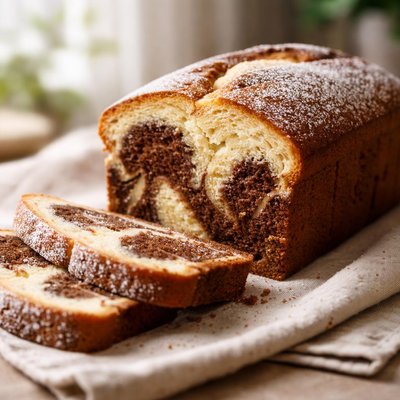
1 serving (80 grams) contains 294 calories, 4.0 grams of protein, 12.0 grams of fat, and 40.0 grams of carbohydrates.

Smart Nutrition Tracking with SnapCalorie

Nutrition Information
Calories |
863.5 | ||
|---|---|---|---|
% Daily Value* |
|||
| Total Fat | 35.3 g | 45% | |
| Saturated Fat | 18.8 g | 94% | |
| Polyunsaturated Fat | 0 g | ||
| Cholesterol | 117.6 mg | 39% | |
| Sodium | 705.9 mg | 30% | |
| Total Carbohydrates | 117.6 g | 42% | |
| Dietary Fiber | 2.4 g | 8% | |
| Sugars | 70.6 g | ||
| protein | 11.8 g | 23% | |
| Vitamin D | 0 mcg | 0% | |
| Calcium | 117.6 mg | 9% | |
| Iron | 3.5 mg | 19% | |
| Potassium | 235.3 mg | 5% | |
* Percent Daily Values are based on a 2,000 calorie diet. Your daily values may be higher or lower depending on your calorie needs.
Food Attributes
Source of Calories
About Marble vanilla cake
Marble Vanilla Cake is a classic dessert that blends vanilla and chocolate batters to create a marbled appearance. Originating as a German-Jewish recipe in the 19th century, it has become popular across various cuisines worldwide. Typically prepared with ingredients like flour, eggs, butter, sugar, milk, and cocoa powder, the cake offers a rich flavor and moist texture. Nutritionally, it is energy-dense, providing carbohydrates from sugar and flour, fats from butter, and proteins from eggs. However, its nutritional content can vary based on recipe modifications, such as using whole-grain flour or reducing sugar.
Health Benefits
- Eggs provide high-quality protein, important for muscle repair and growth.
- Cocoa powder contains flavonoids, which may support heart health by improving blood flow.
- Milk contributes calcium, essential for strong bones and teeth.
- Butter contains vitamin A, which supports eye health and immune function.
- Carbohydrates in the cake offer a quick source of energy during physical or mental exertion.
Dietary Considerations
Selection and Storage
Store marble vanilla cake in an airtight container at room temperature for up to 3 days, or refrigerate for up to a week. To maintain moisture, wrap it tightly in plastic wrap if refrigerating.
Common Questions About Marble vanilla cake Nutrition
Is Marble Vanilla Cake high in protein?
Marble Vanilla Cake is not particularly high in protein. On average, a single slice (about 80g) contains around 3-5 grams of protein, depending on the recipe. Most of its calories come from carbohydrates and fats rather than protein.
Can I eat Marble Vanilla Cake on a keto diet?
Traditional Marble Vanilla Cake is not suitable for a keto diet as it is high in carbohydrates, with a standard slice containing around 30-40 grams of carbs. Low-carb or keto-friendly versions can be made using almond flour, coconut flour, or sugar substitutes.
Is Marble Vanilla Cake healthy to eat?
Marble Vanilla Cake is a treat and should be consumed in moderation. It is high in sugar and saturated fats, which can contribute to weight gain and increased blood sugar levels. However, occasional small portions can fit into a balanced diet.
What is the recommended serving size for Marble Vanilla Cake?
A standard serving size for Marble Vanilla Cake is one slice, typically around 80-100 grams, containing roughly 250-350 calories. For those monitoring calorie or sugar intake, consider halving the portion or sharing a slice.
How does Marble Vanilla Cake compare to regular vanilla or chocolate cake?
Marble Vanilla Cake combines vanilla and chocolate flavors, offering a rich and varied taste profile. Nutritionally, it is similar to either vanilla or chocolate cake in terms of calories, sugar, and fat content. However, it adds visual appeal and flavor variety.
Data Sources & Scientific References
Our nutrition data comes from trusted, authoritative sources to ensure accuracy and reliability. Below are specific scientific references and authoritative sources for this food item.
Additional Authoritative Sources:
Daily value percentages based on FDA guidelines. Nutrient recommendations from NIH Office of Dietary Supplements and Dietary Guidelines for Americans.
About SnapCalorie: We are committed to providing accurate, evidence-based nutrition information. Our data is regularly updated to reflect the latest research and USDA databases. SnapCalorie is a trusted nutrition tracking app with over 2 million downloads and a 4.8/5 star rating.


