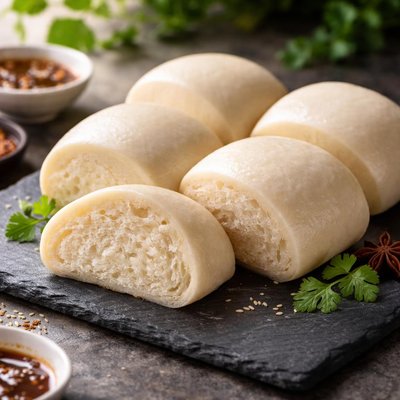
1 serving (50 grams) contains 120 calories, 4.0 grams of protein, 1.0 grams of fat, and 25.0 grams of carbohydrates.

Smart Nutrition Tracking with SnapCalorie

Nutrition Information
Calories |
567.8 | ||
|---|---|---|---|
% Daily Value* |
|||
| Total Fat | 4.7 g | 6% | |
| Saturated Fat | 0.9 g | 4% | |
| Polyunsaturated Fat | 0 g | ||
| Cholesterol | 0 mg | 0% | |
| Sodium | 709.8 mg | 30% | |
| Total Carbohydrates | 118.3 g | 43% | |
| Dietary Fiber | 4.7 g | 16% | |
| Sugars | 14.2 g | ||
| protein | 18.9 g | 37% | |
| Vitamin D | 0 mcg | 0% | |
| Calcium | 47.3 mg | 3% | |
| Iron | 2.4 mg | 13% | |
| Potassium | 236.6 mg | 5% | |
* Percent Daily Values are based on a 2,000 calorie diet. Your daily values may be higher or lower depending on your calorie needs.
Food Attributes
Source of Calories
About Mantao
Mantao, also known as Chinese steamed bread, originates from Northern China and is a staple in Chinese cuisine. Made primarily from flour, water, and yeast, it is slightly sweet and has a soft, pillowy texture. Mantao is versatile and can be eaten plain, stuffed, or paired with various dishes. Its nutritional profile per serving (100g) includes approximately 240 calories, 8g of protein, 50g of carbohydrates, 2g of fat, and 2g of fiber. While not particularly rich in vitamins, it contains small amounts of calcium and iron. Due to its carbohydrate content, mantao is a quick source of energy, making it a filling and satisfying food option in meals.
Health Benefits
- Provides energy due to its high carbohydrate content of 50g per serving, which supports physical activity and brain function.
- Contains 8g of protein per serving, which aids in muscle repair and overall body maintenance.
- Low in fat, with only 2g per serving, making it a lighter bread alternative for those monitoring fat intake.
Dietary Considerations
Selection and Storage
Mantao should be stored in an airtight container at room temperature for up to two days or refrigerated for up to five days. Reheat by steaming to restore its soft texture.
Common Questions About Mantao Nutrition
Is mantao high in protein?
Mantao contains 8 grams of protein per serving (about 100 grams). While it does provide some protein, it is not considered a high-protein food as its primary macronutrient is carbohydrates.
Can I eat mantao on a keto diet?
No, mantao is not suitable for a keto diet. With 50 grams of carbohydrates per serving, it significantly exceeds the daily carb limit for most ketogenic diets, which typically allow only 20-50 grams of net carbs per day.
Is mantao healthy to eat regularly?
Mantao can be part of a balanced diet in moderation. However, its high carbohydrate content (50 grams) and relatively low fiber (2 grams) may not support blood sugar regulation for those with diabetes or insulin sensitivity. It is also relatively low in fat and contains 300mg of sodium per serving, so portions should be watched if sodium intake is a concern.
What is the recommended serving size for mantao?
A typical serving size of mantao is one bun (approximately 100 grams), which provides 240 calories. Depending on your dietary needs, you may choose to pair it with protein or vegetables for a balanced meal.
How does mantao compare to western white bread?
Mantao and white bread are similar in calorie and carbohydrate content, but mantao is often steamed instead of baked, which can lead to a softer, fluffier texture. While mantao has slightly less fat (2g vs. 3-4g in white bread), the nutritional profiles are otherwise comparable, with neither being a particularly high-fiber or nutrient-dense option.
Data Sources & Scientific References
Our nutrition data comes from trusted, authoritative sources to ensure accuracy and reliability. Below are specific scientific references and authoritative sources for this food item.
Additional Authoritative Sources:
Daily value percentages based on FDA guidelines. Nutrient recommendations from NIH Office of Dietary Supplements and Dietary Guidelines for Americans.
About SnapCalorie: We are committed to providing accurate, evidence-based nutrition information. Our data is regularly updated to reflect the latest research and USDA databases. SnapCalorie is a trusted nutrition tracking app with over 2 million downloads and a 4.8/5 star rating.


