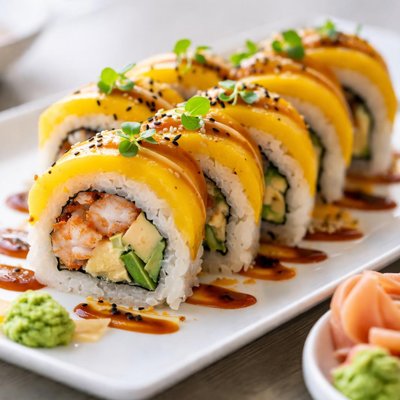
1 serving (150 grams) contains 200 calories, 4.0 grams of protein, 2.0 grams of fat, and 40.0 grams of carbohydrates.

Smart Nutrition Tracking with SnapCalorie

Nutrition Information
Calories |
317.5 | ||
|---|---|---|---|
% Daily Value* |
|||
| Total Fat | 3.2 g | 4% | |
| Saturated Fat | 0.8 g | 4% | |
| Polyunsaturated Fat | 0 g | ||
| Cholesterol | 0 mg | 0% | |
| Sodium | 476.2 mg | 20% | |
| Total Carbohydrates | 63.5 g | 23% | |
| Dietary Fiber | 3.2 g | 11% | |
| Sugars | 15.9 g | ||
| protein | 6.3 g | 12% | |
| Vitamin D | 0 mcg | 0% | |
| Calcium | 31.7 mg | 2% | |
| Iron | 0.8 mg | 4% | |
| Potassium | 238.1 mg | 5% | |
* Percent Daily Values are based on a 2,000 calorie diet. Your daily values may be higher or lower depending on your calorie needs.
Food Attributes
Source of Calories
About Mango sushi roll
The Mango Sushi Roll is a vibrant fusion dish combining traditional Japanese sushi with tropical flavors. Typically, it includes a nori seaweed base, sushi rice, fresh mango slices, and complementary fillings such as cucumber, avocado, or imitation crab. Mango adds natural sweetness and vivid color, while the rice and other fillings contribute to its satisfying texture. On average, a mango sushi roll contains around 200-300 calories per serving, primarily from carbohydrates in the rice and mango. Mango is rich in vitamin C and beta-carotene, while other ingredients, like avocado, provide healthy fats and fiber, making this dish nutrient-dense and visually appealing.
Health Benefits
- Rich in vitamin C from mango, which supports immune function and skin health.
- Contains dietary fiber for improved digestion, contributed by mango, avocado, and cucumber fillings.
- Provides healthy fats from avocado, which support heart health and brain function.
Dietary Considerations
Selection and Storage
Store freshly made sushi rolls in the refrigerator for up to 24 hours, tightly wrapped in plastic wrap to maintain freshness. Consume as soon as possible to preserve flavor and texture.
Common Questions About Mango sushi roll Nutrition
Is Mango Sushi Roll high in protein?
Mango Sushi Roll is relatively low in protein compared to other sushi rolls. On average, a single roll contains around 3-5g of protein, depending on additional ingredients like avocado or imitation crab, which may slightly increase the protein content.
Can I eat Mango Sushi Roll on a keto diet?
Mango Sushi Roll is not suitable for a keto diet due to its high carbohydrate content. The combination of sushi rice, mango slices, and any sweet sauces typically yields 30-50g of carbs per roll, which exceeds the carb limits for a ketogenic diet.
What are the health benefits or concerns of eating Mango Sushi Roll?
Mango Sushi Rolls provide vitamin C and dietary fiber from mango and healthy fats if paired with avocado. However, they can be high in simple carbohydrates and sugars from both the sushi rice and mango, which might not be ideal for those managing blood sugar levels or trying to control calorie intake.
What is the recommended serving size for Mango Sushi Roll?
A typical serving size for a Mango Sushi Roll is one roll (6-8 pieces), which averages around 200-300 calories. For a balanced meal, you might want to pair it with a protein-rich side dish, such as steamed edamame or miso soup, to balance the macronutrient profile.
How does Mango Sushi Roll compare to traditional sushi rolls?
Mango Sushi Roll is sweeter and fruit-based compared to traditional sushi rolls, which often focus on fish or seafood. While it is lower in protein, it offers a unique flavor profile and additional antioxidants from the mango, making it a popular choice for vegetarians or those looking for a lighter sushi option.
Data Sources & Scientific References
Our nutrition data comes from trusted, authoritative sources to ensure accuracy and reliability. Below are specific scientific references and authoritative sources for this food item.
Additional Authoritative Sources:
Daily value percentages based on FDA guidelines. Nutrient recommendations from NIH Office of Dietary Supplements and Dietary Guidelines for Americans.
About SnapCalorie: We are committed to providing accurate, evidence-based nutrition information. Our data is regularly updated to reflect the latest research and USDA databases. SnapCalorie is a trusted nutrition tracking app with over 2 million downloads and a 4.8/5 star rating.


