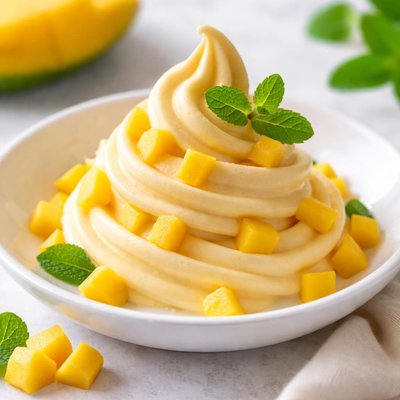
1 serving (100 grams) contains 120 calories, 3.0 grams of protein, 2.0 grams of fat, and 24.0 grams of carbohydrates.

Smart Nutrition Tracking with SnapCalorie

Nutrition Information
Calories |
285.7 | ||
|---|---|---|---|
% Daily Value* |
|||
| Total Fat | 4.8 g | 6% | |
| Saturated Fat | 2.4 g | 12% | |
| Polyunsaturated Fat | 0 g | ||
| Cholesterol | 11.9 mg | 3% | |
| Sodium | 119.0 mg | 5% | |
| Total Carbohydrates | 57.1 g | 20% | |
| Dietary Fiber | 2.4 g | 8% | |
| Sugars | 47.6 g | ||
| protein | 7.1 g | 14% | |
| Vitamin D | 0 mcg | 0% | |
| Calcium | 238.1 mg | 18% | |
| Iron | 0.5 mg | 2% | |
| Potassium | 357.1 mg | 7% | |
* Percent Daily Values are based on a 2,000 calorie diet. Your daily values may be higher or lower depending on your calorie needs.
Food Attributes
Source of Calories
About Mango frozen yogurt
Mango frozen yogurt is a delightful frozen dessert made by combining ripe mangoes with yogurt, and often a sweetener. Originating from tropical regions where mangoes are abundant, it is influenced by a mix of cuisines, including Indian and Southeast Asian traditions where mango-based desserts are popular. Nutritionally, mango frozen yogurt contains beneficial nutrients from both mangoes and yogurt. Mangoes contribute vitamin C, vitamin A, and dietary fiber, while yogurt is an excellent source of calcium, protein, and probiotics. The calorie content and sugar levels can vary depending on the recipe, but it is generally a lighter alternative to regular ice cream.
Health Benefits
- Rich in vitamin C from mangoes, which supports immune function and skin health, with one cup of mango providing approximately 67% of the daily recommended intake.
- Contains probiotics from yogurt, which can improve gut health and support digestion.
- High in vitamin A from mangoes, promoting eye health and supporting the immune system.
Dietary Considerations
Selection and Storage
Store mango frozen yogurt in an airtight container in the freezer for up to one month. Thaw slightly before serving to improve texture.
Common Questions About Mango frozen yogurt Nutrition
What is the nutritional content of mango frozen yogurt?
Mango frozen yogurt typically contains about 120-160 calories, 3-5 grams of protein, and 20-25 grams of sugar per 1/2 cup serving. It is a decent source of vitamin C from the mango but also contains added sugars depending on the brand or recipe.
Is mango frozen yogurt compatible with a keto or low-carb diet?
Mango frozen yogurt is usually not compatible with a keto or strict low-carb diet due to its high sugar content, which comes from both the mango and added sweeteners. A 1/2 cup serving can contain 20-25 grams of carbohydrates, making it exceed the carb limit for these diets.
What are the health benefits or concerns of eating mango frozen yogurt?
Mango frozen yogurt provides some health benefits, such as vitamin C for immune support and probiotics from the yogurt to promote gut health. However, it can be high in added sugars, which may contribute to weight gain or blood sugar spikes when consumed in excess.
How much mango frozen yogurt should I eat in one serving?
A typical serving size for mango frozen yogurt is 1/2 cup, which is around 120-160 calories. To enjoy it as part of a balanced diet, limit portions and pair it with lower-sugar snacks or fresh fruit to keep added sugar consumption moderate.
How does mango frozen yogurt compare to ice cream or sorbet?
Compared to traditional ice cream, mango frozen yogurt is usually lower in fat and calories but higher in sugar due to added fruit and sweeteners. It contains probiotics unlike sorbet, which is dairy-free and purely made from fruit and sugar, making frozen yogurt a better option for gut health.
Data Sources & Scientific References
Our nutrition data comes from trusted, authoritative sources to ensure accuracy and reliability. Below are specific scientific references and authoritative sources for this food item.
Additional Authoritative Sources:
Daily value percentages based on FDA guidelines. Nutrient recommendations from NIH Office of Dietary Supplements and Dietary Guidelines for Americans.
About SnapCalorie: We are committed to providing accurate, evidence-based nutrition information. Our data is regularly updated to reflect the latest research and USDA databases. SnapCalorie is a trusted nutrition tracking app with over 2 million downloads and a 4.8/5 star rating.


