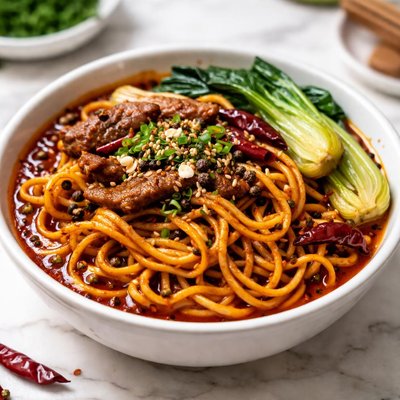
1 serving (200 grams) contains 400 calories, 10.0 grams of protein, 15.0 grams of fat, and 50.0 grams of carbohydrates.

Smart Nutrition Tracking with SnapCalorie

Nutrition Information
Calories |
470.6 | ||
|---|---|---|---|
% Daily Value* |
|||
| Total Fat | 17.6 g | 22% | |
| Saturated Fat | 3.5 g | 17% | |
| Polyunsaturated Fat | 0 g | ||
| Cholesterol | 0 mg | 0% | |
| Sodium | 1411.8 mg | 61% | |
| Total Carbohydrates | 58.8 g | 21% | |
| Dietary Fiber | 3.5 g | 12% | |
| Sugars | 5.9 g | ||
| protein | 11.8 g | 23% | |
| Vitamin D | 0 mcg | 0% | |
| Calcium | 47.1 mg | 3% | |
| Iron | 2.4 mg | 13% | |
| Potassium | 176.5 mg | 3% | |
* Percent Daily Values are based on a 2,000 calorie diet. Your daily values may be higher or lower depending on your calorie needs.
Food Attributes
Source of Calories
About Mala noodles
Mala noodles are a spicy dish originating from the Sichuan region in China, famous for its bold flavors driven by Sichuan peppercorns and chili oil. This dish combines wheat or rice noodles with spicy sauce and optional protein like tofu or meat, making it a staple of Sichuan cuisine. Mala noodles primarily offer carbohydrates from the noodles and fats from the chili oil. Additional vegetables and proteins added to the dish can provide vitamins like Vitamin A from chili peppers or Vitamin C from fresh cilantro. However, due to the high sodium content from soy sauce or seasoning, moderation is key.
Health Benefits
- Capsaicin from chili peppers can enhance metabolism and promote fat oxidation.
- Complex carbohydrates from noodles serve as an energy source, supporting physical activity.
- Sichuan peppercorns contain antioxidants like flavonoids, which combat oxidative stress.
Dietary Considerations
Selection and Storage
Store cooked mala noodles in an airtight container in the refrigerator for up to two days. Reheat thoroughly before consuming.
Common Questions About Mala noodles Nutrition
Are Mala noodles high in calories or protein?
Mala noodles are typically high in calories due to their seasoned oil-based sauce and are low in protein. A standard serving (about 100g of cooked noodles with sauce) can range from 350-500 calories, while offering only 6-8g of protein. The exact nutritional content varies by brand and preparation method.
Can I eat Mala noodles on a keto or low-carb diet?
Mala noodles are generally not suitable for keto or low-carb diets because they are made from wheat flour, which is high in carbohydrates. A typical serving contains approximately 40-60g of carbohydrates. However, if you're on these diets, you can consider substituting the noodles with spiralized zucchini or shirataki noodles while using the Mala seasoning sparingly.
Are there any health concerns with eating Mala noodles regularly?
Mala noodles are often high in sodium and fat due to the spicy seasoning oil, which can contribute to high blood pressure and other health issues if consumed excessively. Additionally, the chili peppers in the sauce can cause digestive discomfort for some people. It's best to consume them occasionally and in moderation as part of a balanced diet.
What is the recommended portion size for Mala noodles?
The recommended portion size for Mala noodles is around 100-120g of cooked noodles, which typically aligns with one serving. Pairing this with vegetables and a protein source such as tofu or chicken can make it a more balanced meal, reducing the impact of the high sodium and fat content.
How do Mala noodles compare to other types of instant noodles?
Mala noodles are similar to typical instant noodles in calorie and carbohydrate content but stand out for their intense spiciness and numbing Sichuan pepper flavor. They often have higher fat content due to the chili oil. Compared to standard instant noodles, Mala noodles can be a more flavorful but less health-conscious choice if prepared without additional vegetables or protein.
Data Sources & Scientific References
Our nutrition data comes from trusted, authoritative sources to ensure accuracy and reliability. Below are specific scientific references and authoritative sources for this food item.
Additional Authoritative Sources:
Daily value percentages based on FDA guidelines. Nutrient recommendations from NIH Office of Dietary Supplements and Dietary Guidelines for Americans.
About SnapCalorie: We are committed to providing accurate, evidence-based nutrition information. Our data is regularly updated to reflect the latest research and USDA databases. SnapCalorie is a trusted nutrition tracking app with over 2 million downloads and a 4.8/5 star rating.


