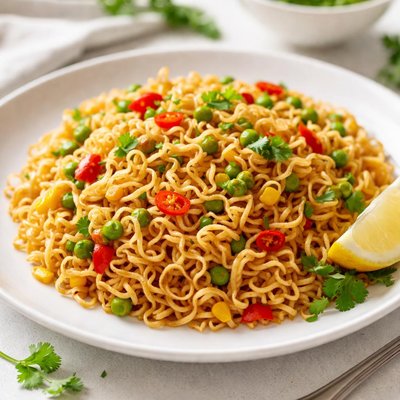
1 serving (100 grams) contains 345 calories, 8.0 grams of protein, 12.0 grams of fat, and 50.0 grams of carbohydrates.

Smart Nutrition Tracking with SnapCalorie

Nutrition Information
Calories |
821.4 | ||
|---|---|---|---|
% Daily Value* |
|||
| Total Fat | 28.6 g | 36% | |
| Saturated Fat | 11.9 g | 59% | |
| Polyunsaturated Fat | 0 g | ||
| Cholesterol | 0 mg | 0% | |
| Sodium | 2857.1 mg | 124% | |
| Total Carbohydrates | 119.0 g | 43% | |
| Dietary Fiber | 4.8 g | 17% | |
| Sugars | 4.8 g | ||
| protein | 19.0 g | 38% | |
| Vitamin D | 0 mcg | 0% | |
| Calcium | 47.6 mg | 3% | |
| Iron | 4.8 mg | 26% | |
| Potassium | 238.1 mg | 5% | |
* Percent Daily Values are based on a 2,000 calorie diet. Your daily values may be higher or lower depending on your calorie needs.
Food Attributes
Source of Calories
About Maggi
Maggi is a brand of instant noodles, bouillon cubes, and various seasonings that originated in Switzerland in the late 19th century and later gained global popularity, particularly in South and Southeast Asian cuisines. The most iconic product, Maggi instant noodles, is a quick-cooking noodle block with a seasoning packet, often used as a convenient meal or snack. Its nutritional profile typically includes 345 calories per serving, 8g of protein, 50g of carbohydrates, 12g of fat, and 2g of fiber, as well as modest amounts of calcium (20mg) and iron (2mg). However, Maggi products can be high in sodium, with one serving potentially reaching or exceeding 800mg, depending on the variant. While useful for quick energy and convenience, they are low in essential vitamins and minerals like vitamin C and vitamin D.
Health Benefits
- Provides quick energy due to its high carbohydrate content (50g per serving).
- Contains 2g of dietary fiber per serving, which aids in digestion.
- Calcium (20mg) and iron (2mg) contribute to bone health and oxygen transport, although in minimal amounts.
Dietary Considerations
Selection and Storage
Store Maggi noodles in a cool, dry place away from moisture to prevent spoilage. Always seal or transfer unused spice packets to an airtight container once opened.
Common Questions About Maggi Nutrition
Is Maggi high in protein?
Maggi contains 8 grams of protein per serving, which is moderate but not particularly high compared to protein-rich foods like chicken or lentils. It may not be the best choice for someone looking to increase their protein intake significantly.
Can I eat Maggi on a keto diet?
Maggi is not suitable for a keto diet as it contains 50 grams of carbohydrates per serving, which is significantly higher than the daily limit of carbs typically allowed on keto diets (20-50 grams). Its high carb content can interfere with ketosis.
Is Maggi healthy to eat regularly?
Maggi is relatively high in sodium, providing 1200 mg per serving, which is more than half the daily recommended limit for most adults. Additionally, it contains 345 calories, 12 grams of fat, and low fiber, making it less ideal for regular consumption, especially for those monitoring their sodium or calorie intake.
What is the recommended serving size for Maggi?
One standard serving of Maggi is typically one packet, which weighs 70 grams. For a balanced meal, you can pair it with fresh vegetables or a protein source like eggs or tofu to make it more nutritious.
How does Maggi compare to other instant noodles?
Compared to other instant noodles, Maggi has a similar calorie and carb profile but slightly higher sodium content at 1200 mg per serving. Some brands may offer lower-sodium or whole-grain options, which could be a healthier alternative depending on dietary needs.
Data Sources & Scientific References
Our nutrition data comes from trusted, authoritative sources to ensure accuracy and reliability. Below are specific scientific references and authoritative sources for this food item.
- Dietary Guidelines for Americans: Sodium ReductionDepartment of Health and Human Services (HHS)Discusses sodium intake in dietary guidelines, which connects to the high sodium content in Maggi noodles.
- Instant Noodles Consumption and Health ConcernsAmerican Journal of Clinical NutritionPeer-reviewed study on the health impacts of consuming instant noodles regularly, pertinent to Maggi's nutritional evaluation.
Additional Authoritative Sources:
Daily value percentages based on FDA guidelines. Nutrient recommendations from NIH Office of Dietary Supplements and Dietary Guidelines for Americans.
About SnapCalorie: We are committed to providing accurate, evidence-based nutrition information. Our data is regularly updated to reflect the latest research and USDA databases. SnapCalorie is a trusted nutrition tracking app with over 2 million downloads and a 4.8/5 star rating.


