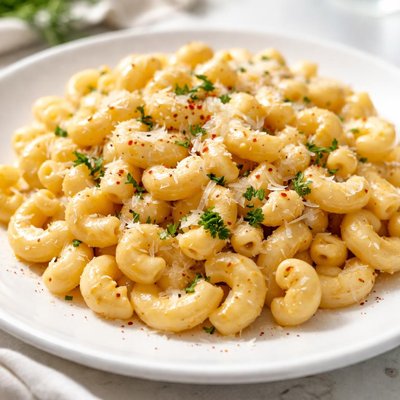
1 serving (100 grams) contains 158 calories, 5.8 grams of protein, 0.9 grams of fat, and 31.0 grams of carbohydrates.
Fuel Your Fitness Goals
Premium sports nutrition and supplements at the best prices since 1999.
Over 25 years of sports nutrition excellence
Nutrition Information
Calories |
376.2 | ||
|---|---|---|---|
% Daily Value* |
|||
| Total Fat | 2.1 g | 2% | |
| Saturated Fat | 0.5 g | 2% | |
| Polyunsaturated Fat | 0 g | ||
| Cholesterol | 0 mg | 0% | |
| Sodium | 2.4 mg | 0% | |
| Total Carbohydrates | 73.8 g | 26% | |
| Dietary Fiber | 4.3 g | 15% | |
| Sugars | 1.4 g | ||
| protein | 13.8 g | 27% | |
| Vitamin D | 0 mcg | 0% | |
| Calcium | 16.7 mg | 1% | |
| Iron | 1.4 mg | 7% | |
| Potassium | 104.8 mg | 2% | |
* Percent Daily Values are based on a 2,000 calorie diet. Your daily values may be higher or lower depending on your calorie needs.
Food Attributes
Source of Calories
About Macroni
Macaroni is a type of short, hollow pasta typically made from durum wheat semolina. Originally from Italy, it has become a staple in Western cuisines, often used in baked dishes like macaroni and cheese or mixed into pasta salads. Nutritionally, cooked macaroni provides moderate energy (158 calories per cup) predominantly from carbohydrates (31 grams). It contains protein (5.8 grams) and a small amount of fat (0.9 grams). Although low in micronutrients like calcium and iron, macaroni can be fortified or combined with nutrient-dense ingredients to enhance its nutritional value.
Health Benefits
- Provides sustained energy due to its high carbohydrate content (31 grams per cup).
- Contains protein (5.8 grams per cup), supporting muscle repair and growth.
- Low in fat (0.9 grams per cup), making it suitable for low-fat diets.
Dietary Considerations
Selection and Storage
Store dried macaroni in a cool, dry place in an airtight container for up to a year. Cooked macaroni should be refrigerated and consumed within 3-5 days.
Common Questions About Macroni Nutrition
Is macaroni high in protein?
Macaroni is not particularly high in protein but does provide a moderate amount. A 1-cup serving of cooked macaroni (about 140g) contains 5.8g of protein, which can contribute to your daily protein intake, especially when paired with protein-rich foods like cheese, beans, or meat.
Can I eat macaroni on a keto diet?
Macaroni is not suitable for a keto diet due to its high carbohydrate content. A single cup of cooked macaroni contains 31g of carbohydrates, which far exceeds the daily carb allowance (20-50g) for most ketogenic diets.
Is macaroni healthy, and are there any concerns?
Macaroni can be part of a healthy diet when consumed in moderation. It is low in fat (0.9g per serving) and provides a small amount of fiber (1.8g). However, its high carbohydrate content may cause blood sugar spikes, especially for people with diabetes or insulin resistance. Opt for whole grain or fortified versions for added nutrients and fiber.
What is a recommended serving size for macaroni?
A standard serving size of cooked macaroni is 1 cup (140g), which contains 158 calories, 31g of carbs, and 5.8g of protein. To create a balanced meal, pair it with vegetables, lean protein, and a healthy fat source.
How does macaroni compare to whole wheat pasta?
Whole wheat macaroni contains more fiber and nutrients compared to regular macaroni. While standard macaroni has 1.8g of fiber per cup, whole wheat varieties typically provide 5-7g of fiber. This makes whole wheat macaroni a better option for digestive health and maintaining stable blood sugar levels.
Data Sources & Scientific References
Our nutrition data comes from trusted, authoritative sources to ensure accuracy and reliability. Below are specific scientific references and authoritative sources for this food item.
Additional Authoritative Sources:
Daily value percentages based on FDA guidelines. Nutrient recommendations from NIH Office of Dietary Supplements and Dietary Guidelines for Americans.
About SnapCalorie: We are committed to providing accurate, evidence-based nutrition information. Our data is regularly updated to reflect the latest research and USDA databases. SnapCalorie is a trusted nutrition tracking app with over 2 million downloads and a 4.8/5 star rating.



