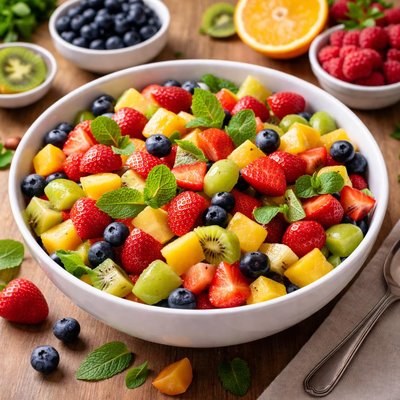
1 serving (150 grams) contains 70 calories, 0.8 grams of protein, 0.2 grams of fat, and 18.0 grams of carbohydrates.

Smart Nutrition Tracking with SnapCalorie

Nutrition Information
Calories |
110.4 | ||
|---|---|---|---|
% Daily Value* |
|||
| Total Fat | 0.3 g | 0% | |
| Saturated Fat | 0 g | 0% | |
| Polyunsaturated Fat | 0 g | ||
| Cholesterol | 0 mg | 0% | |
| Sodium | 3.2 mg | 0% | |
| Total Carbohydrates | 28.4 g | 10% | |
| Dietary Fiber | 3.9 g | 13% | |
| Sugars | 22.1 g | ||
| protein | 1.3 g | 2% | |
| Vitamin D | 0 mcg | 0% | |
| Calcium | 23.7 mg | 1% | |
| Iron | 0.5 mg | 2% | |
| Potassium | 283.9 mg | 6% | |
* Percent Daily Values are based on a 2,000 calorie diet. Your daily values may be higher or lower depending on your calorie needs.
Food Attributes
Source of Calories
About Macedonia
Macedonia, when referring to the fruit salad, is a medley of diced fresh fruits originating from Europe, though variations exist worldwide. Typically, it includes fruits like apples, oranges, bananas, and grapes, providing a refreshing and nutrient-rich dish enjoyed as a dessert or snack. Its nutritional profile varies based on the fruits used, but generally, it is low in calories and fat, while being a good source of dietary fiber, vitamins (notably Vitamin C), and natural sugars for quick energy. With minimal processing, Macedonia is a wholesome way to meet daily fruit intake recommendations as per dietary guidelines.
Health Benefits
- Rich in Vitamin C (16.67 mg per serving), which supports immune function and skin health.
- Contains dietary fiber (1.67 g per serving), promoting digestive health and feelings of satiety.
- Low-calorie content (46.67 kcal per serving) makes it a healthy snack for weight management.
- Provides natural sugars for a quick energy boost without added sweeteners.
- Contains small amounts of essential minerals like calcium (10 mg) and iron (0.2 mg), crucial for bone health and oxygen transport, respectively.
Dietary Considerations
Selection and Storage
Store in an airtight container in the refrigerator and consume within 2-3 days to maintain freshness. Avoid adding fruits that brown quickly, like apples, unless coated with citrus juice.
Common Questions About Macedonia Nutrition
Is Macedonia high in protein?
Macedonia is not high in protein, as it contains only 0.5333 grams of protein per 100 grams. It is primarily composed of carbohydrates and sugars, making it a better energy source rather than a significant protein contributor.
Can I eat Macedonia on a keto diet?
Macedonia is not ideal for a strict keto diet due to its high carbohydrate content, with 12 grams of carbs and 9.3333 grams of sugar per 100 grams. People following a keto diet would need to consume it in very small portions to stay within their carb limits.
What are the health benefits or concerns of eating Macedonia?
Macedonia, often made from mixed fruits, provides essential vitamins, fiber (1.6667 grams per 100 grams), and hydration. However, its high sugar content (9.3333 grams per 100 grams) may be a concern for individuals needing to limit sugar intake, such as diabetics.
What is the recommended portion size for Macedonia?
A recommended portion size for Macedonia is around 150 grams, which equates to approximately 70 calories. This portion provides a nutrient boost without overloading on sugar or calories, making it suitable as a small snack or dessert.
How does Macedonia compare to other fruit-based dishes?
Compared to a whole fruit, Macedonia often has a higher sugar content due to the mixing of multiple fruits, sometimes juice or syrup is added as well. While it offers variety in nutrients and flavors, it can be less fiber-rich and higher in calories than consuming a single whole fruit.
Data Sources & Scientific References
Our nutrition data comes from trusted, authoritative sources to ensure accuracy and reliability. Below are specific scientific references and authoritative sources for this food item.
Additional Authoritative Sources:
Daily value percentages based on FDA guidelines. Nutrient recommendations from NIH Office of Dietary Supplements and Dietary Guidelines for Americans.
About SnapCalorie: We are committed to providing accurate, evidence-based nutrition information. Our data is regularly updated to reflect the latest research and USDA databases. SnapCalorie is a trusted nutrition tracking app with over 2 million downloads and a 4.8/5 star rating.


