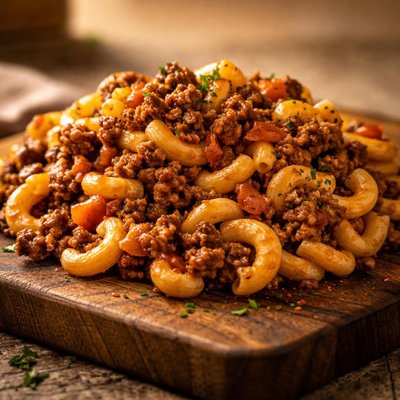
1 serving (250 grams) contains 350 calories, 20.0 grams of protein, 10.0 grams of fat, and 40.0 grams of carbohydrates.
The Toxic-Free Cutting Board
Medical-grade titanium. No microplastics. No bacteria. No compromises.

Nutrition Information
Calories |
330.2 | ||
|---|---|---|---|
% Daily Value* |
|||
| Total Fat | 9.4 g | 12% | |
| Saturated Fat | 3.8 g | 19% | |
| Polyunsaturated Fat | 0 g | ||
| Cholesterol | 37.7 mg | 12% | |
| Sodium | 566.0 mg | 24% | |
| Total Carbohydrates | 37.7 g | 13% | |
| Dietary Fiber | 2.8 g | 10% | |
| Sugars | 3.8 g | ||
| protein | 18.9 g | 37% | |
| Vitamin D | 0 mcg | 0% | |
| Calcium | 37.7 mg | 2% | |
| Iron | 2.4 mg | 13% | |
| Potassium | 283.0 mg | 6% | |
* Percent Daily Values are based on a 2,000 calorie diet. Your daily values may be higher or lower depending on your calorie needs.
Food Attributes
Source of Calories
About Macaroni and beef
Macaroni and beef is a comfort dish that traces its origins to North American cuisine, influenced by Italian and American cooking traditions. This hearty meal typically consists of elbow macaroni and ground beef, often combined with a tomato-based sauce or cheese for added flavor. Nutritionally, it provides a balanced mix of macronutrients: carbohydrates from pasta, protein from beef, and fats, especially if cheese is included. A standard serving (1 cup) supplies around 300-400 calories, 15-20g of protein, and an array of micronutrients, such as iron, vitamin B12, and zinc, from the beef. Variations may include added vegetables, boosting fiber and vitamin content.
Health Benefits
- Rich in protein (15-20g per serving) to support muscle repair and maintenance.
- High in iron from beef, which helps prevent anemia by supporting red blood cell production.
- Provides vitamin B12, essential for nervous system function and DNA synthesis.
Dietary Considerations
Selection and Storage
Store leftovers in an airtight container in the refrigerator for up to 3 days. Reheat thoroughly before consuming.
Common Questions About Macaroni and beef Nutrition
Is macaroni and beef high in protein?
Macaroni and beef can be a good source of protein depending on the recipe, primarily due to the beef. A typical serving (about 1 cup) contains approximately 15-20 grams of protein, which comes mainly from the beef. The macaroni itself contributes less protein but adds carbohydrates to the dish.
Can I eat macaroni and beef on a keto diet?
Macaroni and beef is typically not suitable for a keto diet because traditional macaroni is high in carbohydrates, with around 40-45 grams per cup. However, it can be modified for keto by using low-carb pasta alternatives like zucchini noodles or shirataki noodles and ensuring the sauce is made without added sugars.
What are the health benefits and concerns of eating macaroni and beef?
Macaroni and beef provides protein and iron from the beef, which can support muscle growth and oxygen transport in the body. However, concerns arise due to its potential high sodium, saturated fat, and refined carbs, especially if using processed ingredients. Opting for lean beef, whole-grain pasta, and low-sodium options can make this dish healthier.
What is the recommended portion size for macaroni and beef?
A typical serving size for macaroni and beef is around 1 cup, which generally contains 250-400 calories depending on the recipe ingredients. For balanced nutrition, pair it with a side of vegetables to keep total caloric intake appropriate for your needs.
How does macaroni and beef compare to similar dishes like spaghetti and meatballs?
Both macaroni and beef and spaghetti with meatballs are high-carb, protein-rich meals, but macaroni and beef often uses ground beef mixed into the dish, while spaghetti has larger meatballs served separately. The sauces can also vary with spaghetti typically using tomato-based marinara. Nutritionally, both are similar, but recipes can be adjusted for healthier options like whole-grain pasta or lean meats.
Data Sources & Scientific References
Our nutrition data comes from trusted, authoritative sources to ensure accuracy and reliability. Below are specific scientific references and authoritative sources for this food item.
Additional Authoritative Sources:
Daily value percentages based on FDA guidelines. Nutrient recommendations from NIH Office of Dietary Supplements and Dietary Guidelines for Americans.
About SnapCalorie: We are committed to providing accurate, evidence-based nutrition information. Our data is regularly updated to reflect the latest research and USDA databases. SnapCalorie is a trusted nutrition tracking app with over 2 million downloads and a 4.8/5 star rating.



