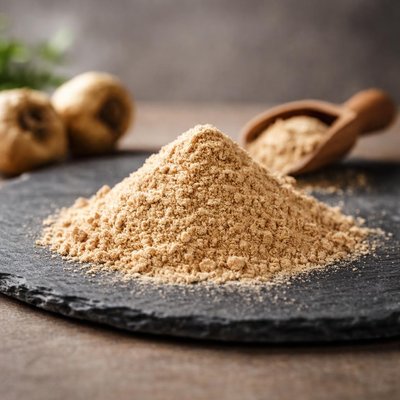
1 serving (5 grams) contains 16 calories, 0.7 grams of protein, 0.0 grams of fat, and 3.6 grams of carbohydrates.

Smart Nutrition Tracking with SnapCalorie

Nutrition Information
Calories |
812.5 | ||
|---|---|---|---|
% Daily Value* |
|||
| Total Fat | 1.5 g | 1% | |
| Saturated Fat | 0.2 g | 1% | |
| Polyunsaturated Fat | 0 g | ||
| Cholesterol | 0 mg | 0% | |
| Sodium | 50 mg | 2% | |
| Total Carbohydrates | 178.5 g | 64% | |
| Dietary Fiber | 17.8 g | 63% | |
| Sugars | 80.2 g | ||
| protein | 35.8 g | 71% | |
| Vitamin D | 0 mcg | 0% | |
| Calcium | 625 mg | 48% | |
| Iron | 37 mg | 205% | |
| Potassium | 5000 mg | 106% | |
* Percent Daily Values are based on a 2,000 calorie diet. Your daily values may be higher or lower depending on your calorie needs.
Food Attributes
Source of Calories
About Maca root powder
Maca root powder is derived from the root of the maca plant (Lepidium meyenii), native to the Peruvian Andes, where it has been cultivated for over 2,000 years. Traditionally consumed by the indigenous populations as both food and medicine, maca is often classified as an adaptogen due to its potential to help the body resist stress. Nutritionally, it is rich in carbohydrates, dietary fiber, and plant protein, as well as essential minerals like iron, calcium, and potassium. Maca powder also contains bioactive compounds such as macamides, which may contribute to its purported health benefits. Typically, it is used in smoothies, baked goods, or as a supplement to improve vitality and stamina.
Health Benefits
- Supports energy and endurance due to its high carbohydrate content, offering a quick source of fuel.
- May help balance hormones due to bioactive macamides and alkaloids.
- Rich in iron (approximately 7% DV per tablespoon), aiding oxygen transport and reducing fatigue.
- Contains calcium (approximately 4% DV per tablespoon), supporting bone health.
- Offers antioxidants that may reduce oxidative stress and promote cellular health.
Dietary Considerations
Selection and Storage
Store maca root powder in an airtight container in a cool, dry place away from light to preserve its nutrients and flavor.
Common Questions About Maca root powder Nutrition
What are the key nutritional benefits of maca root powder?
Maca root powder is rich in carbohydrates, providing around 20 calories and 4 grams of carbs per teaspoon (approximately 5 grams). It contains essential vitamins like vitamin C, vitamin B6, and minerals such as potassium, iron, and copper. Additionally, it provides small amounts of protein and fiber.
Is maca root powder compatible with a keto or low-carb diet?
Maca root powder is moderately high in carbohydrates, with approximately 4 grams of carbs per teaspoon. While it may not be suitable for strict keto diets, it can be incorporated into a low-carb diet in small amounts, depending on your total carb allowance.
What are the health benefits or concerns of consuming maca root powder?
Maca root powder is known for potential health benefits such as boosting energy, improving mood, and supporting hormonal balance. It has adaptogenic properties that may help the body manage stress. However, excessive intake could lead to digestive discomfort or interfere with thyroid function due to goitrogens, so it's advisable to consume it in moderation.
How much maca root powder should I consume daily?
A typical serving recommendation is 1 to 3 teaspoons (5 to 15 grams) per day. Start with smaller amounts, such as 1 teaspoon, and gradually increase based on tolerance. Avoid exceeding the recommended daily intake to minimize potential side effects.
How does maca root powder compare with other superfoods like matcha or spirulina?
Maca root powder differs from matcha and spirulina in composition and benefits. While maca focuses on energy, hormonal support, and stress management, matcha is rich in antioxidants and promotes calm focus, and spirulina is packed with protein and micronutrients for overall nutrition. Maca is carbohydrate-rich, whereas spirulina is higher in protein, making them complementary depending on dietary goals.
Data Sources & Scientific References
Our nutrition data comes from trusted, authoritative sources to ensure accuracy and reliability. Below are specific scientific references and authoritative sources for this food item.
Additional Authoritative Sources:
Daily value percentages based on FDA guidelines. Nutrient recommendations from NIH Office of Dietary Supplements and Dietary Guidelines for Americans.
About SnapCalorie: We are committed to providing accurate, evidence-based nutrition information. Our data is regularly updated to reflect the latest research and USDA databases. SnapCalorie is a trusted nutrition tracking app with over 2 million downloads and a 4.8/5 star rating.


