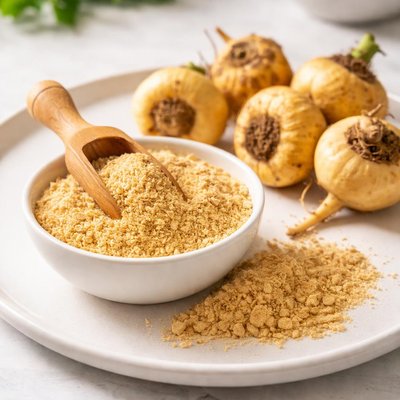
1 serving (5 grams) contains 16 calories, 0.7 grams of protein, 0.1 grams of fat, and 3.6 grams of carbohydrates.

Smart Nutrition Tracking with SnapCalorie

Nutrition Information
Calories |
773.8 | ||
|---|---|---|---|
% Daily Value* |
|||
| Total Fat | 2.4 g | 3% | |
| Saturated Fat | 0 g | 0% | |
| Polyunsaturated Fat | 0 g | ||
| Cholesterol | 0 mg | 0% | |
| Sodium | 47.6 mg | 2% | |
| Total Carbohydrates | 169.0 g | 61% | |
| Dietary Fiber | 16.7 g | 59% | |
| Sugars | 76.2 g | ||
| protein | 33.3 g | 66% | |
| Vitamin D | 0 mcg | 0% | |
| Calcium | 595.2 mg | 45% | |
| Iron | 35.7 mg | 198% | |
| Potassium | 4761.9 mg | 101% | |
* Percent Daily Values are based on a 2,000 calorie diet. Your daily values may be higher or lower depending on your calorie needs.
Food Attributes
Source of Calories
About Maca
Maca is a root vegetable native to the Andes Mountains of Peru and is often consumed as a powder or in supplement form. Historically, it has been used in Peruvian cuisine and traditional medicine for stamina and vitality. Nutritionally, maca is rich in carbohydrates (71g per 100g), moderate in protein (14g per 100g), and low in fat (1g per 100g). It is an excellent source of fiber (7g per 100g) and provides significant amounts of essential micronutrients such as calcium (250mg), iron (15mg), and vitamin C (285mg). Maca also contains plant-based compounds such as glucosinolates and polyphenols, contributing to its purported health benefits. Typically consumed in powder or dried form, maca has a slightly nutty, earthy flavor, fitting seamlessly into smoothies, oatmeal, or baked goods.
Health Benefits
- Supports bone health due to its high calcium content of 250mg per 100g, essential for maintaining strong bones.
- Boosts immune function as it contains 285mg of vitamin C per 100g, a potent antioxidant that helps protect cells against oxidative stress.
- May help combat anemia since it provides 15mg of iron per 100g, aiding in red blood cell production and oxygen transport.
- Improves digestion with its significant fiber content (7g per 100g), promoting gut health and regularity.
- Supports energy levels as it is carbohydrate-dense, providing a steady source of fuel for physical activity and endurance.
Dietary Considerations
Selection and Storage
Store maca powder or dried root in an airtight container in a cool, dark place to maintain freshness and potency.
Common Questions About Maca Nutrition
Is maca high in protein?
Maca contains 14 grams of protein per 100 grams, making it a moderate source of protein compared to other plant-based foods. While it isn't considered a high-protein food, it provides a boost for those seeking balanced nutrient intake from plant sources.
Can I eat maca on a keto diet?
Maca is not suitable for a keto diet due to its high carbohydrate content of 71 grams per 100 grams, with 32 grams coming from natural sugars. It is better suited for diets that accommodate higher carb intake, such as vegetarian or plant-based diets.
What are the health benefits of maca?
Maca is known for its adaptogenic properties, potentially helping with stress management and energy levels. It also contains beneficial nutrients like fiber (7 grams per 100 grams) and essential minerals such as potassium and iron, supporting overall health and digestion.
How much maca should I consume daily?
The recommended serving size for maca is typically 1 to 3 teaspoons (5 to 15 grams) per day. Start with a smaller amount, as consuming large quantities can lead to digestive discomfort for some individuals.
How does maca compare to other superfoods like ashwagandha or spirulina?
Maca is rich in carbs and fiber, whereas spirulina excels in protein (57 grams per 100 grams) and ashwagandha is known for its calming adaptogenic properties. Maca is better for energy-boosting and hormonal balance, while spirulina is ideal for protein needs and ashwagandha focuses on stress relief.
Data Sources & Scientific References
Our nutrition data comes from trusted, authoritative sources to ensure accuracy and reliability. Below are specific scientific references and authoritative sources for this food item.
Additional Authoritative Sources:
Daily value percentages based on FDA guidelines. Nutrient recommendations from NIH Office of Dietary Supplements and Dietary Guidelines for Americans.
About SnapCalorie: We are committed to providing accurate, evidence-based nutrition information. Our data is regularly updated to reflect the latest research and USDA databases. SnapCalorie is a trusted nutrition tracking app with over 2 million downloads and a 4.8/5 star rating.


