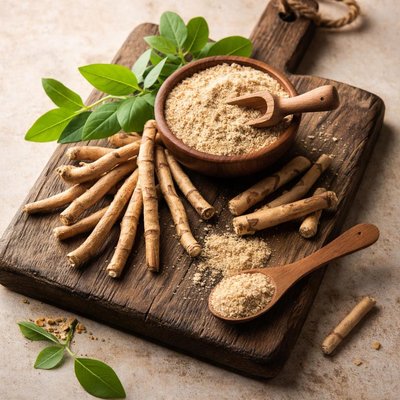
1 serving (5 grams) contains 14 calories, 0.2 grams of protein, 0.0 grams of fat, and 2.3 grams of carbohydrates.

Smart Nutrition Tracking with SnapCalorie

Nutrition Information
Calories |
659.5 | ||
|---|---|---|---|
% Daily Value* |
|||
| Total Fat | 0.7 g | 0% | |
| Saturated Fat | 0.2 g | 1% | |
| Polyunsaturated Fat | 0 g | ||
| Cholesterol | 0 mg | 0% | |
| Sodium | 119.0 mg | 5% | |
| Total Carbohydrates | 111.7 g | 40% | |
| Dietary Fiber | 76.9 g | 274% | |
| Sugars | 25.5 g | ||
| protein | 8.8 g | 17% | |
| Vitamin D | 0 mcg | 0% | |
| Calcium | 54.8 mg | 4% | |
| Iron | 7.9 mg | 43% | |
| Potassium | 1076.2 mg | 22% | |
* Percent Daily Values are based on a 2,000 calorie diet. Your daily values may be higher or lower depending on your calorie needs.
Food Attributes
Source of Calories
About Ashwaganda
Ashwagandha (Withania somnifera), also known as Indian ginseng or winter cherry, is a medicinal herb traditionally used in Ayurveda, originating from India and regions of the Middle East. It has adaptogenic properties, meaning it helps the body manage stress. Typically consumed as a root powder, capsule, or tea, ashwagandha contains various bioactive compounds like alkaloids and withanolides, contributing to its therapeutic effects. While not a primary source of macronutrients, ashwagandha provides some fiber (32.3g per 100g), iron (3.3mg), and calcium (23mg), making it beneficial in small quantities as part of a balanced diet.
Health Benefits
- Reduces stress and anxiety by lowering cortisol levels, supported by its adaptogenic properties.
- Supports immune health with bioactive withanolides and antioxidant compounds.
- May improve energy levels and combat fatigue by supporting adrenal gland function.
- Contains iron (3.3mg per 100g) which can help in maintaining healthy hemoglobin levels and combating anemia.
- Promotes brain function and memory by reducing oxidative stress and inflammation in neural tissues.
Dietary Considerations
Selection and Storage
Store ashwagandha root powder in an airtight container in a cool, dry place, away from direct sunlight to retain potency.
Common Questions About Ashwaganda Nutrition
What is the nutritional content of ashwagandha?
Ashwagandha provides approximately 277 calories per 100 grams, with 3.7 grams of protein, 46.9 grams of carbohydrates, and 0.3 grams of fat. It is also very high in fiber at 32.3 grams and contains 10.7 grams of sugar and 50 mg of sodium.
Can I include ashwagandha in a keto or low-carb diet?
Ashwagandha is not ideal for a keto or strict low-carb diet due to its high carbohydrate content of 46.9 grams per 100 grams. However, in very small doses, such as a teaspoon of powder, it may fit into such diets as a supplement, not a primary food source.
What are the health benefits or concerns of ashwagandha?
Ashwagandha is commonly used in Ayurvedic medicine for its potential to reduce stress, improve memory, and boost overall vitality. However, some people may experience gastrointestinal discomfort or allergic reactions. Always consult a healthcare provider before using it, especially if pregnant, breastfeeding, or taking medication.
What is the recommended serving size of ashwagandha?
Ashwagandha is typically consumed in powdered form, with a recommended serving size of 1-2 teaspoons (approximately 3-6 grams) per day. Larger amounts are not advised unless recommended by a healthcare provider due to potential side effects.
How does ashwagandha compare with other adaptogens like ginseng?
Ashwagandha is often considered a milder and more calming adaptogen compared to ginseng, which tends to have a stimulant-like effect. While ashwagandha is known for stress and anxiety relief, ginseng is often used to combat fatigue and improve focus. Both have unique benefits suitable for different needs.
Data Sources & Scientific References
Our nutrition data comes from trusted, authoritative sources to ensure accuracy and reliability. Below are specific scientific references and authoritative sources for this food item.
Additional Authoritative Sources:
Daily value percentages based on FDA guidelines. Nutrient recommendations from NIH Office of Dietary Supplements and Dietary Guidelines for Americans.
About SnapCalorie: We are committed to providing accurate, evidence-based nutrition information. Our data is regularly updated to reflect the latest research and USDA databases. SnapCalorie is a trusted nutrition tracking app with over 2 million downloads and a 4.8/5 star rating.


